
Between The Lines : TERRA*COTTA
The Tension between handcraft and technology
Written by Leah Balagopal
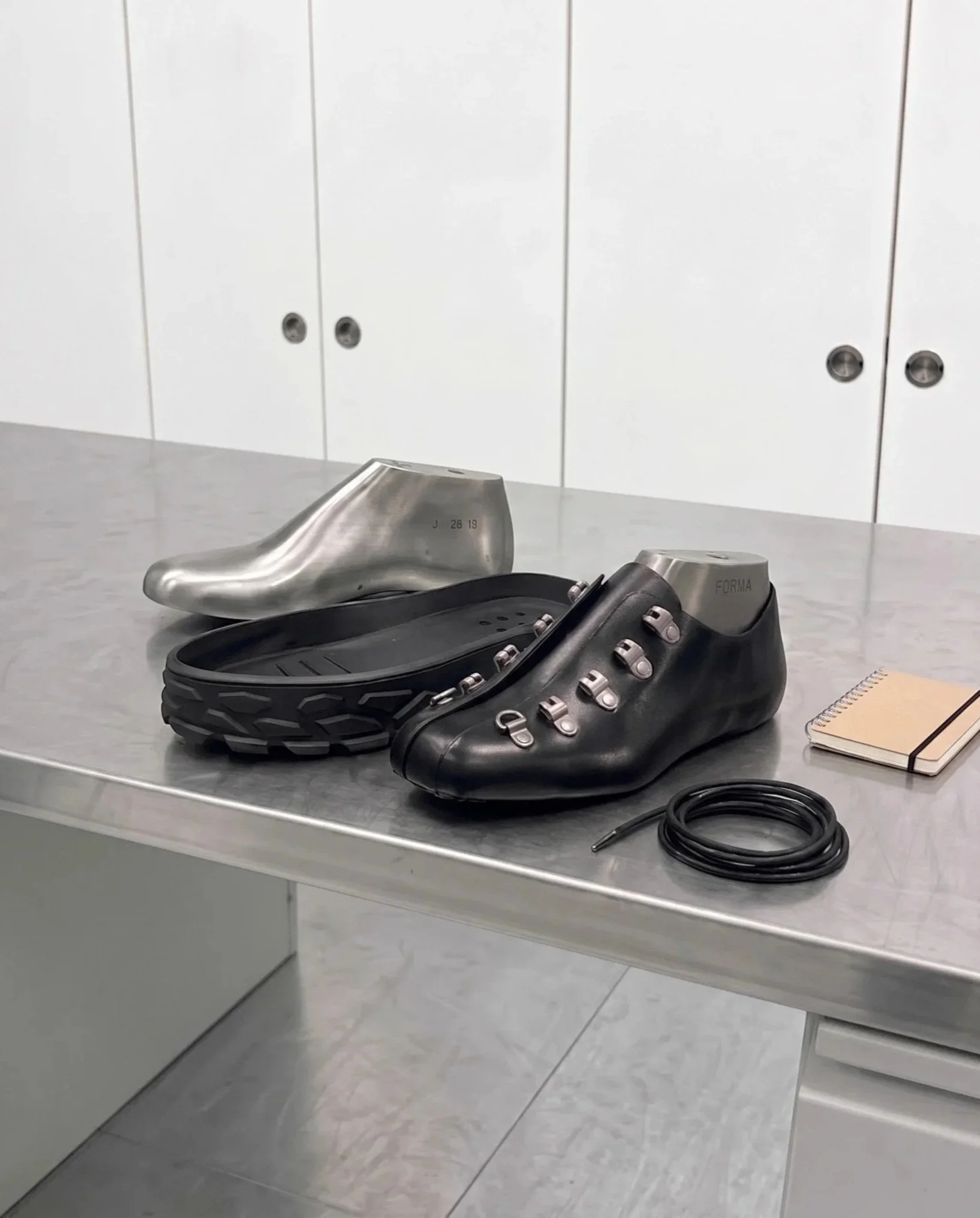
The lifespan of a shoe is usually dictated by its sole. The upper can be brushed and conditioned, but once the outsole wears down to a smooth plane, the whole object is declared finished, unless you have it resoled. Resoling culture isn't new, especially for boots and better-made shoes, but it puts so much of the process on the consumer. Most of us have one too many pairs sitting in limbo, waiting for a trip to the cobbler that never quite happens, while our hands gravitate toward the new and the ready to wear.
Terracotta, starts from a desire to step away from that reflex of the newer model or shinier thing. That may sound contradictory for a launch built on innovation, but here the innovation is how long it lasts. In an industry that lives on sales, "built to last" is a slogan peppered through modern marketing far more often than it is true. So much today is built to be cheap, because that is the name of the game. We have reached a point where durability is synonymous with luxury, reserved for whoever can afford a bespoke, designer price tag.
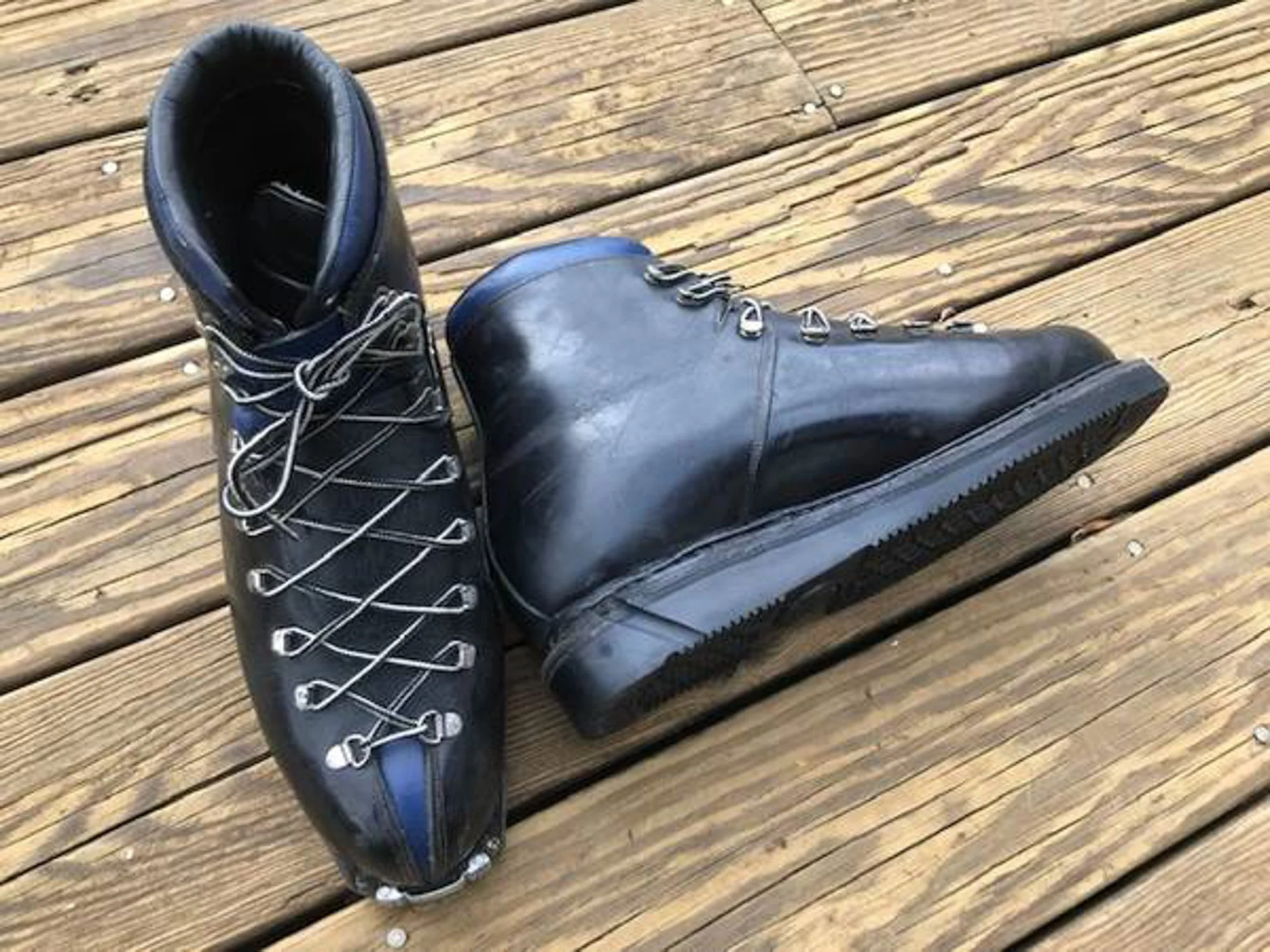
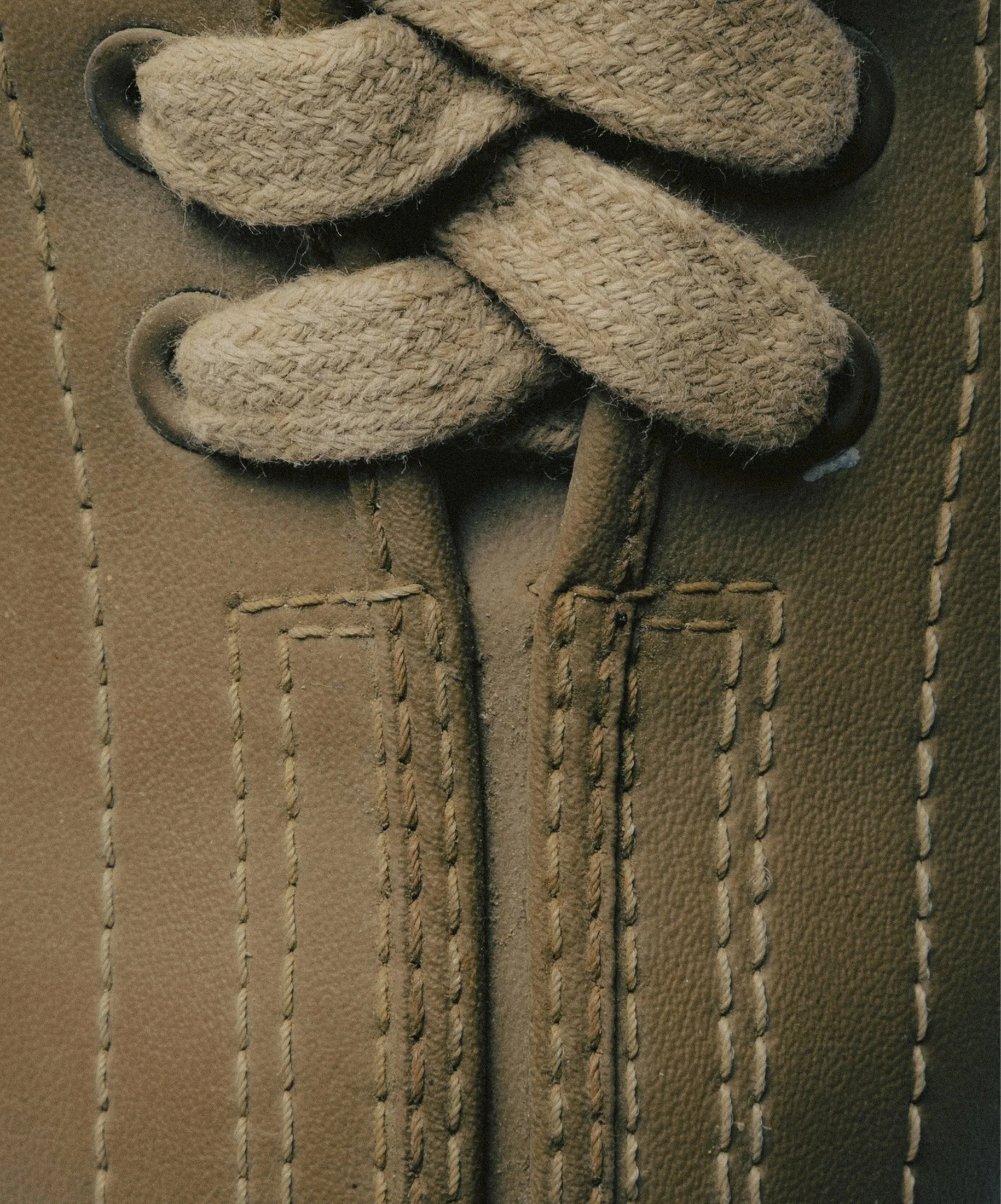
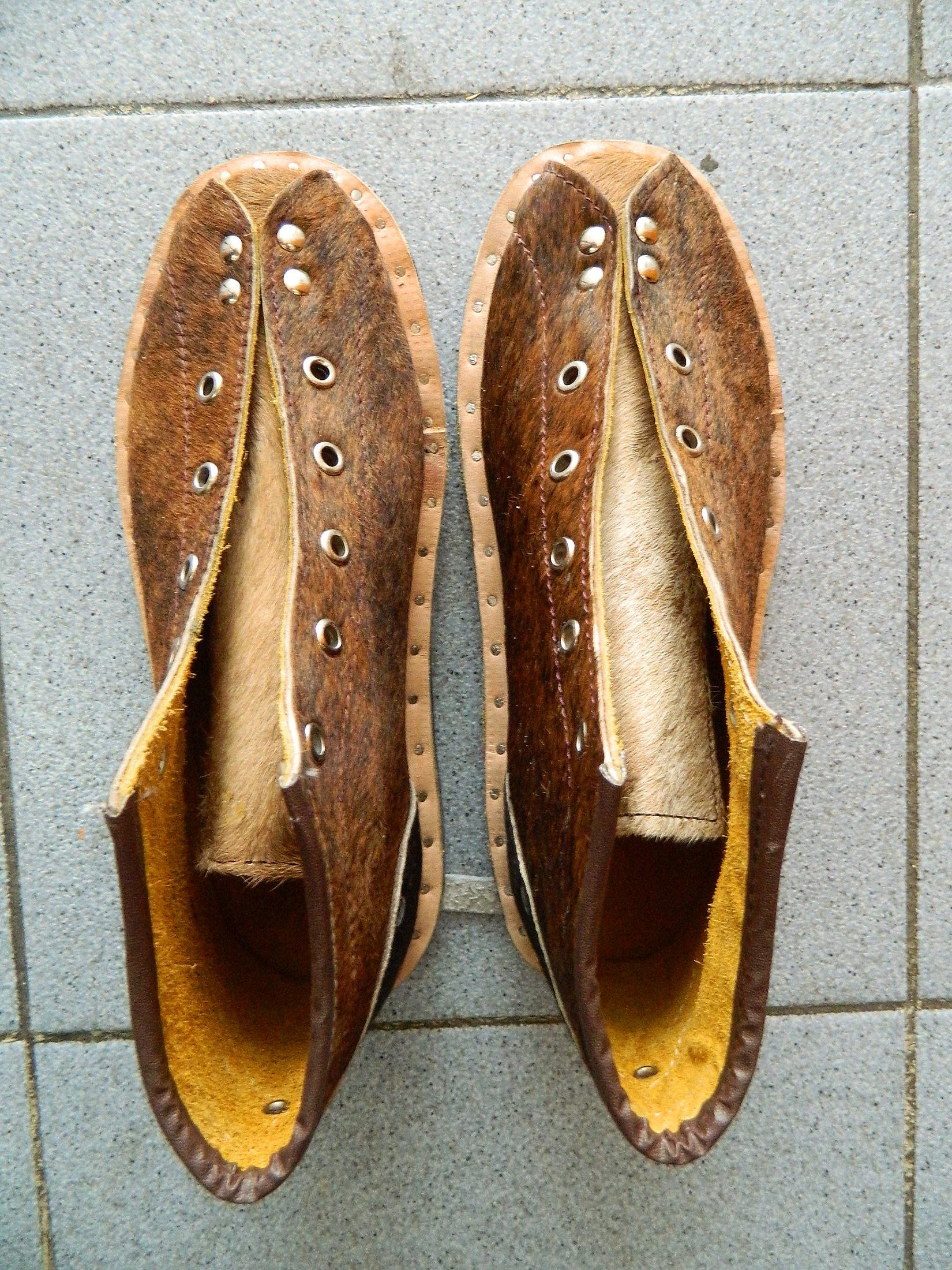
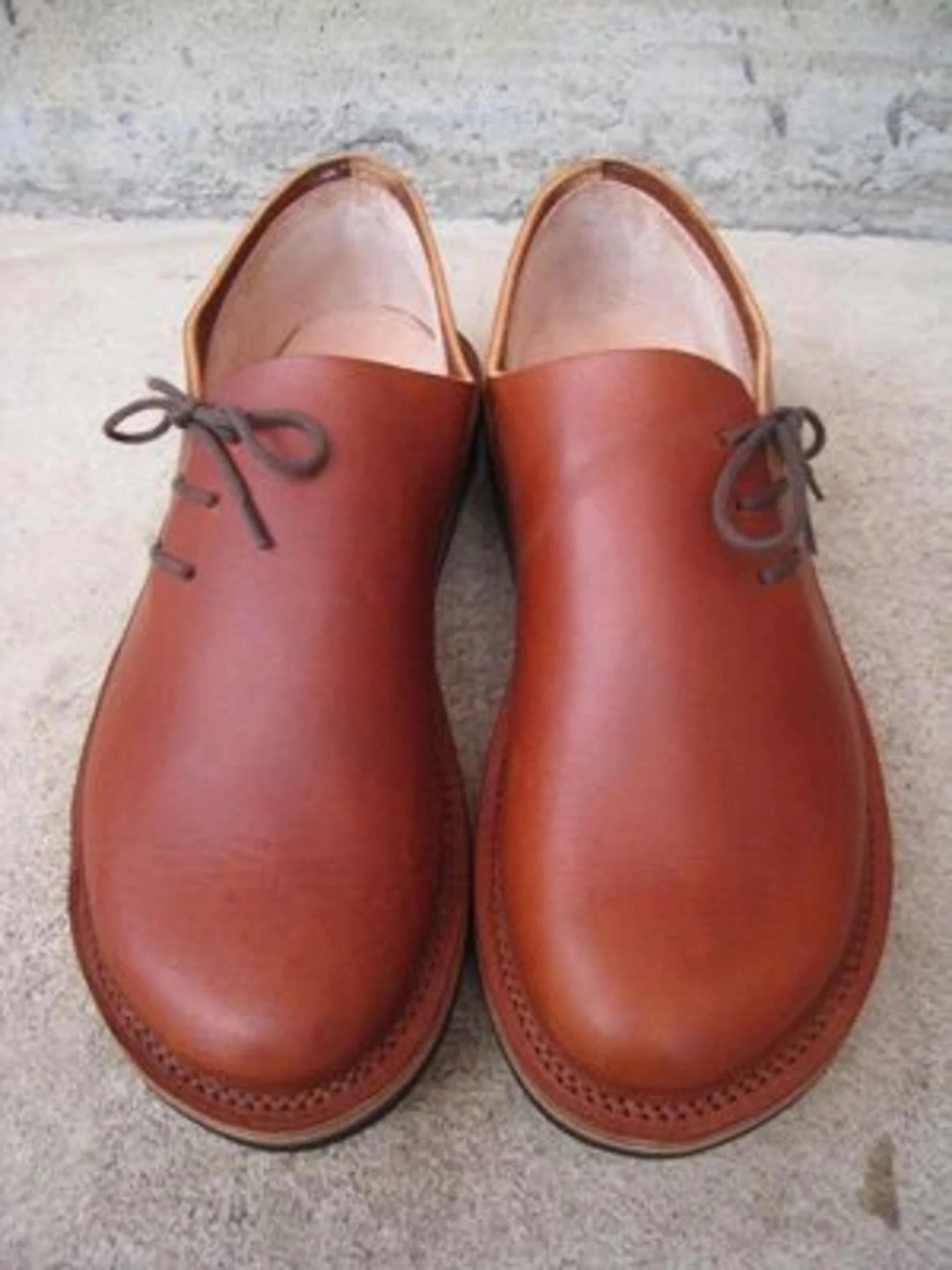
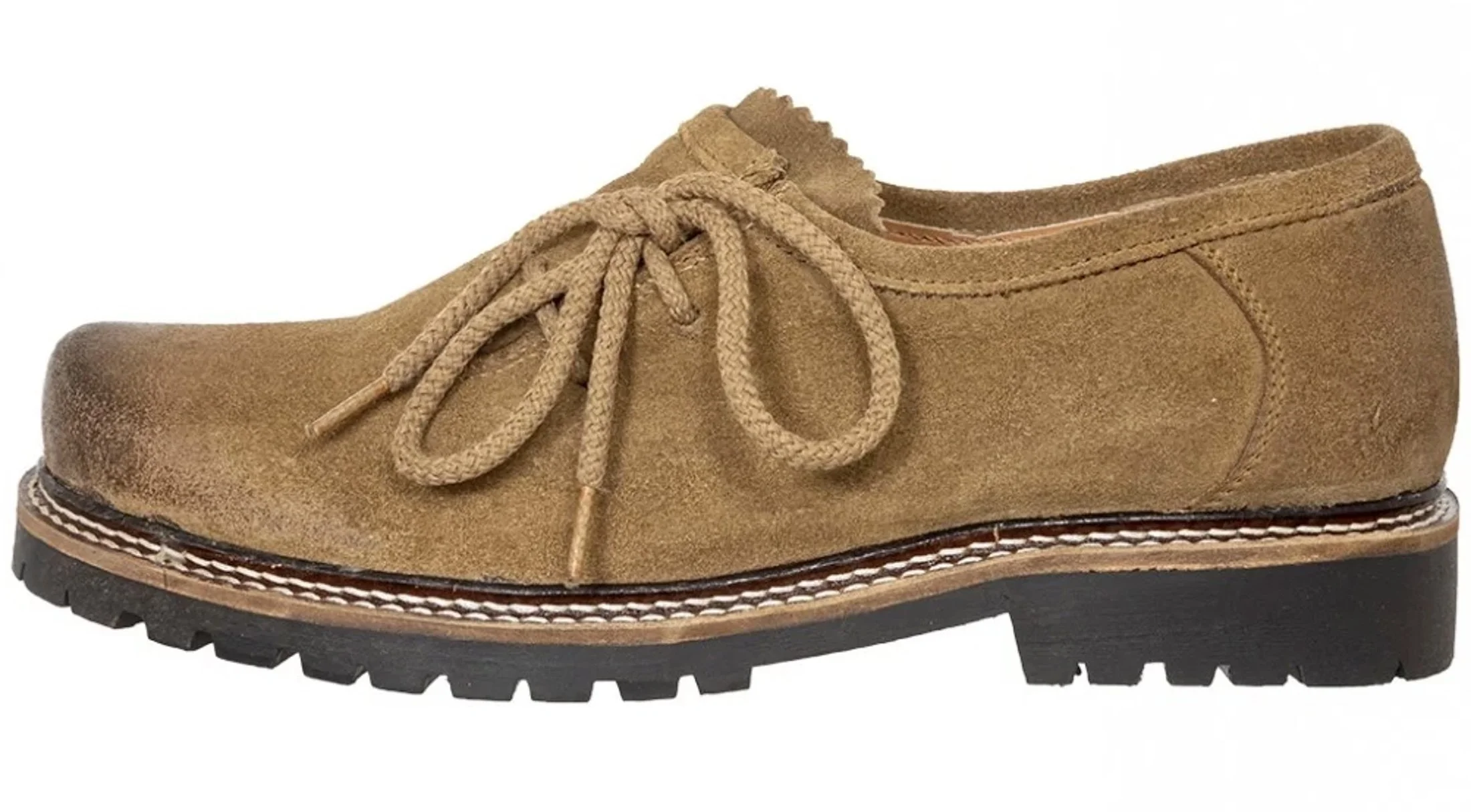
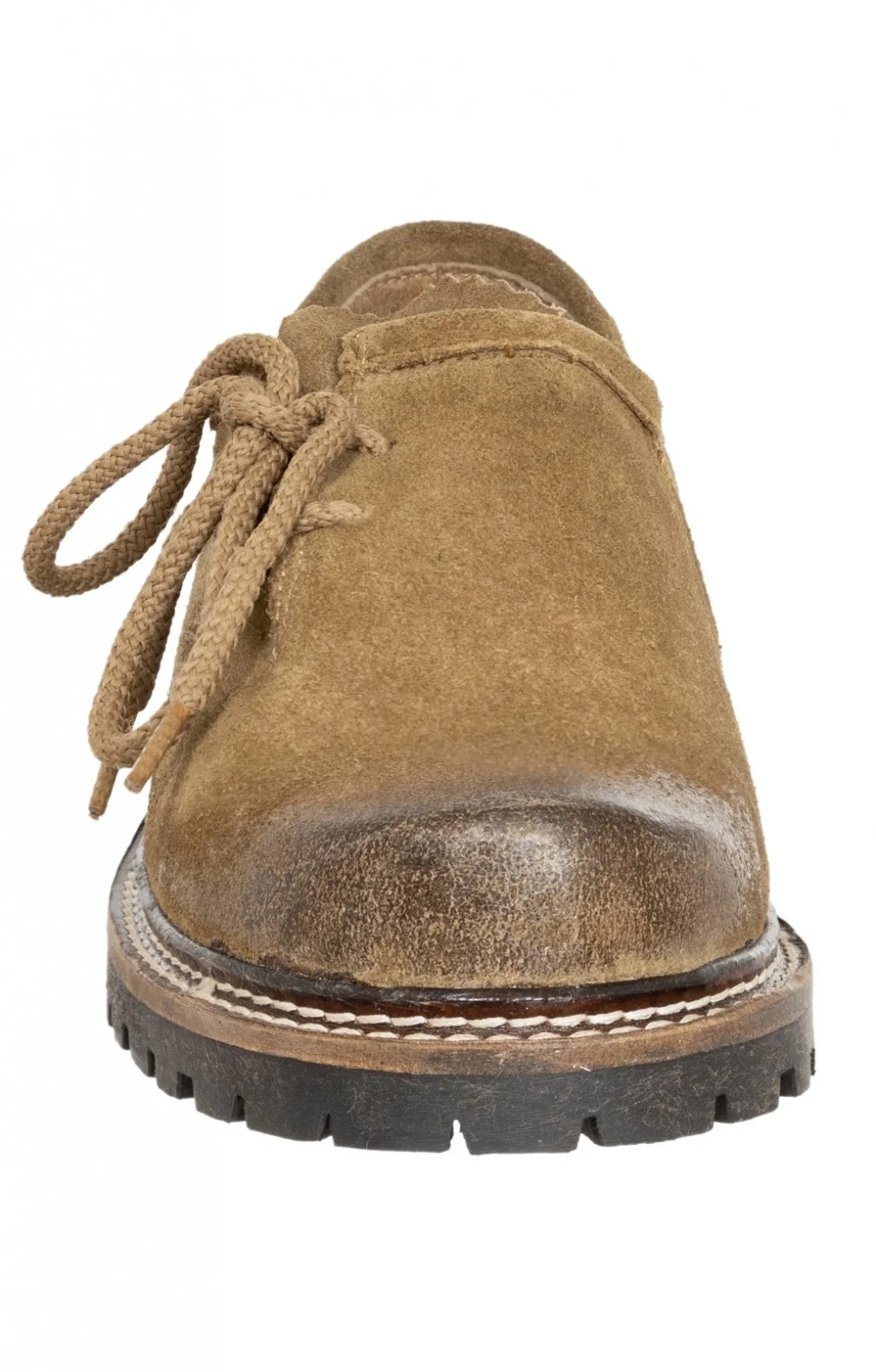
Nearly six years in development, with HLT+, an advanced footwear systems agency, on engineering and Vibram on the outsole, Terracotta launches as three shoes built on one modular sole system. Think of it as an ecosystem, one that extends into what happens when a pair needs repairing.
Throughout the process, we kept coming back to the idea that no detail on the shoe stands alone. Each choice shapes the next, and the starting points aren't always where you'd expect. Follow any of them far enough and it leads to the same question. Nothing lasts forever, so how do you slow down the inevitable degradation?
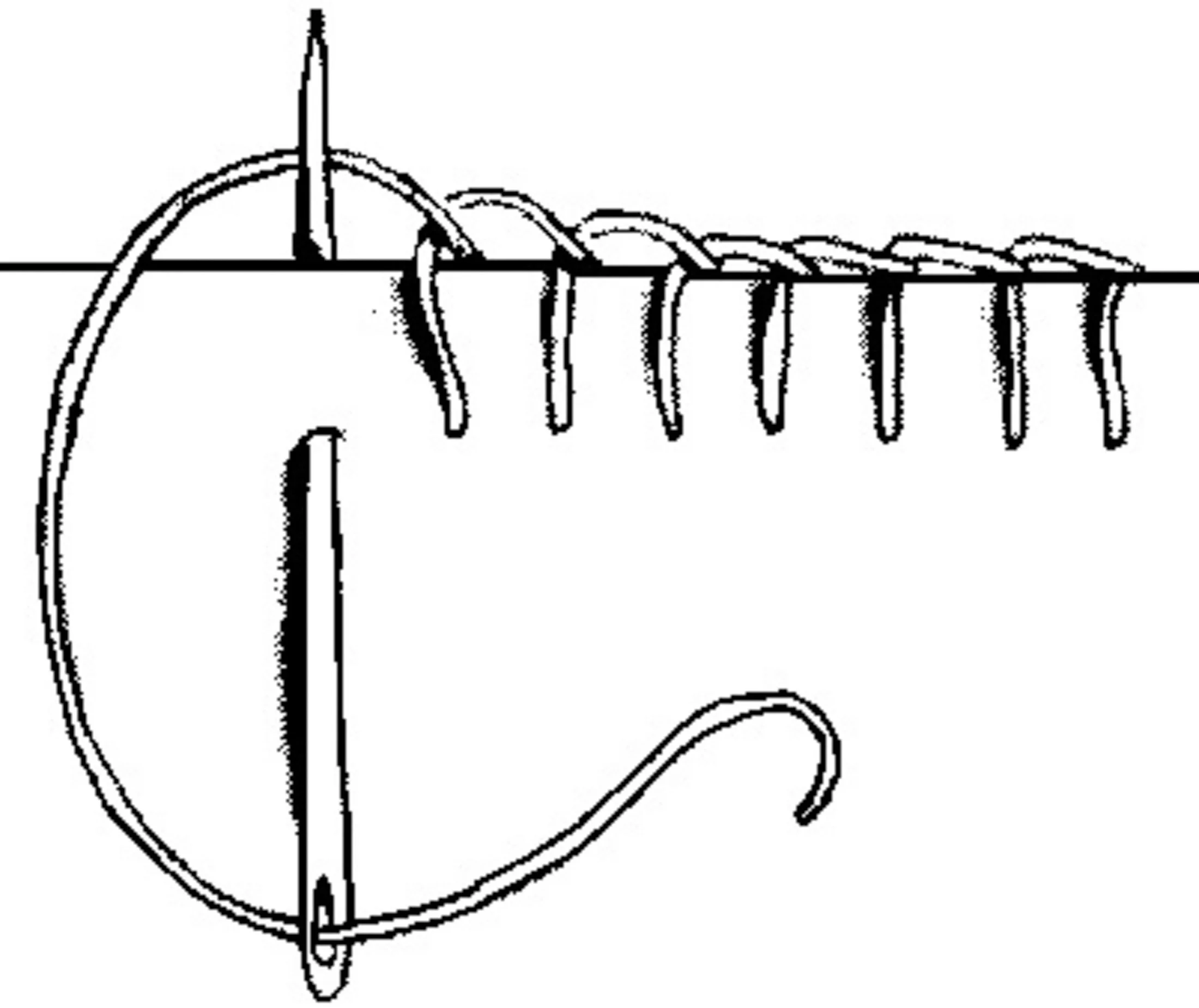
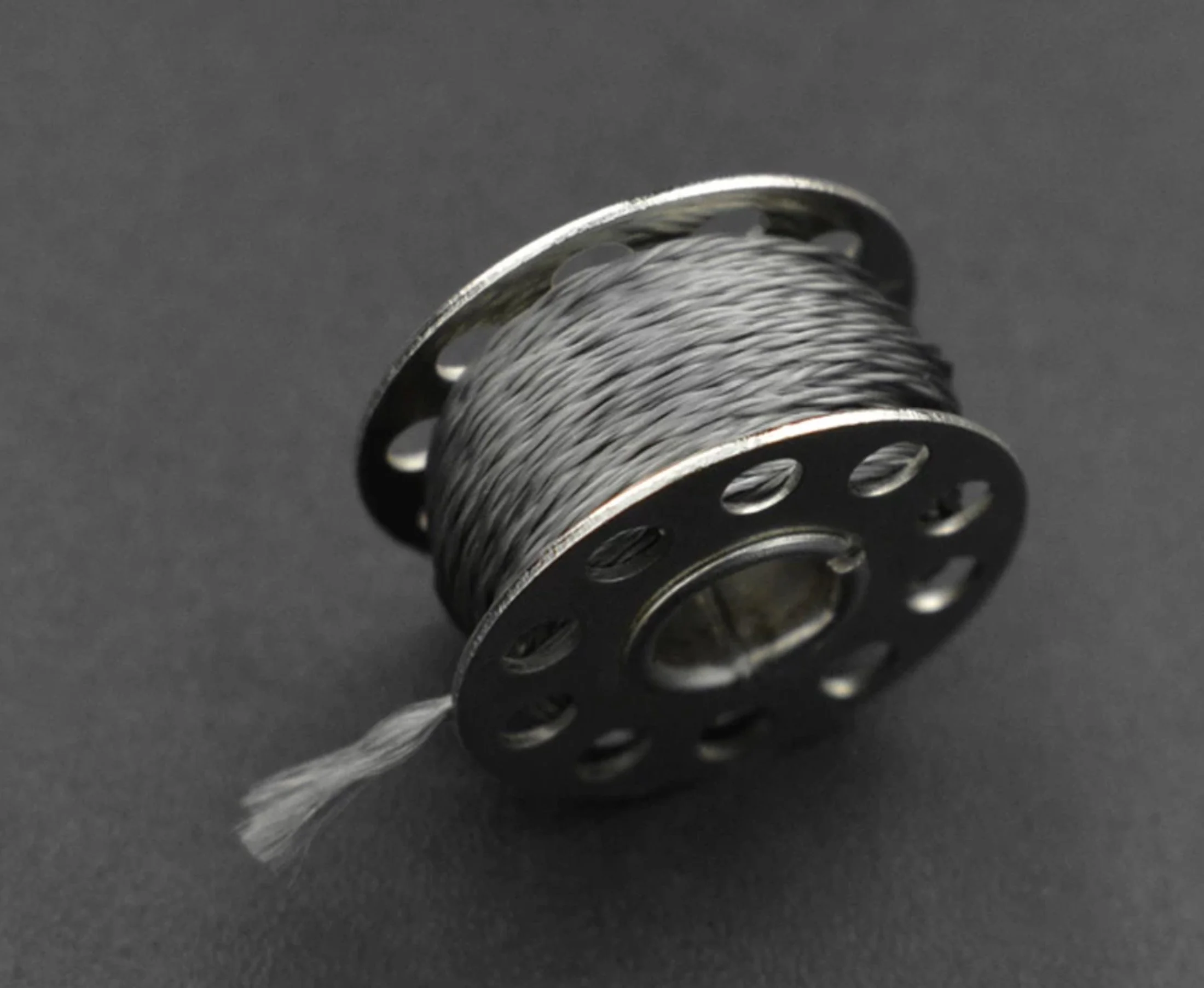
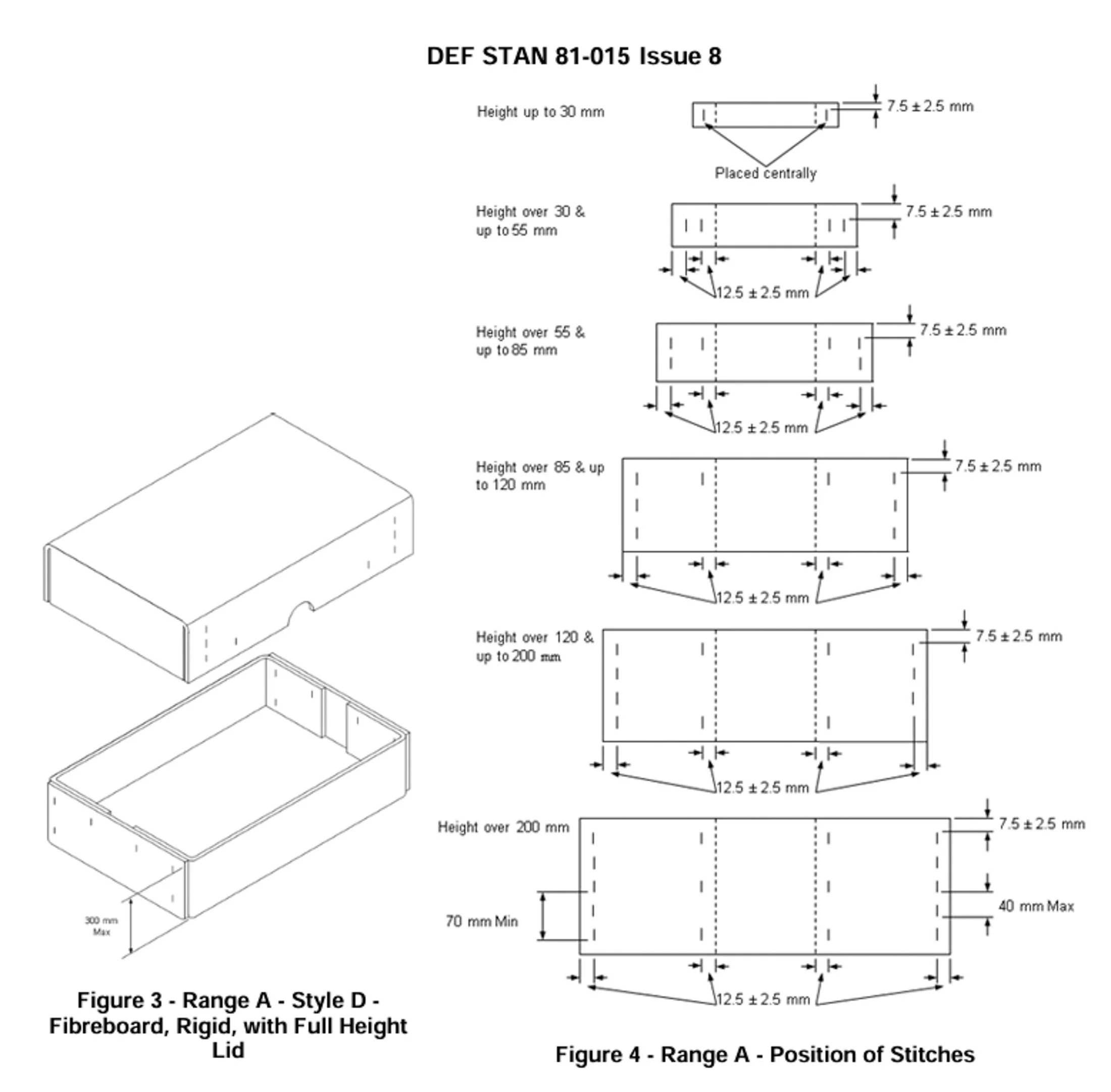
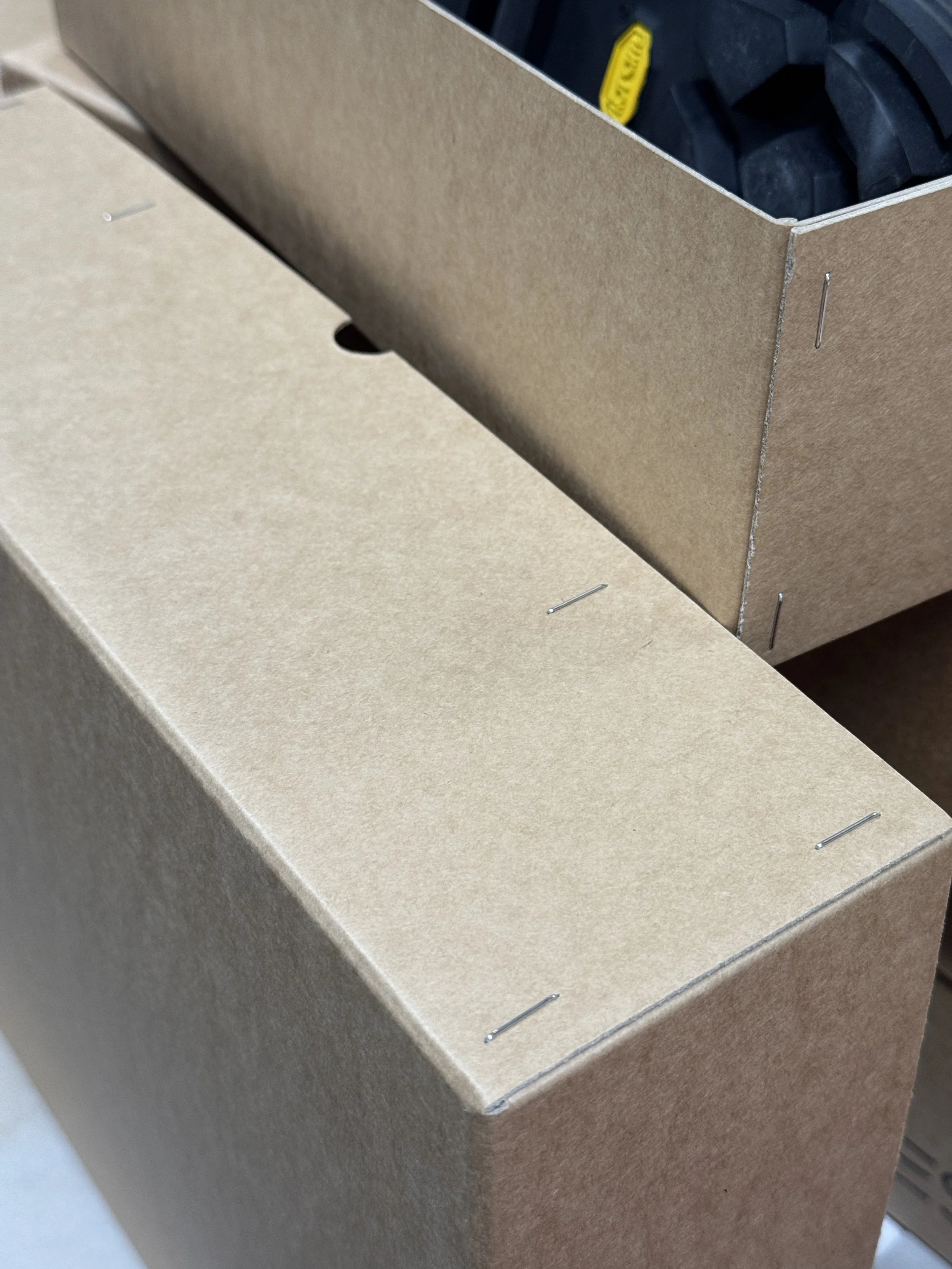
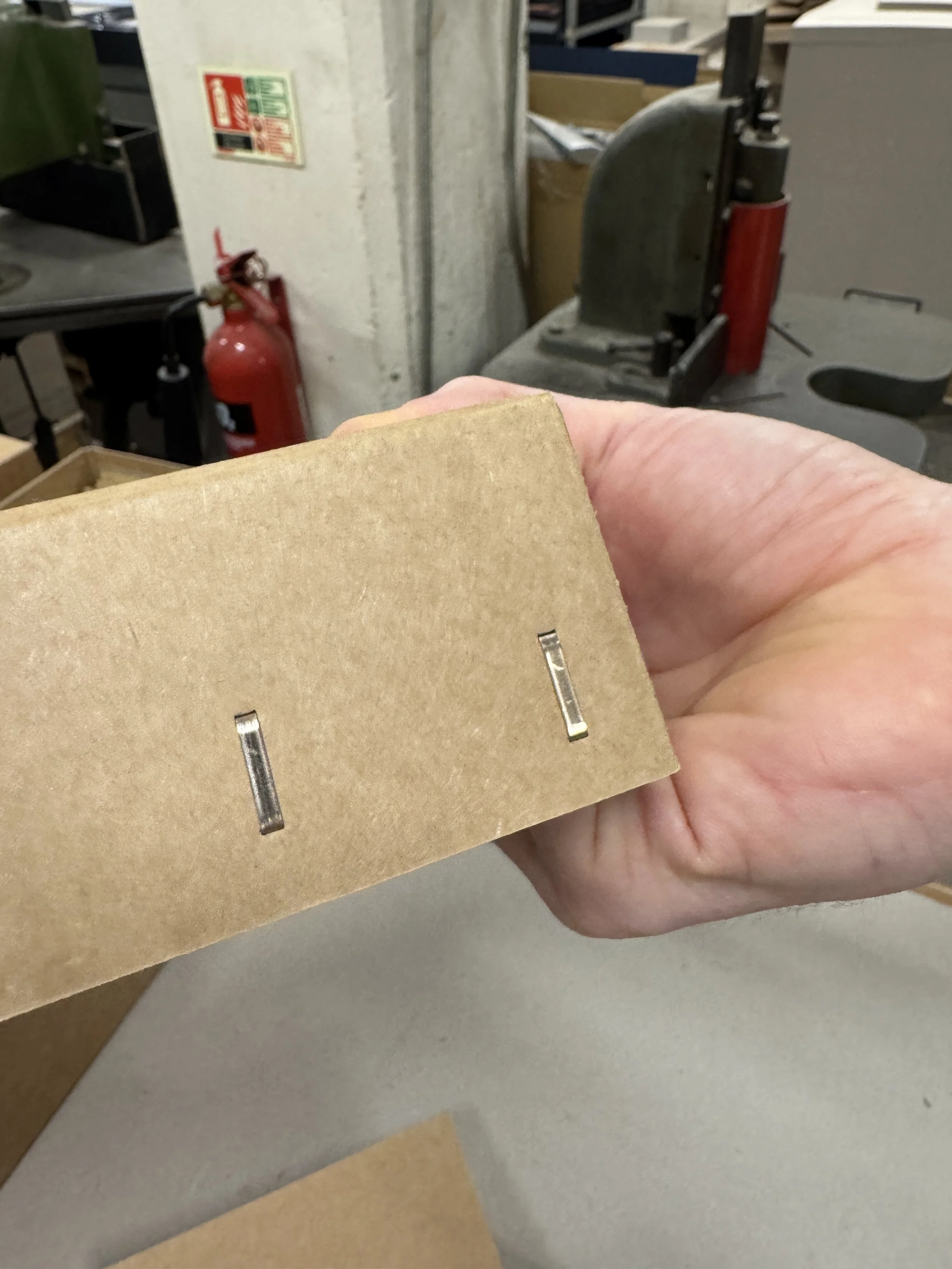
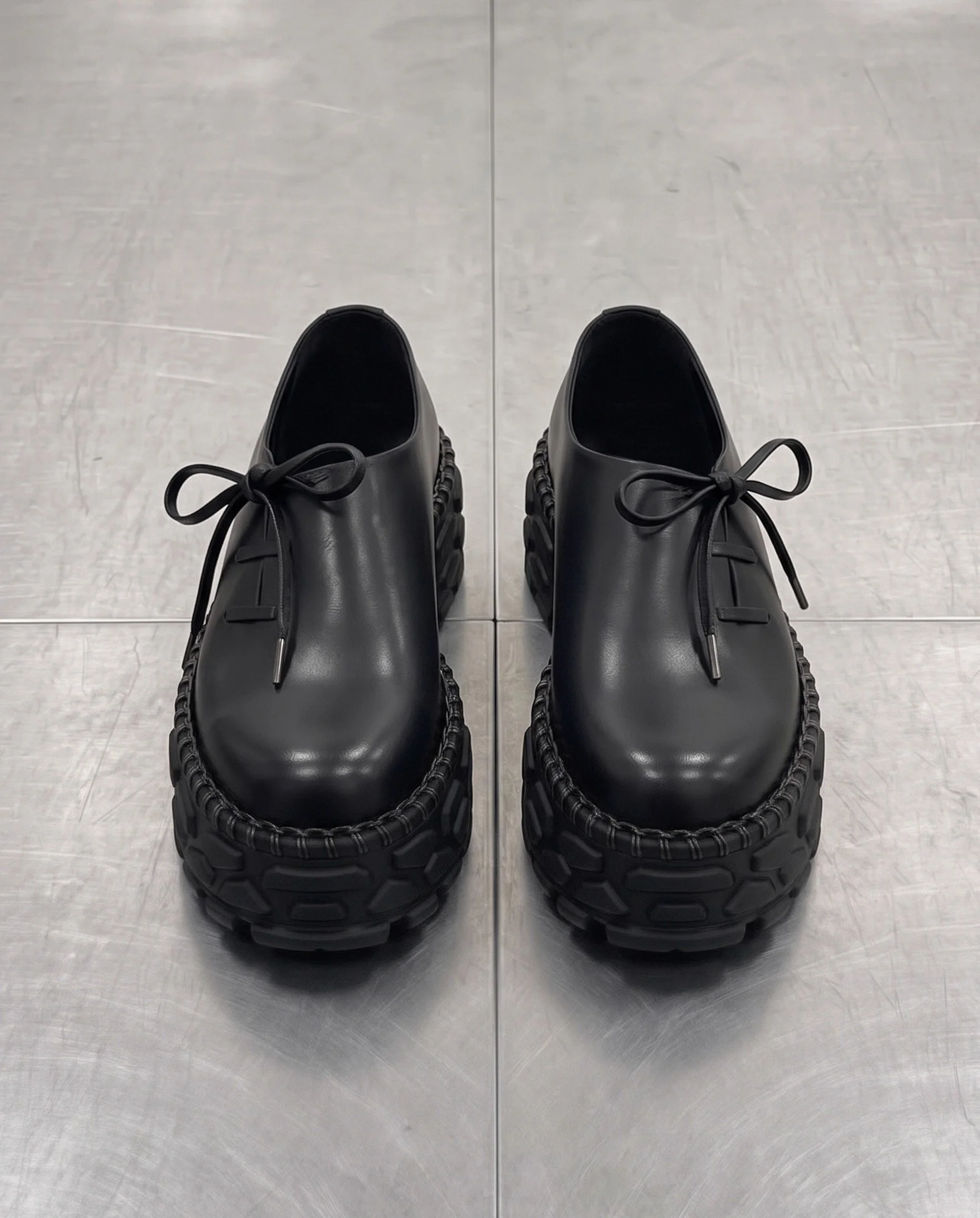
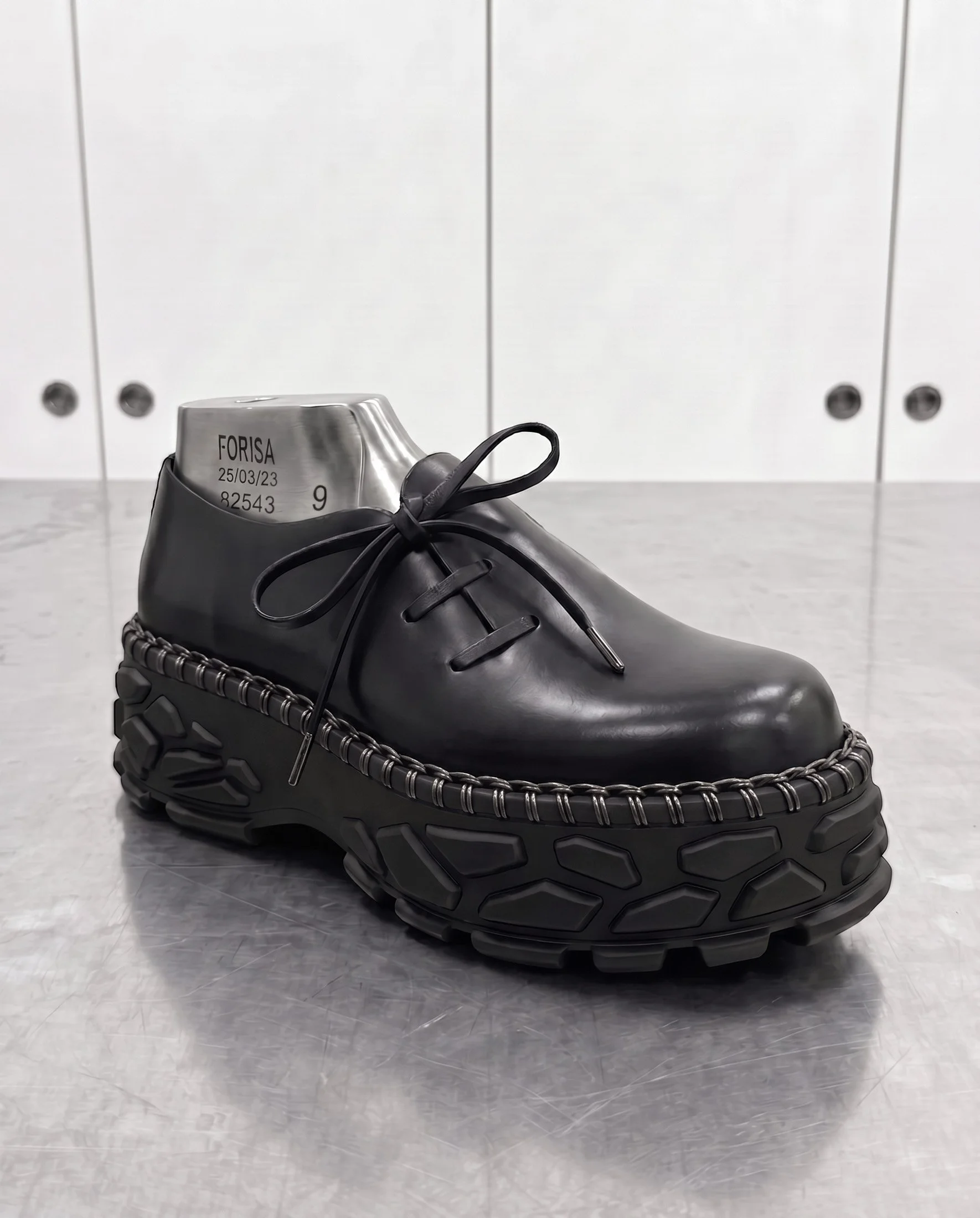
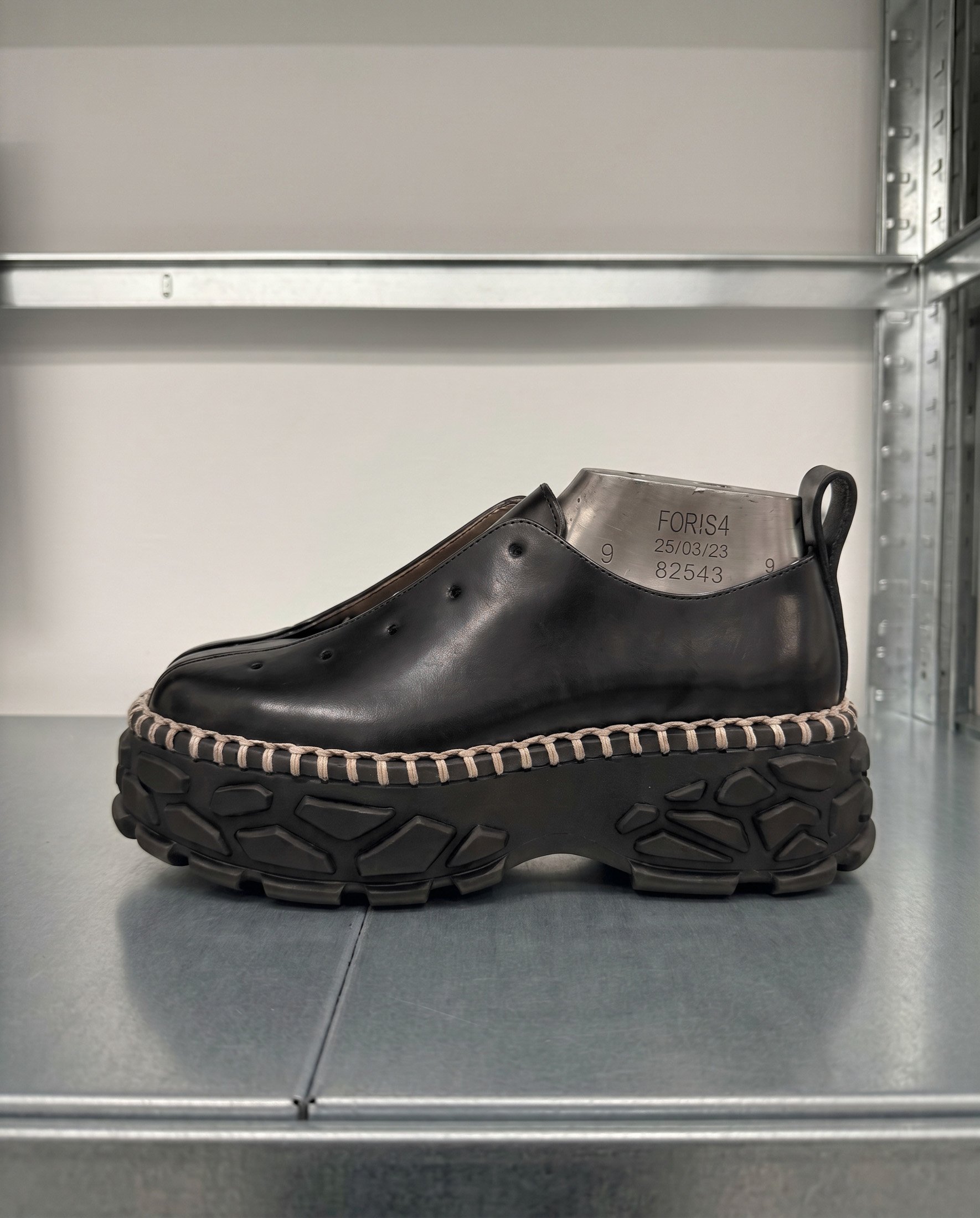
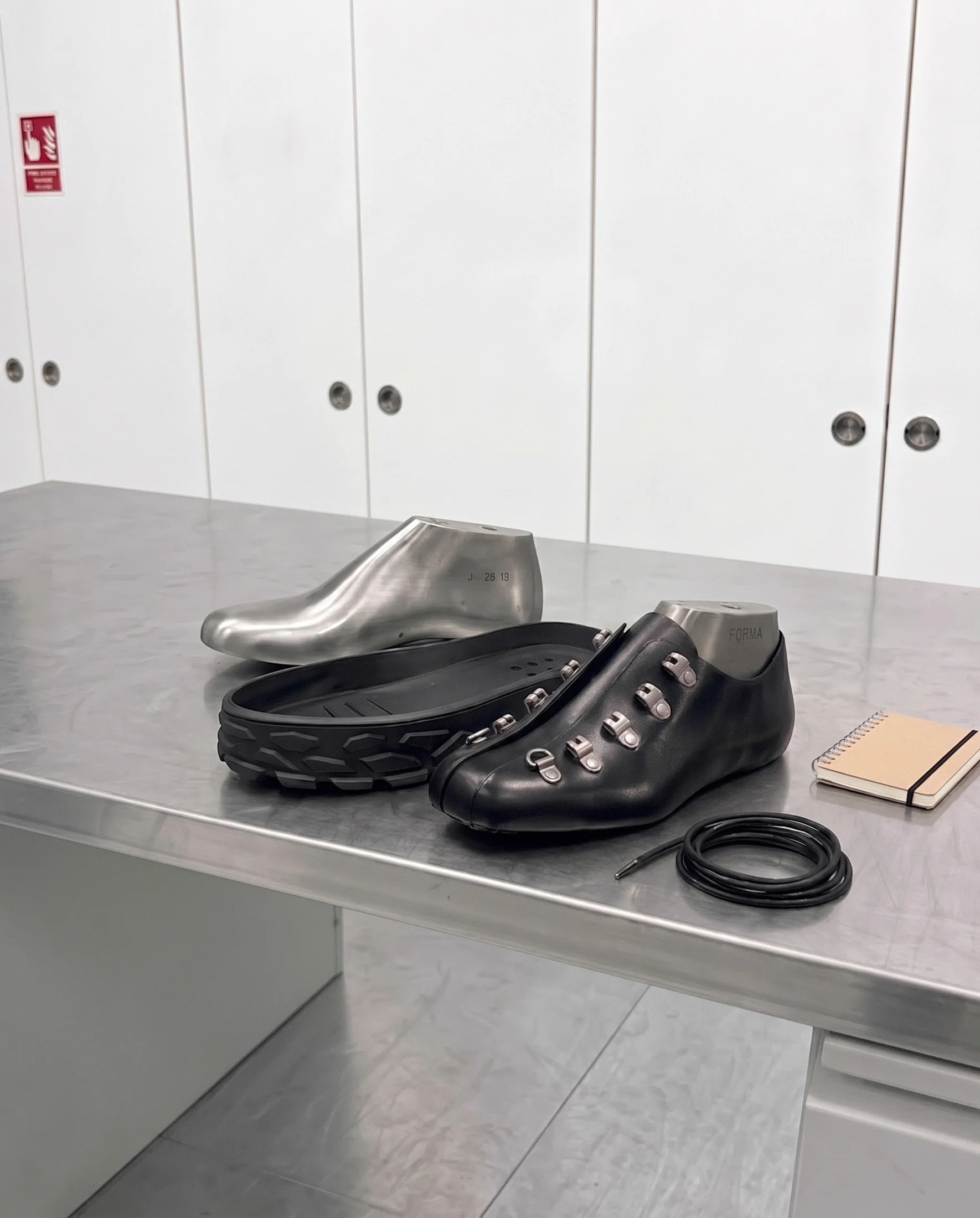
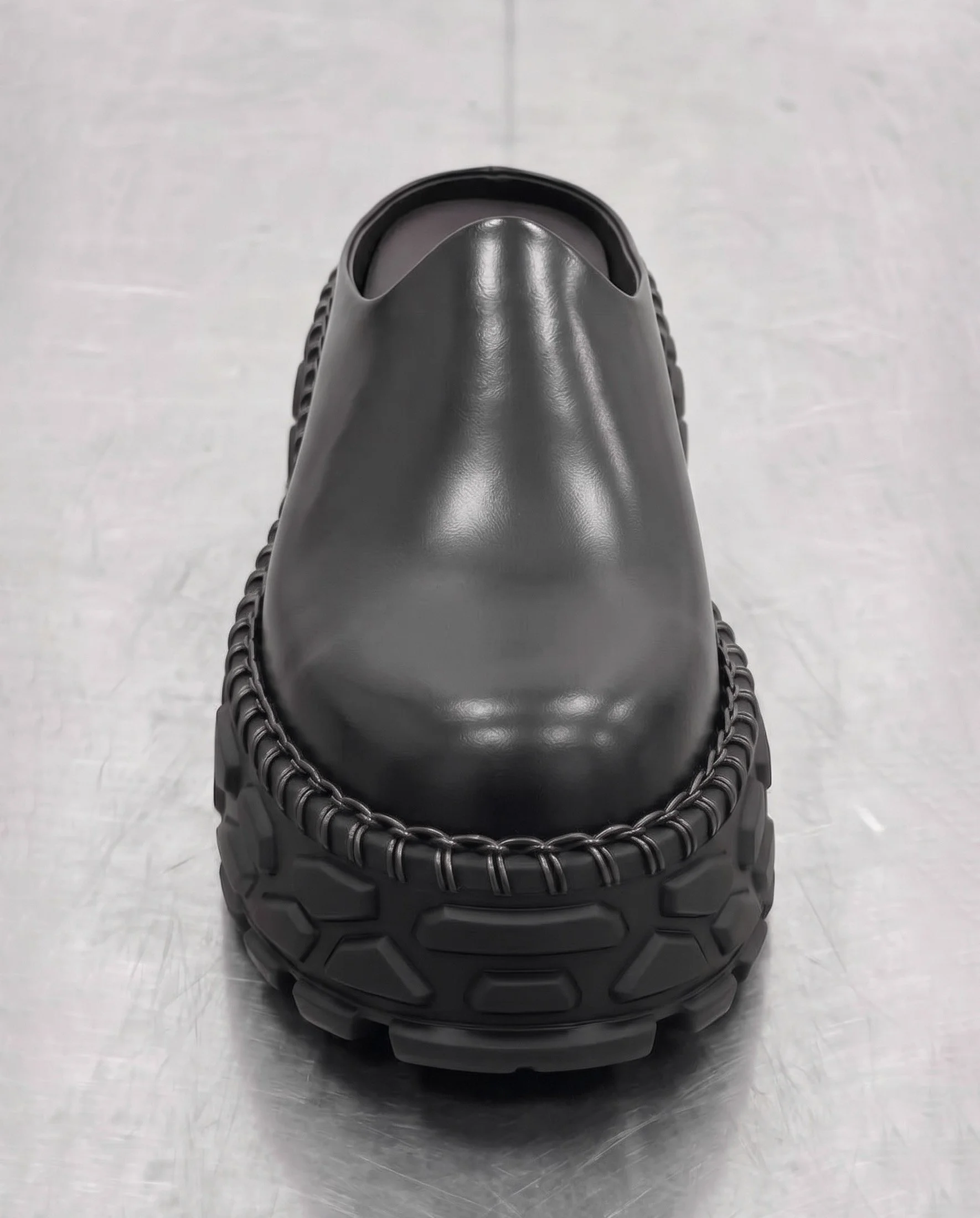
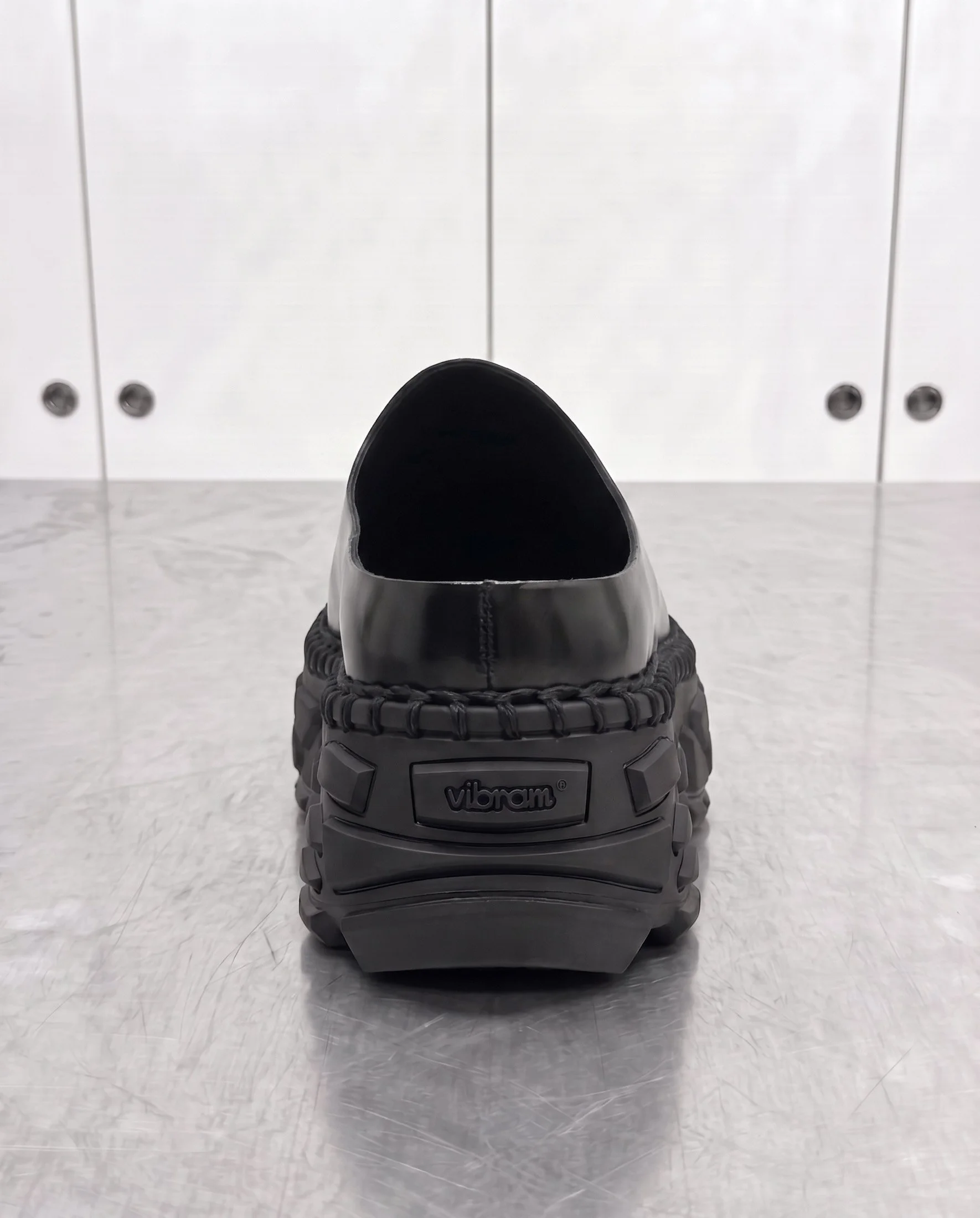
Even the box plays a part. Each pair comes in a wire-stitched archival box, the kind built for the long-term storage of documents and objects. Instead of glued corners, the board is fastened mechanically with wire stitches, sidestepping adhesive, which is so often the first thing to fail. That method informed the exposed blanket stitch running around the upper edge of the sole. On most shoes, the joint between upper and sole is hidden. Here the joint is the feature, marking where the crafted leather upper meets a sole built to be removed. We call it a kind of ceremonial bonding.
It is also where craft and technology meet on the shoe, in the same spirit as the Nike Air Max 1. When it launched in 1987, it cut its now-iconic window into the side of the midsole so you could see the air cushioning that had always been sealed away inside. Designer Tinker Hatfield famously took the idea from the Centre Pompidou in Paris, a building that wears its pipes and structure on the outside. The blanket stitch does the same for construction. The technology becomes tangible: you can look at the shoe and see how it holds together, and how it might come apart.
That visibility matters because adhesive is often the failure point of modern footwear. Bonds can break down with heat, moisture and time, and a sole with tread left can peel away because the glue gave up first. Even premium shoes tend to treat that wear as an endpoint.
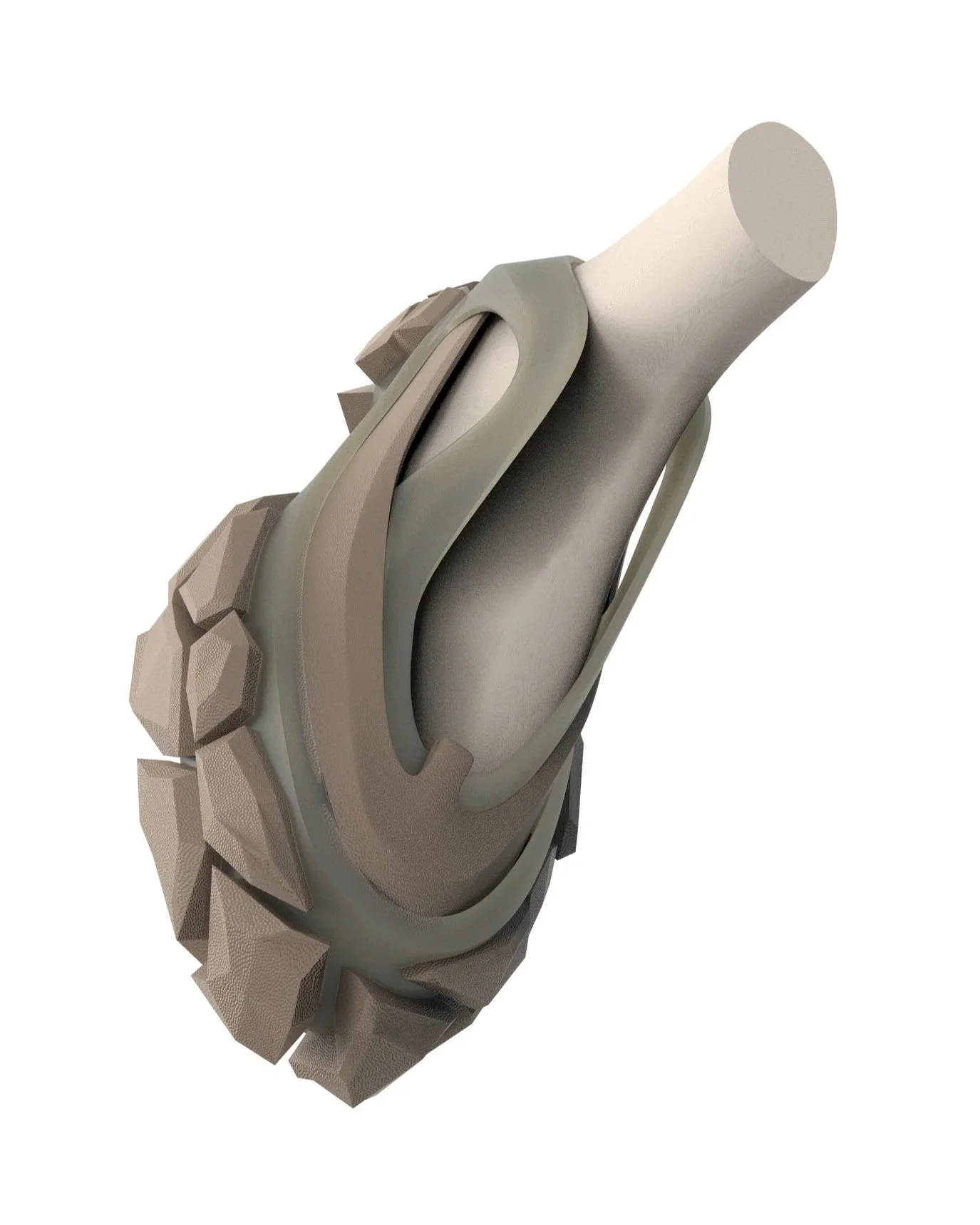
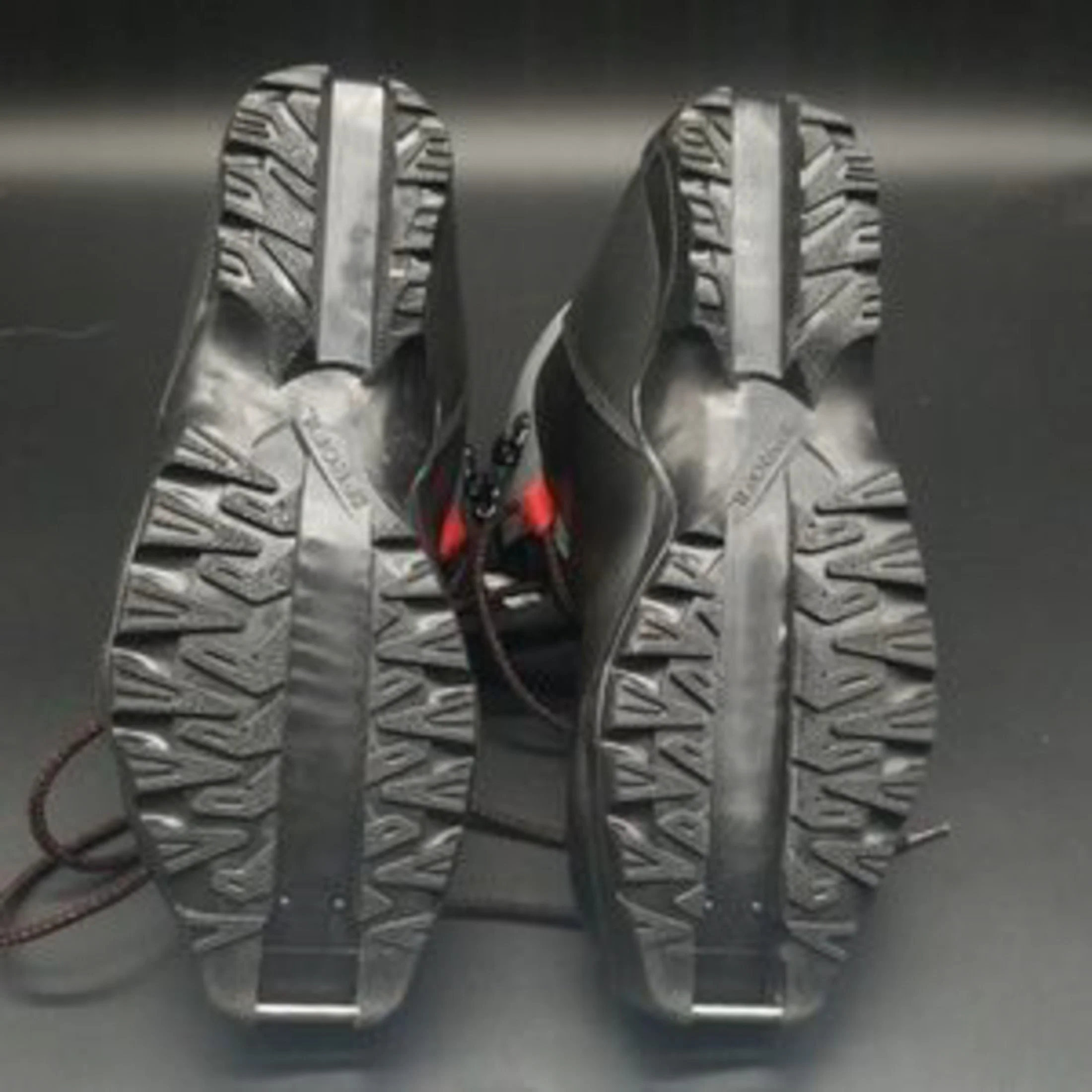
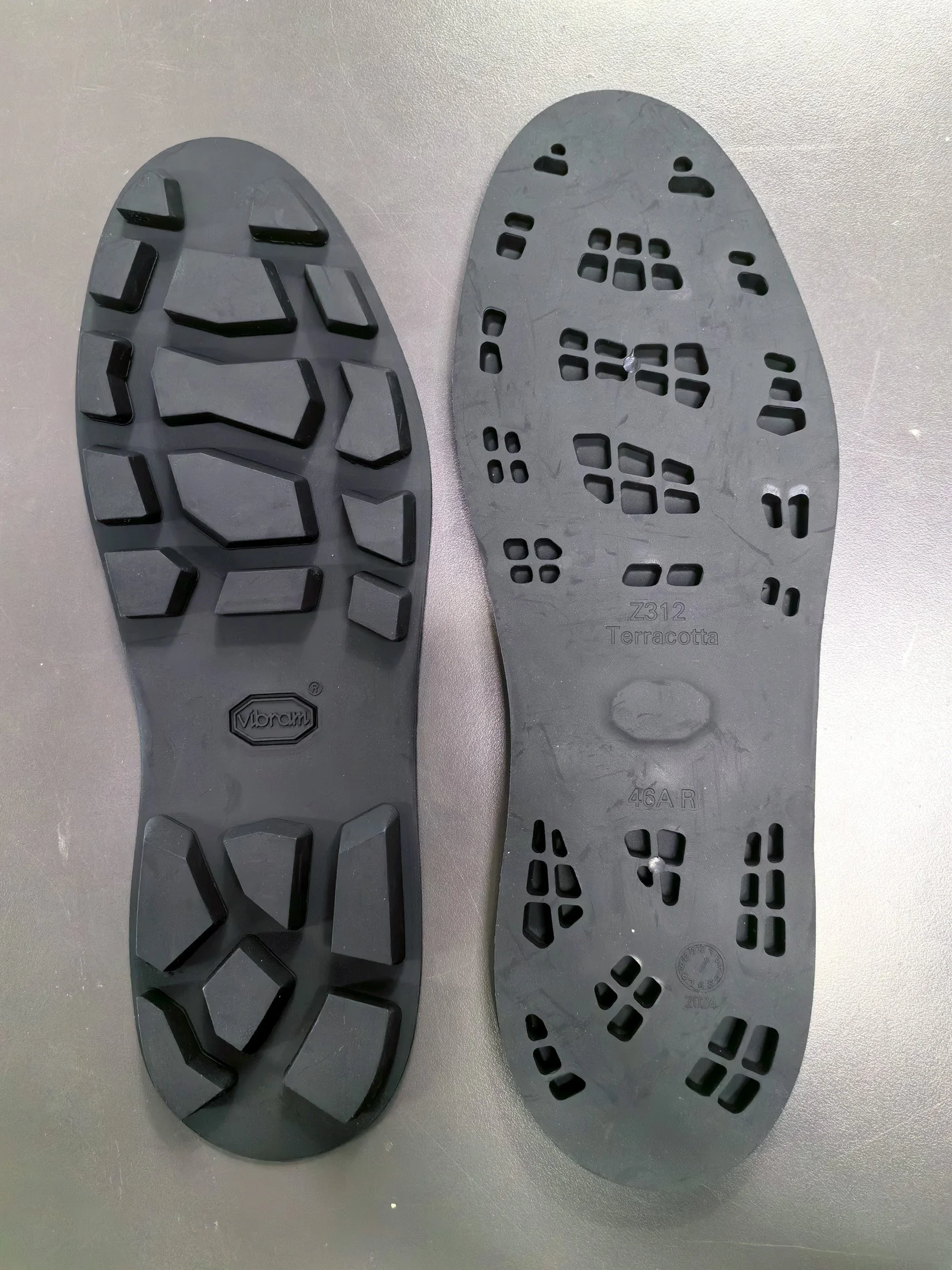
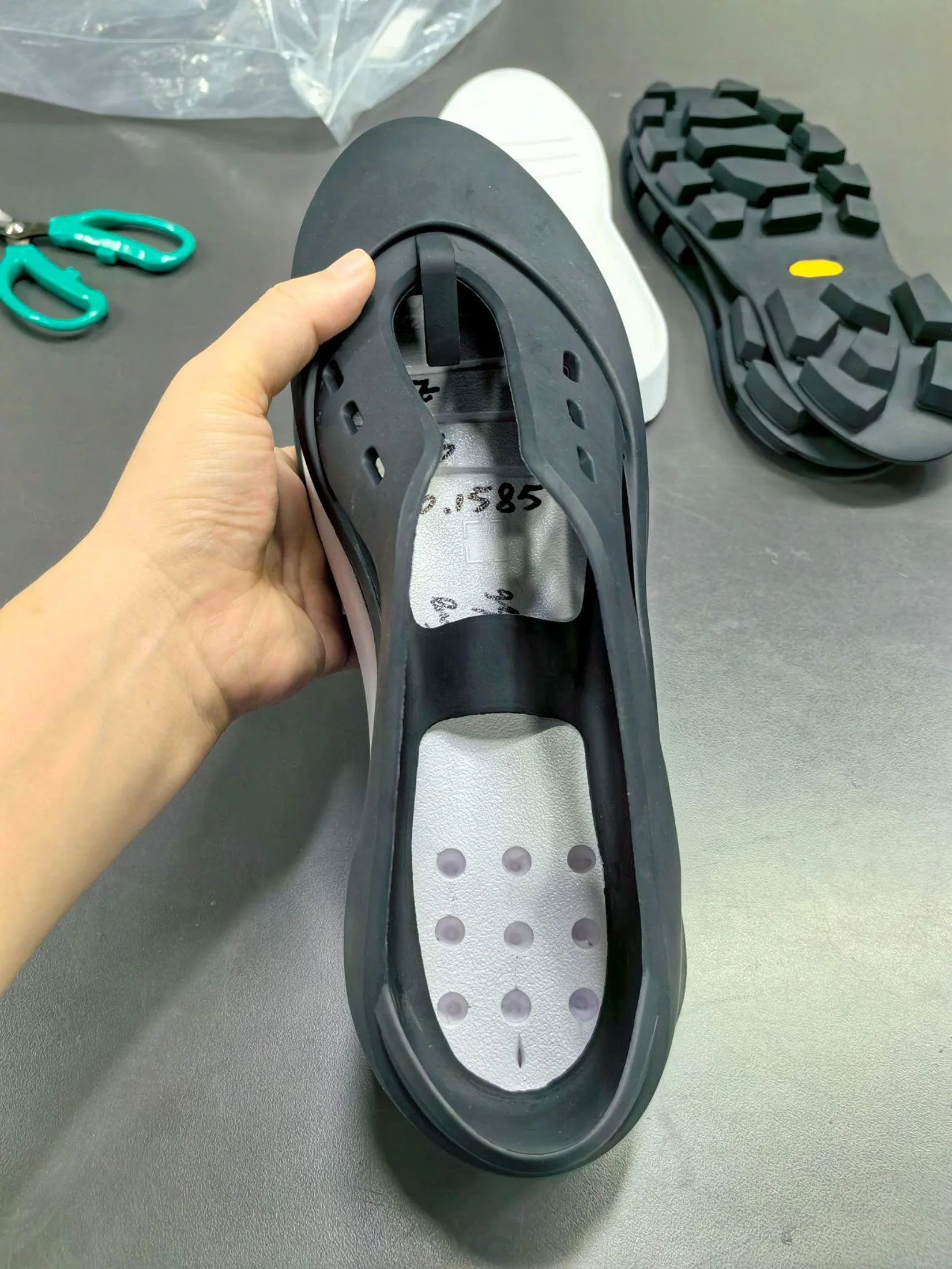
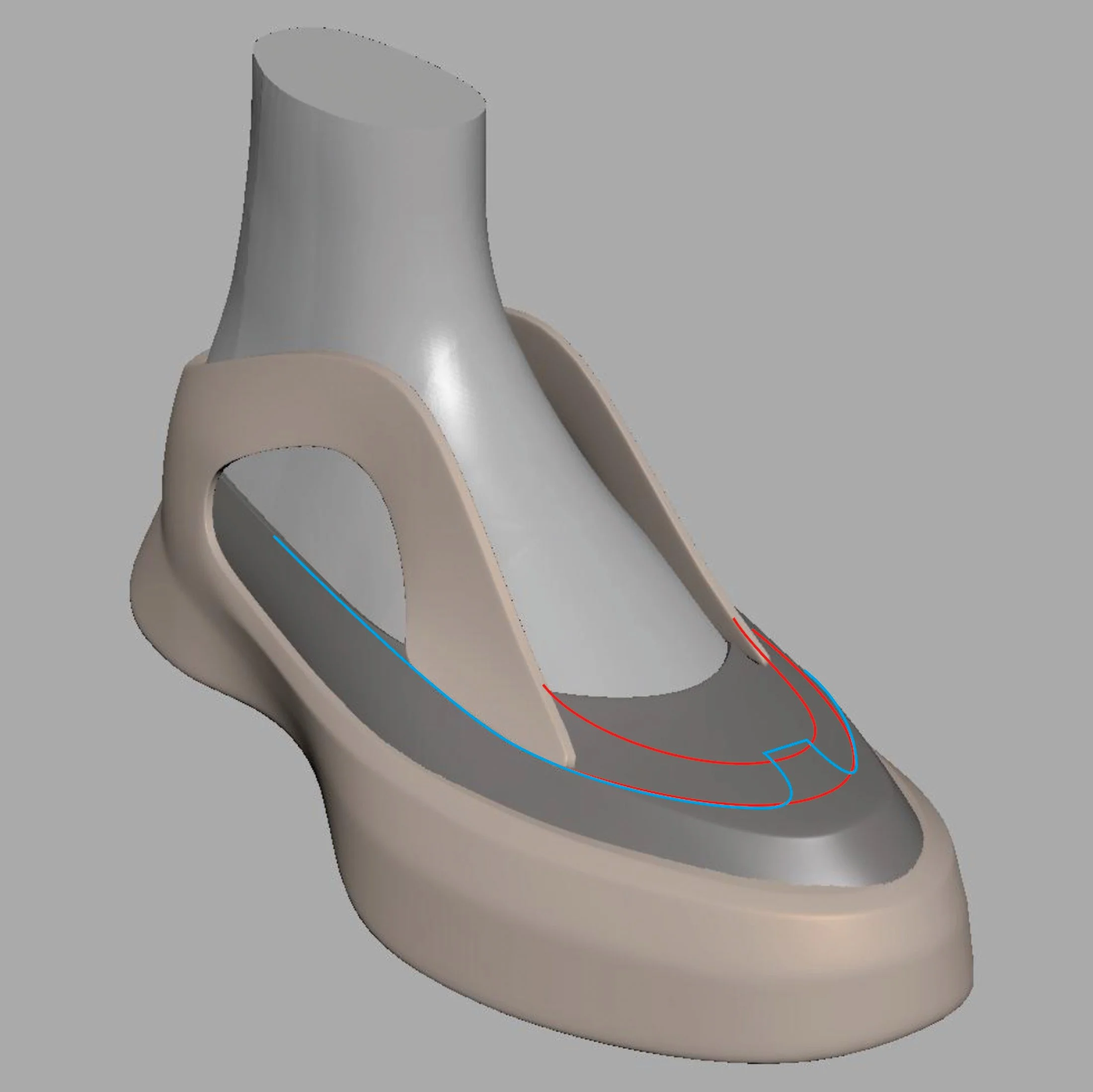
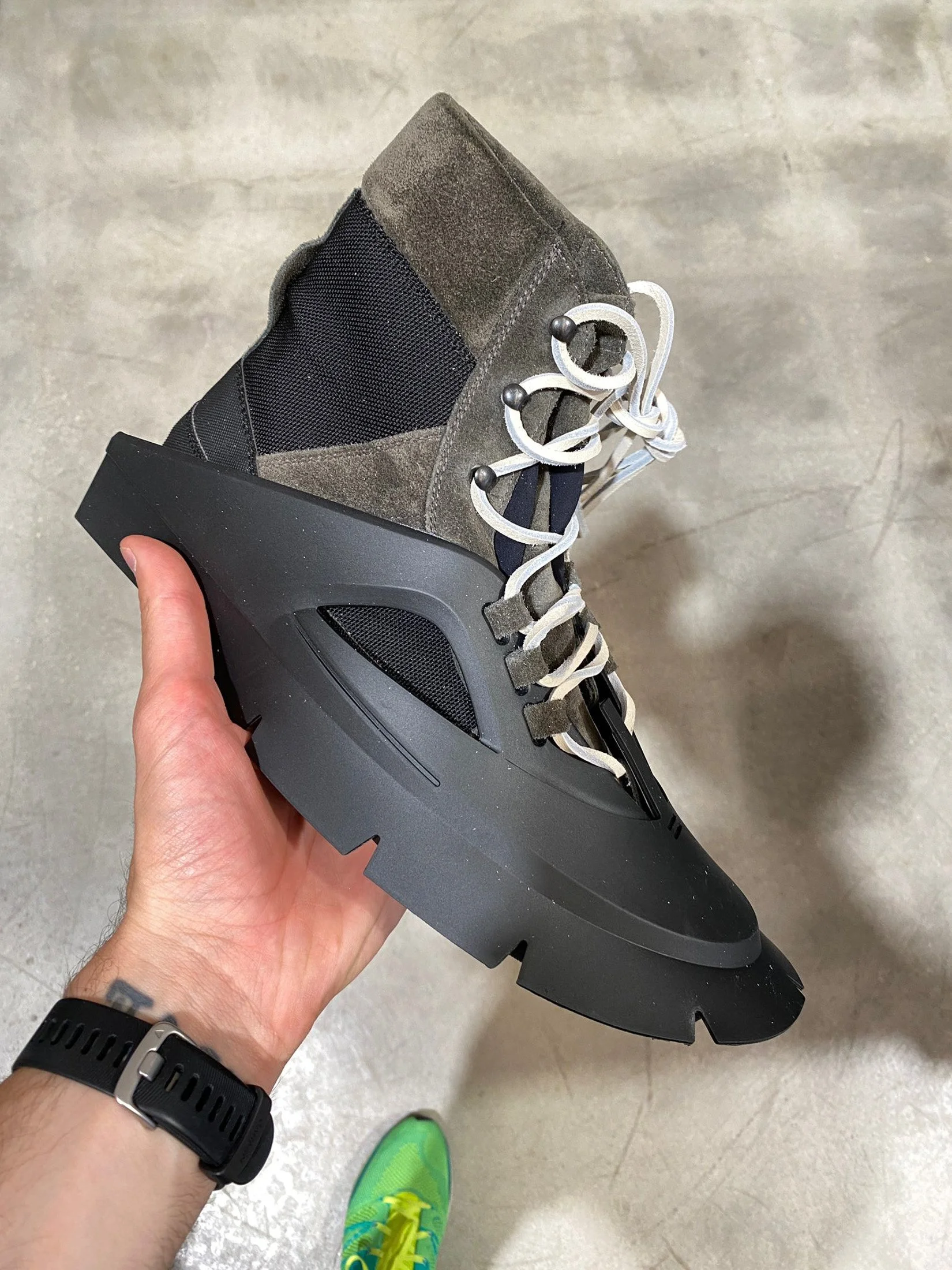
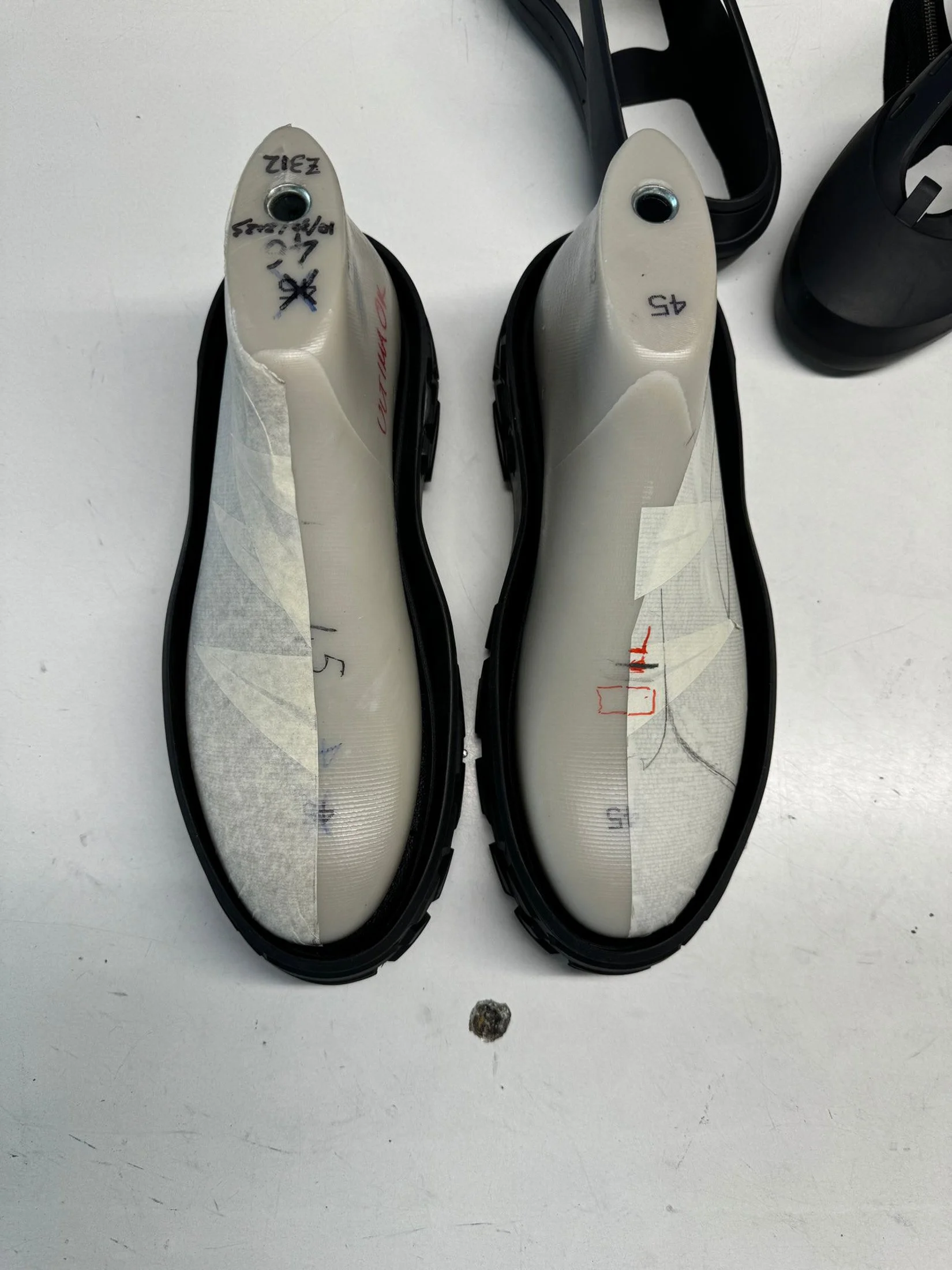
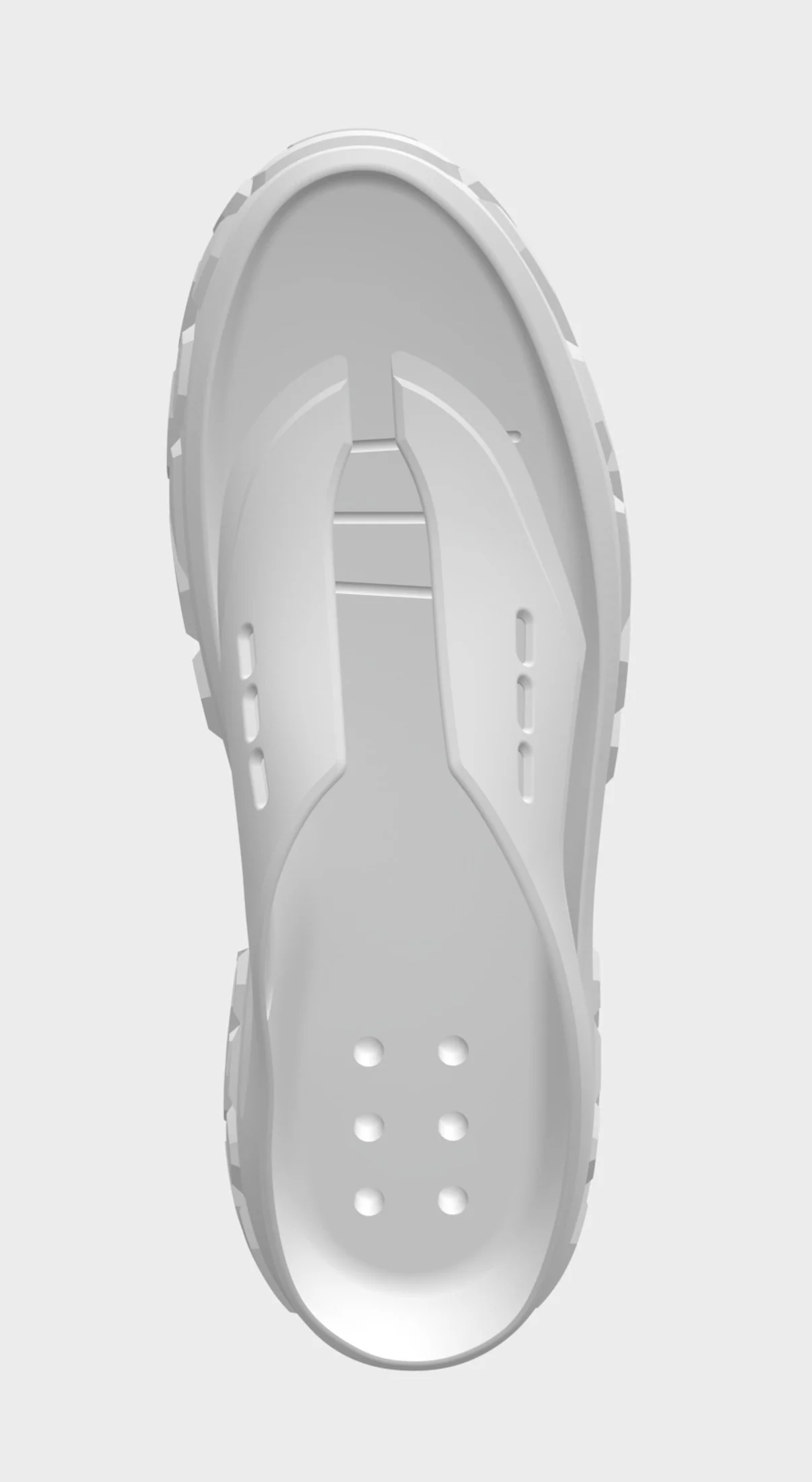
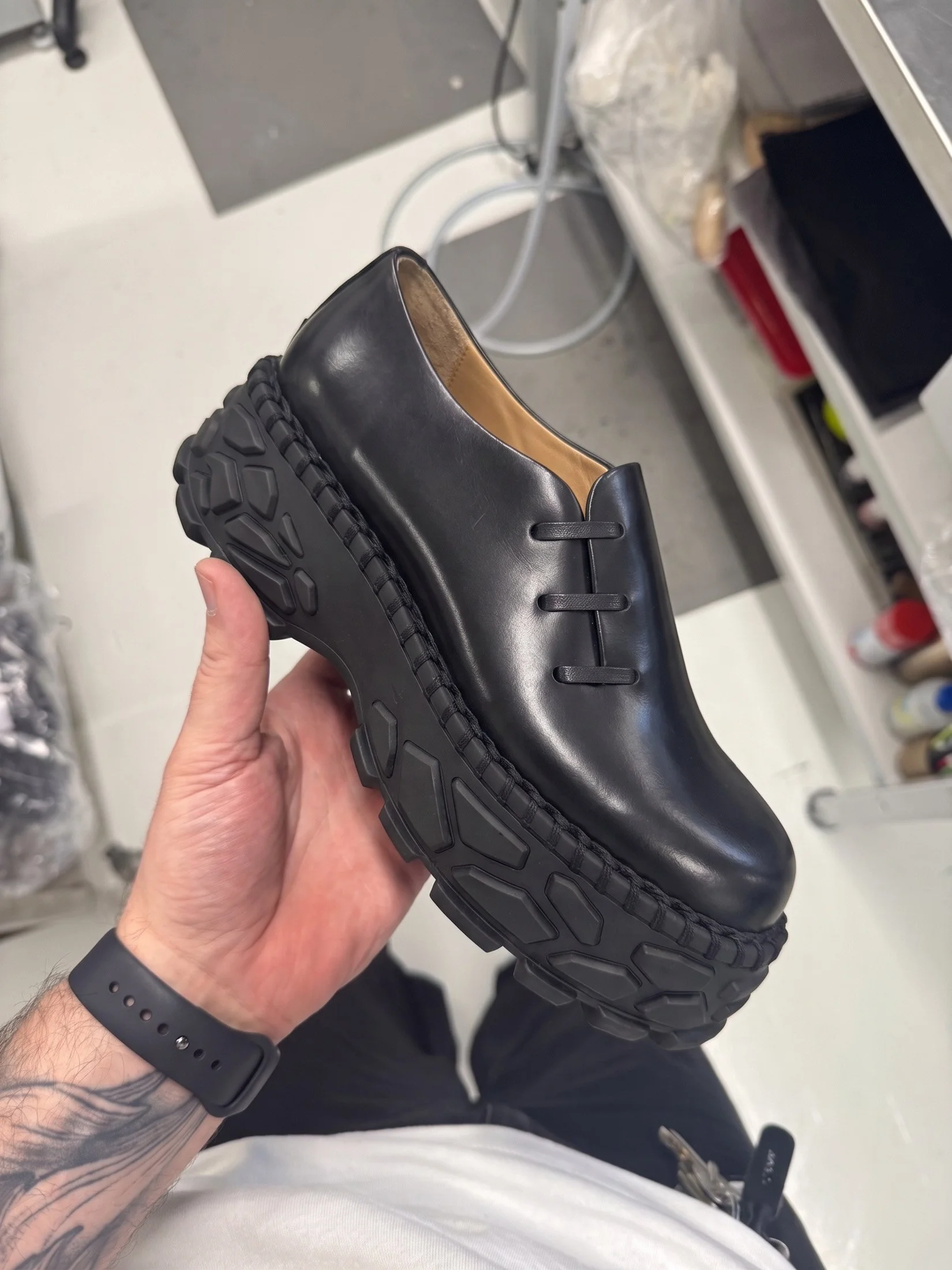
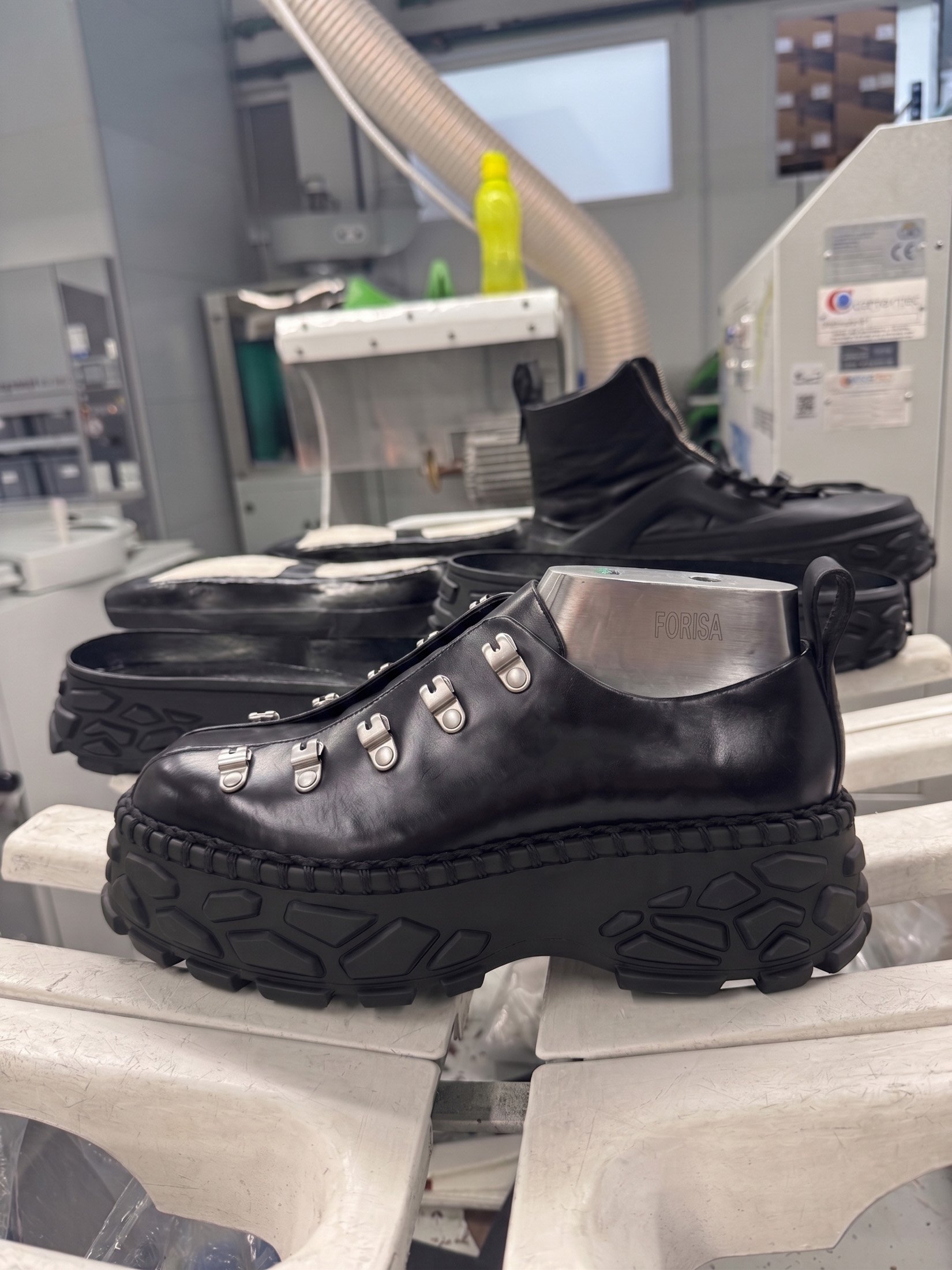
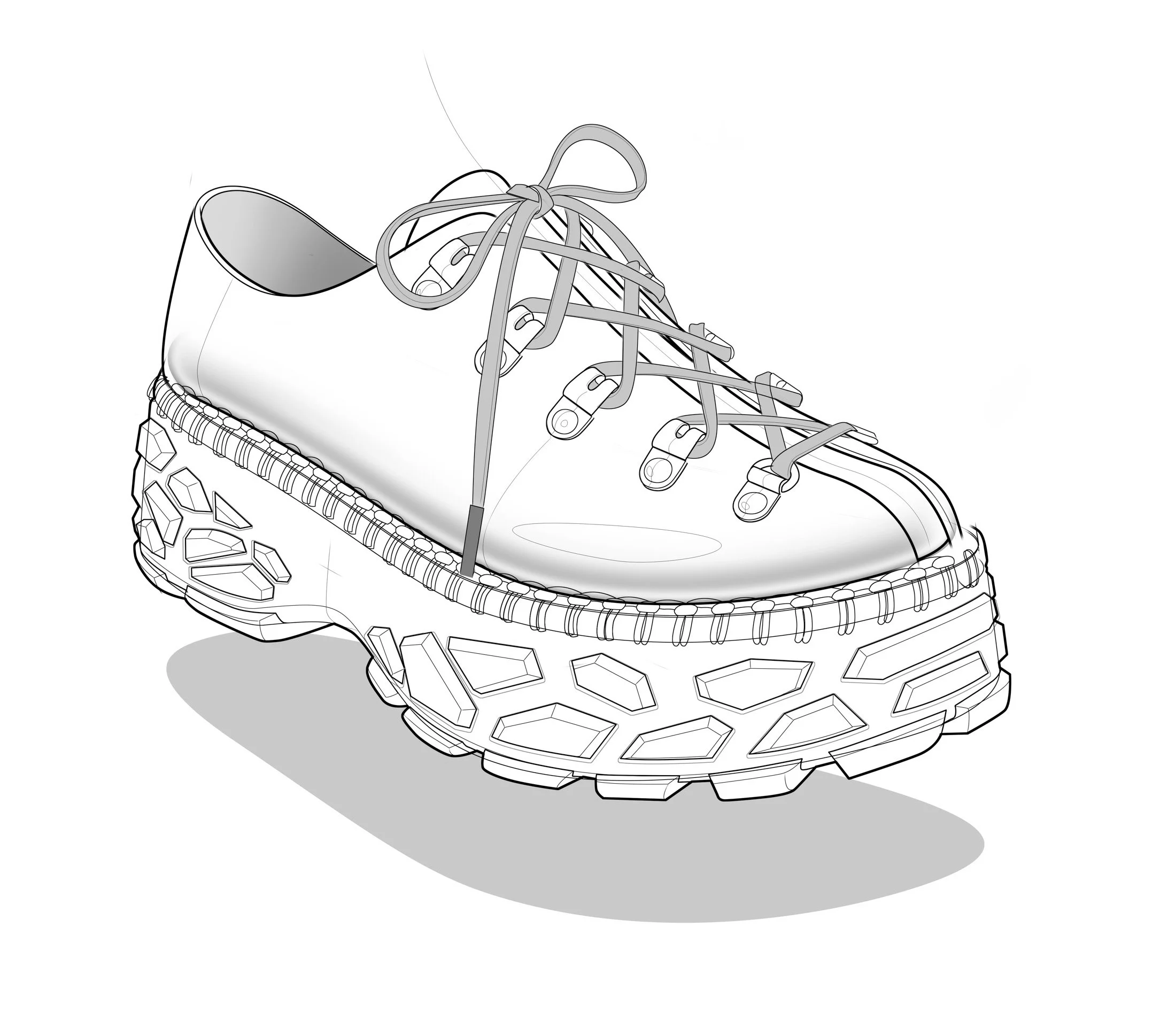
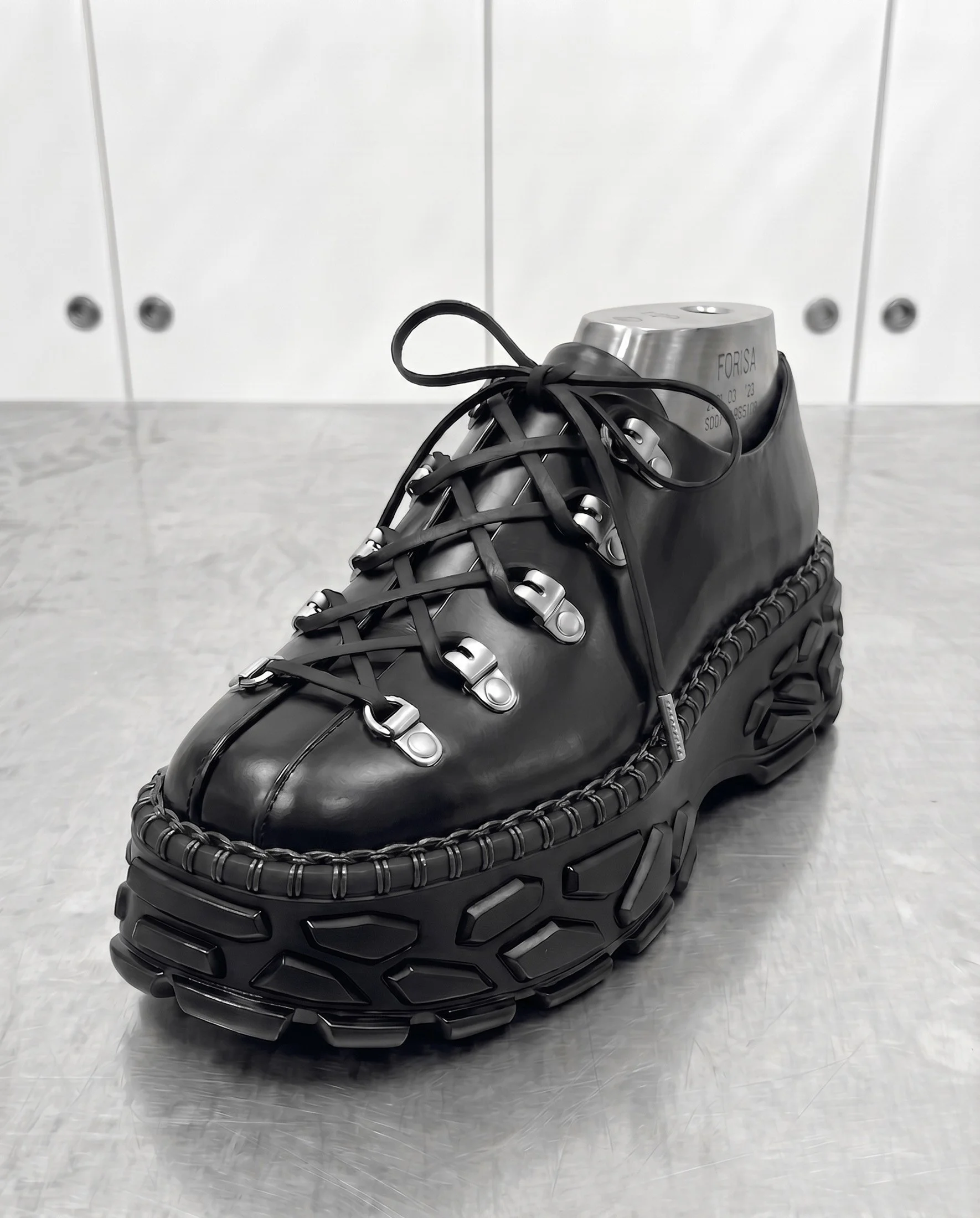
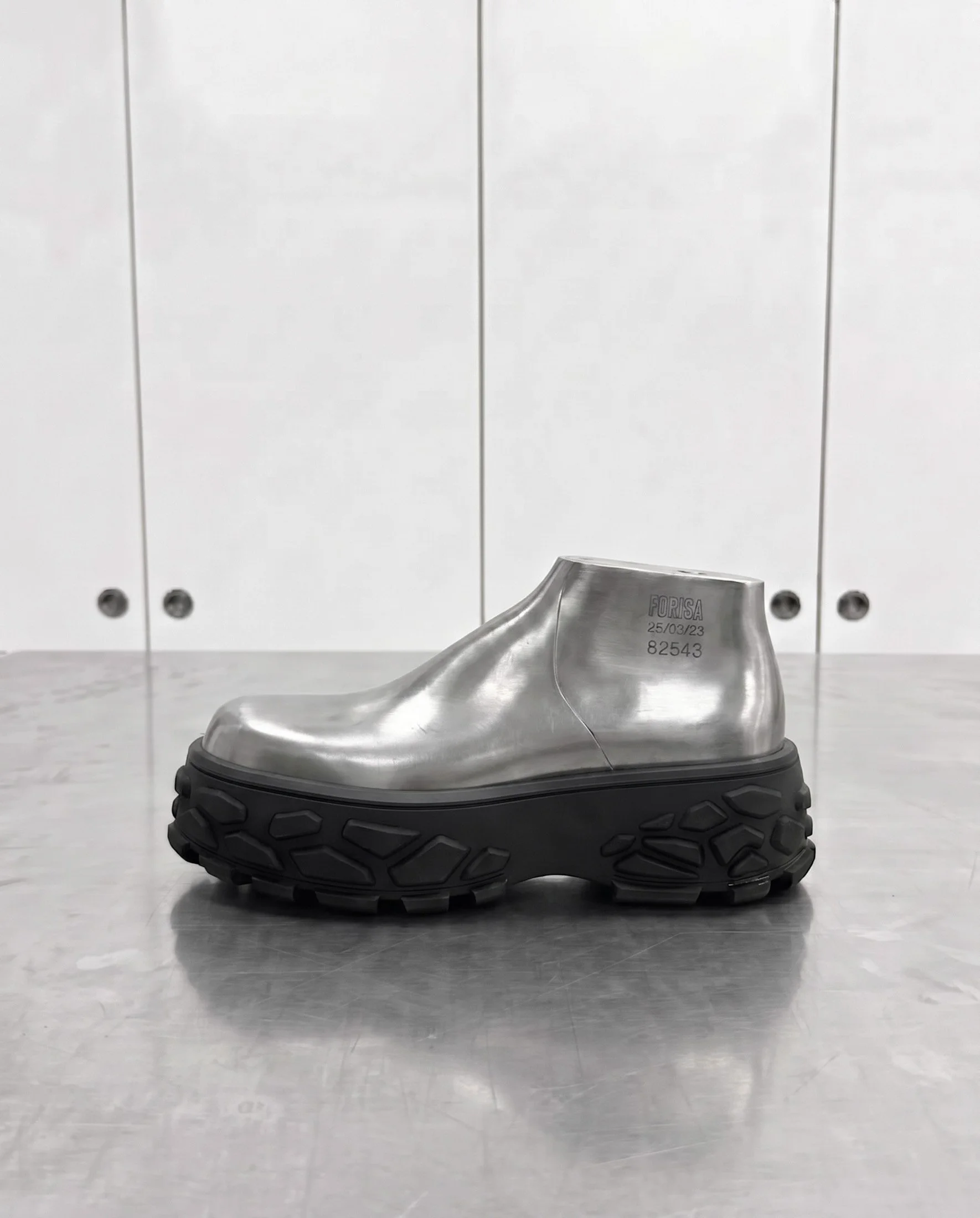
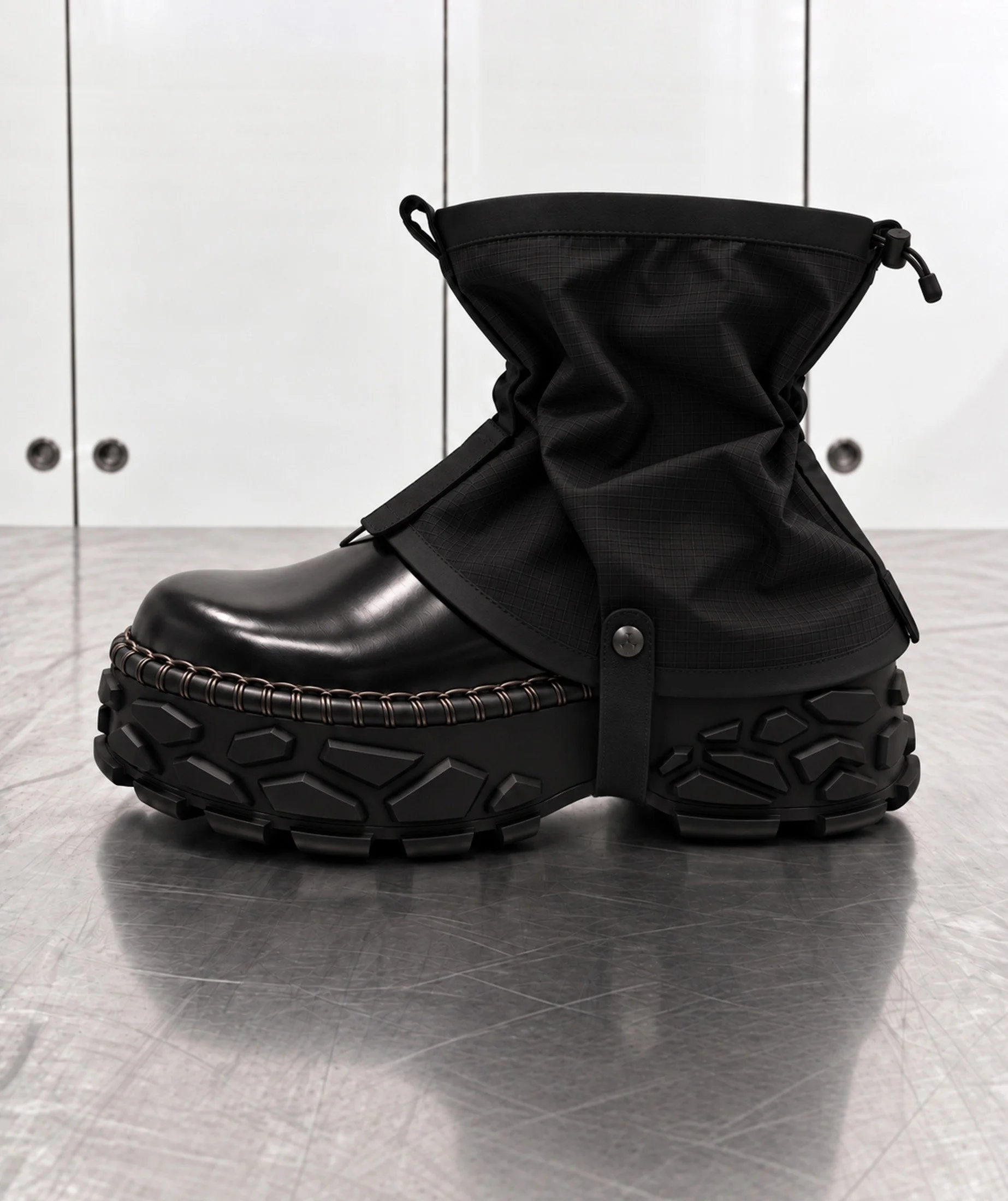
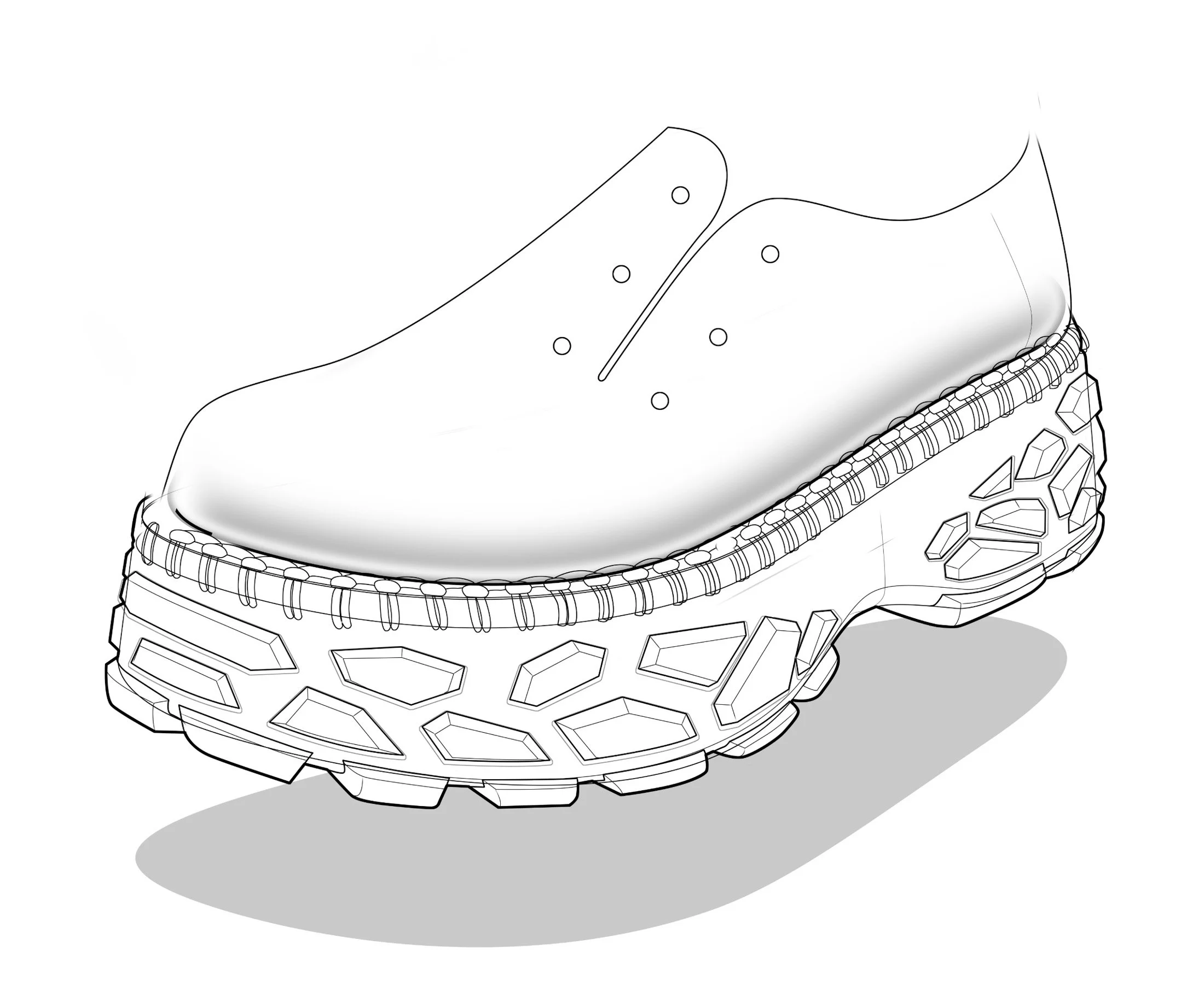
Terracotta replaces that single bonded unit with a sole system developed with Vibram and built in three distinct layers. At the base is a retention chassis with an open skeletal geometry that aligns, secures and distributes force across the platform under load. Engineered for continuous use, it is meant to stay for the life of the shoe. Through the gaps in the chassis passes a replaceable Vibram tread, the primary point of contact between body and terrain, with lug geometries tuned for terrain response, directional control and long-term wear across varying conditions. On top sits an EVA layer built for controlled compression. It locks the system into place and stabilises the assembly under pressure, soft under impact and responsive across changing surfaces. The tread takes the most abrasion, so it is the part designed to come out. Where bonding is involved, the system is designed to release at a low temperature, allowing the components to separate without damaging the upper. Making the shoe come apart has to be accounted for while it is being put together.
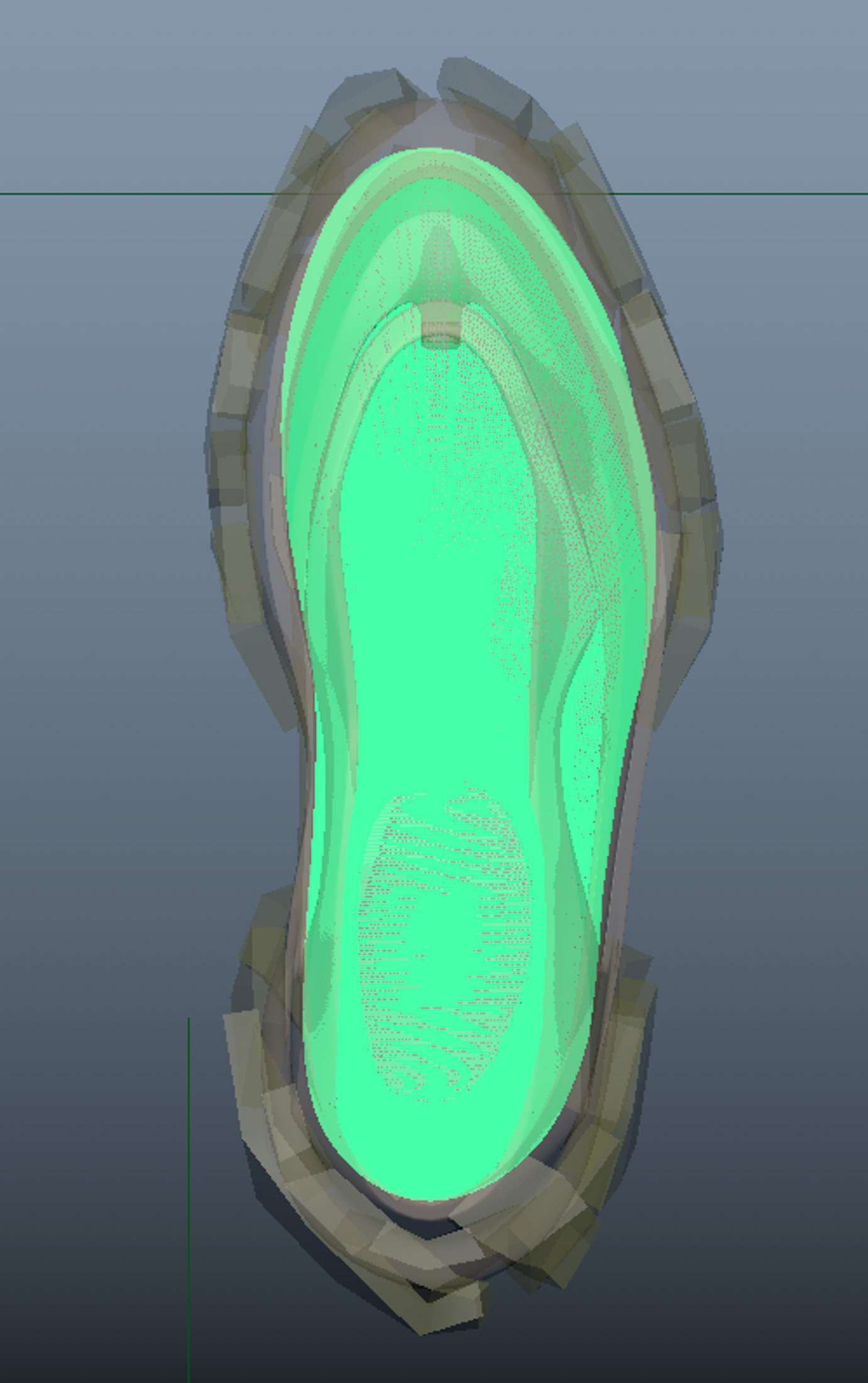
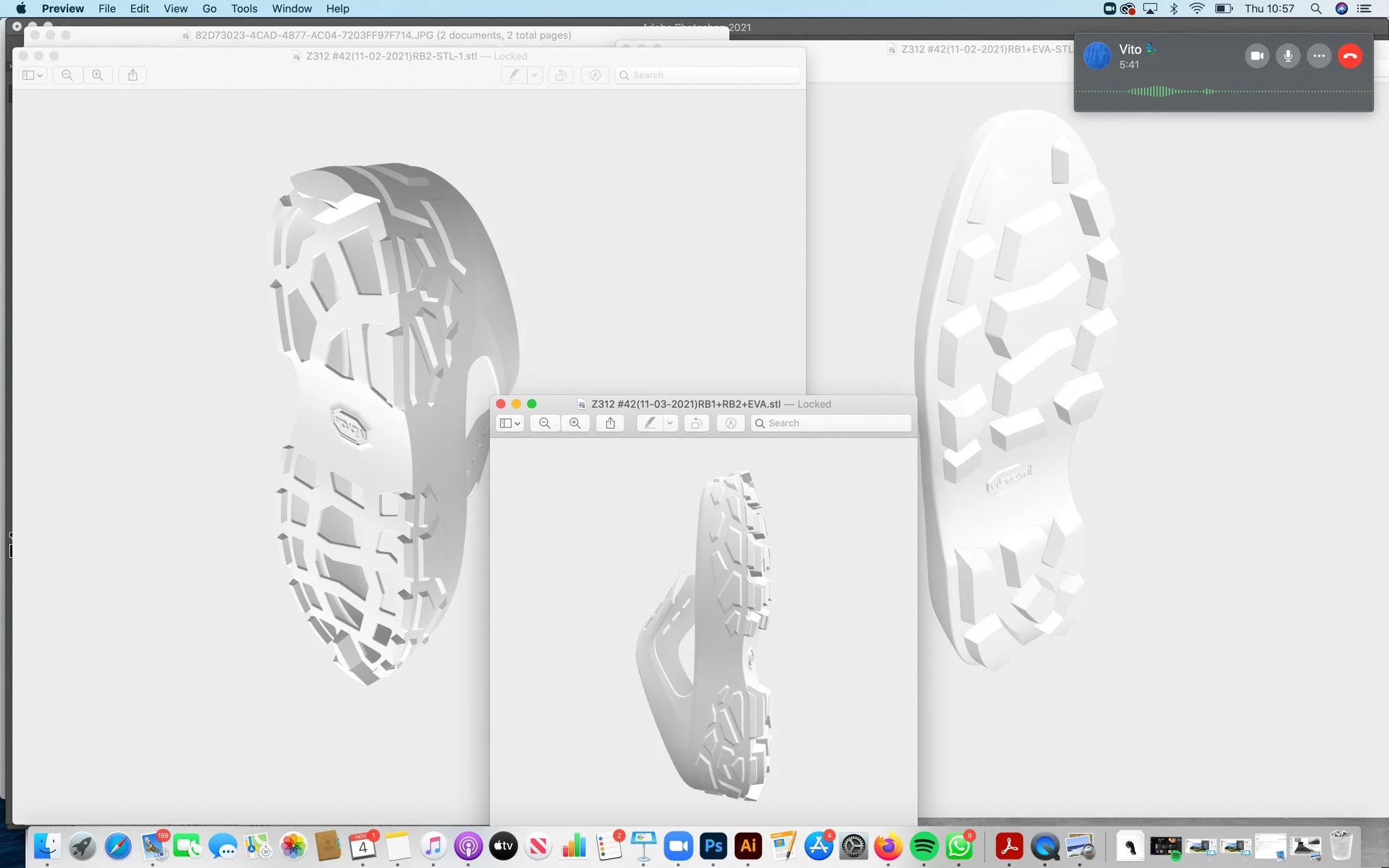
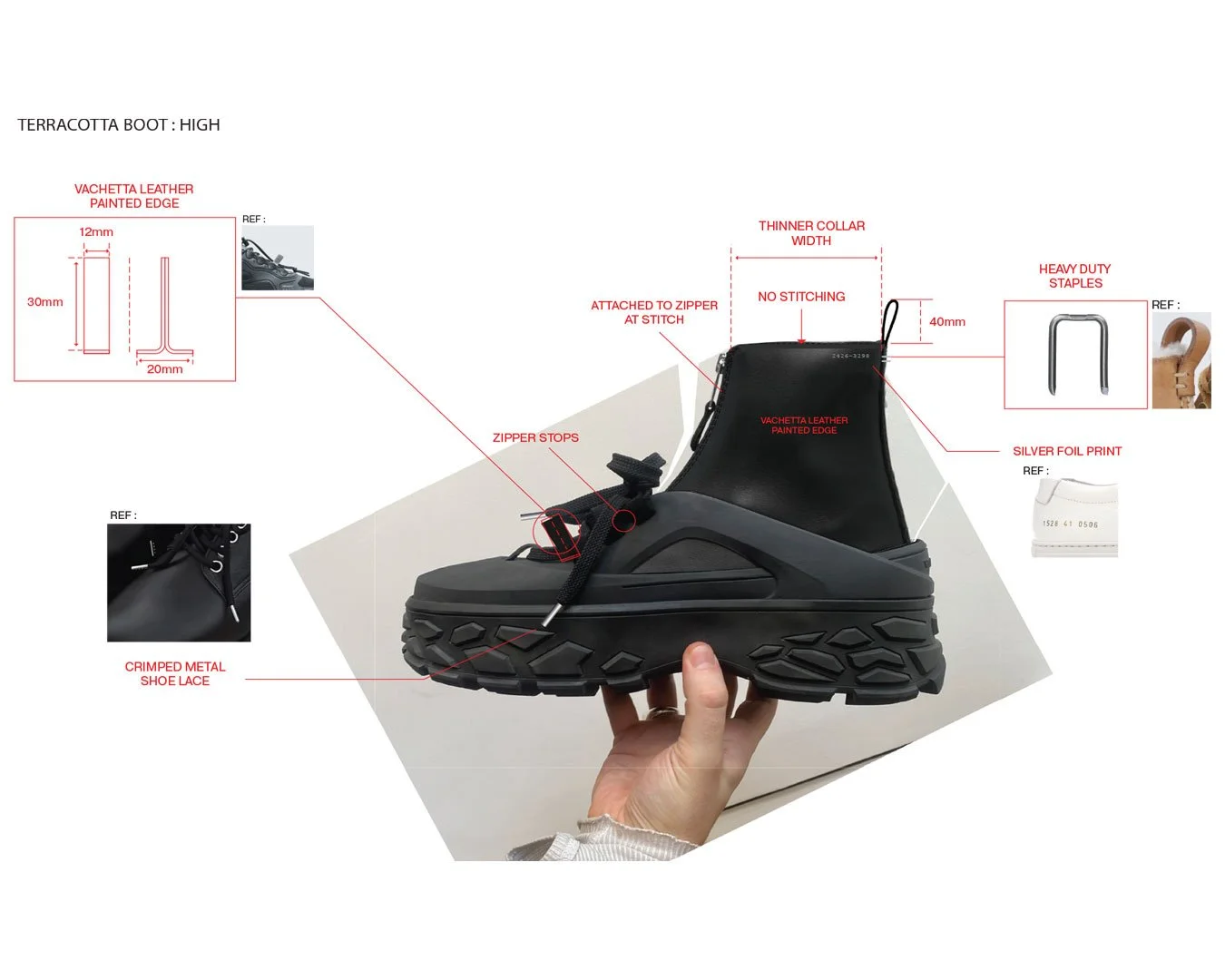
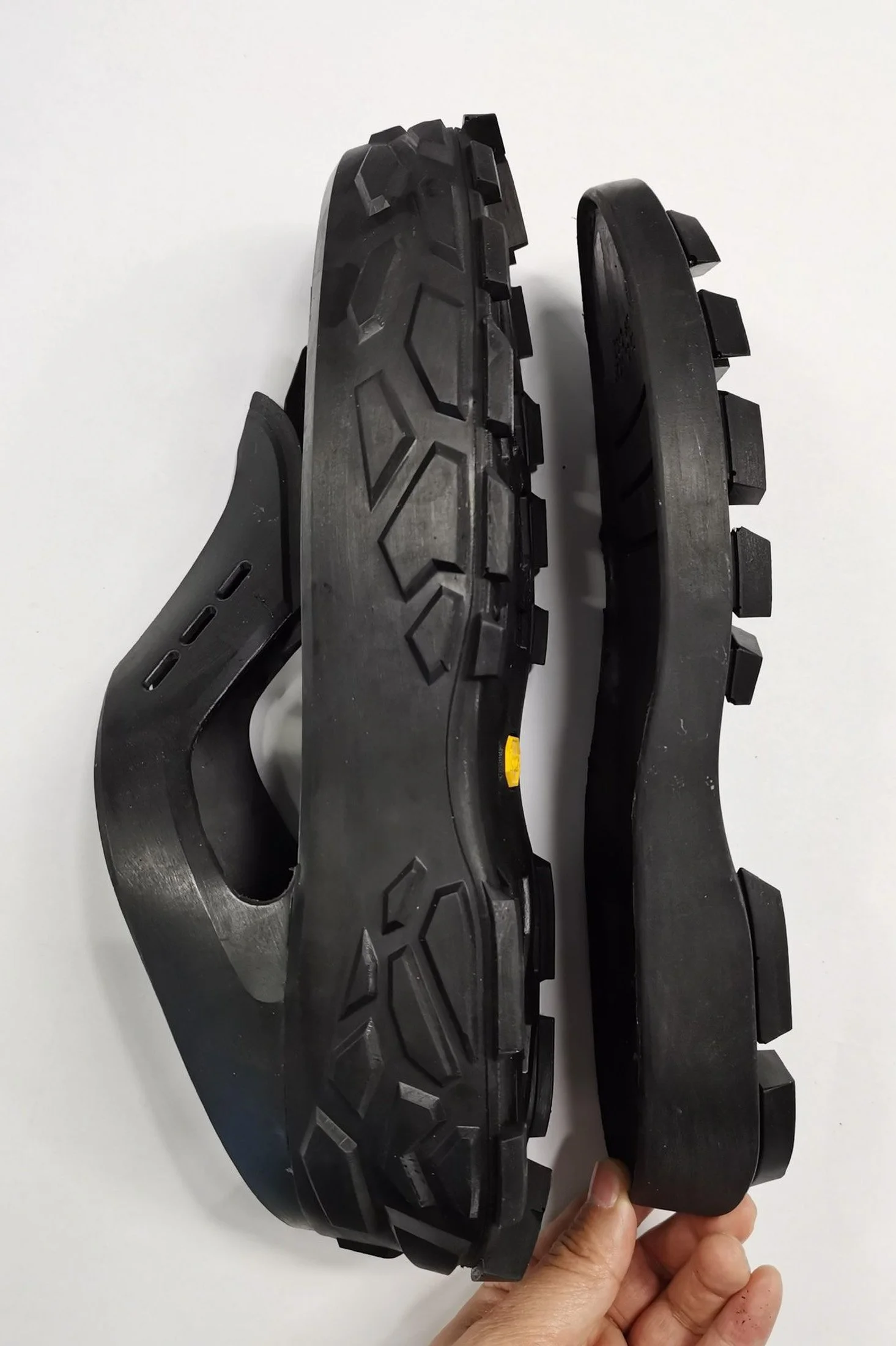
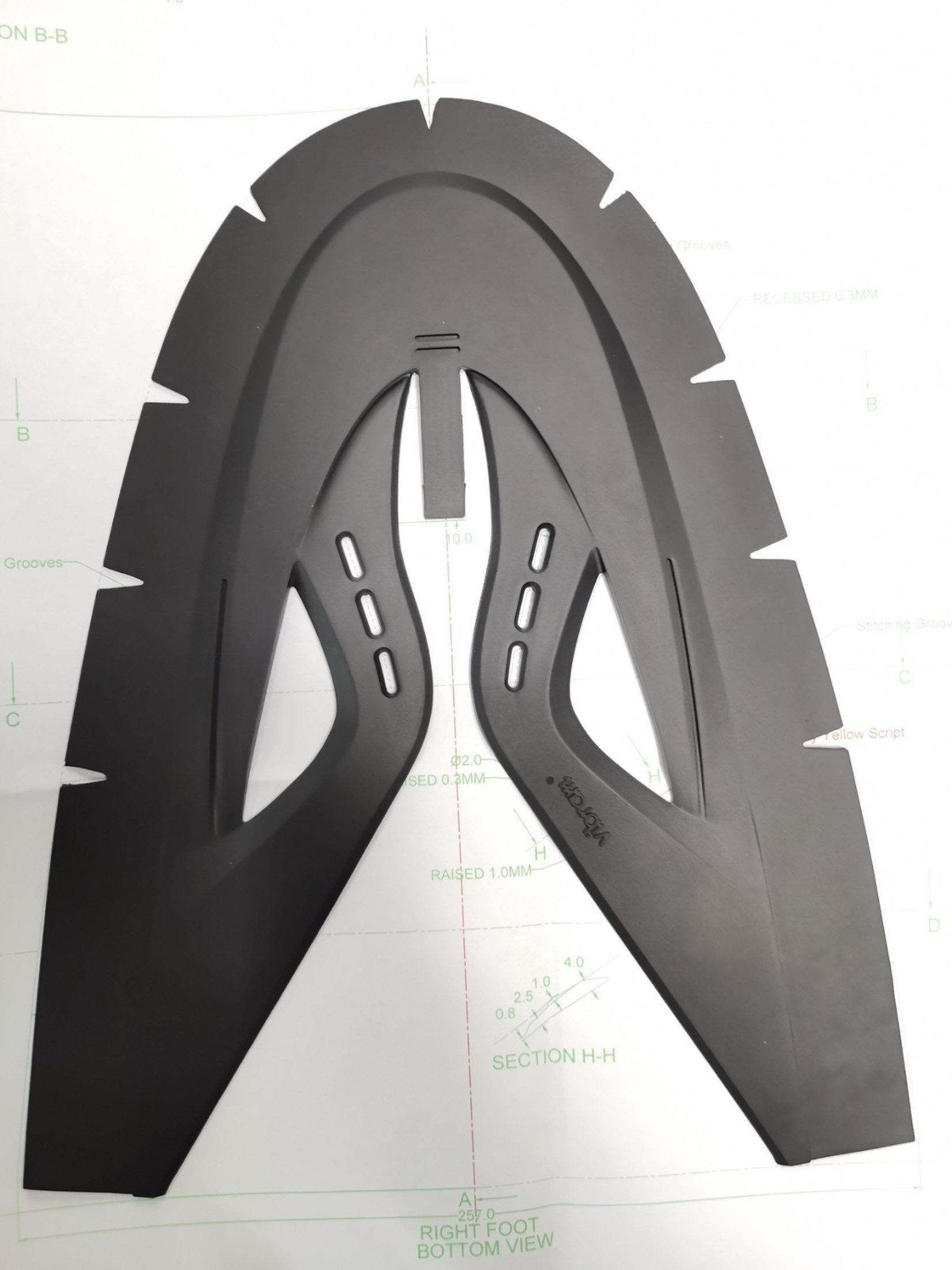
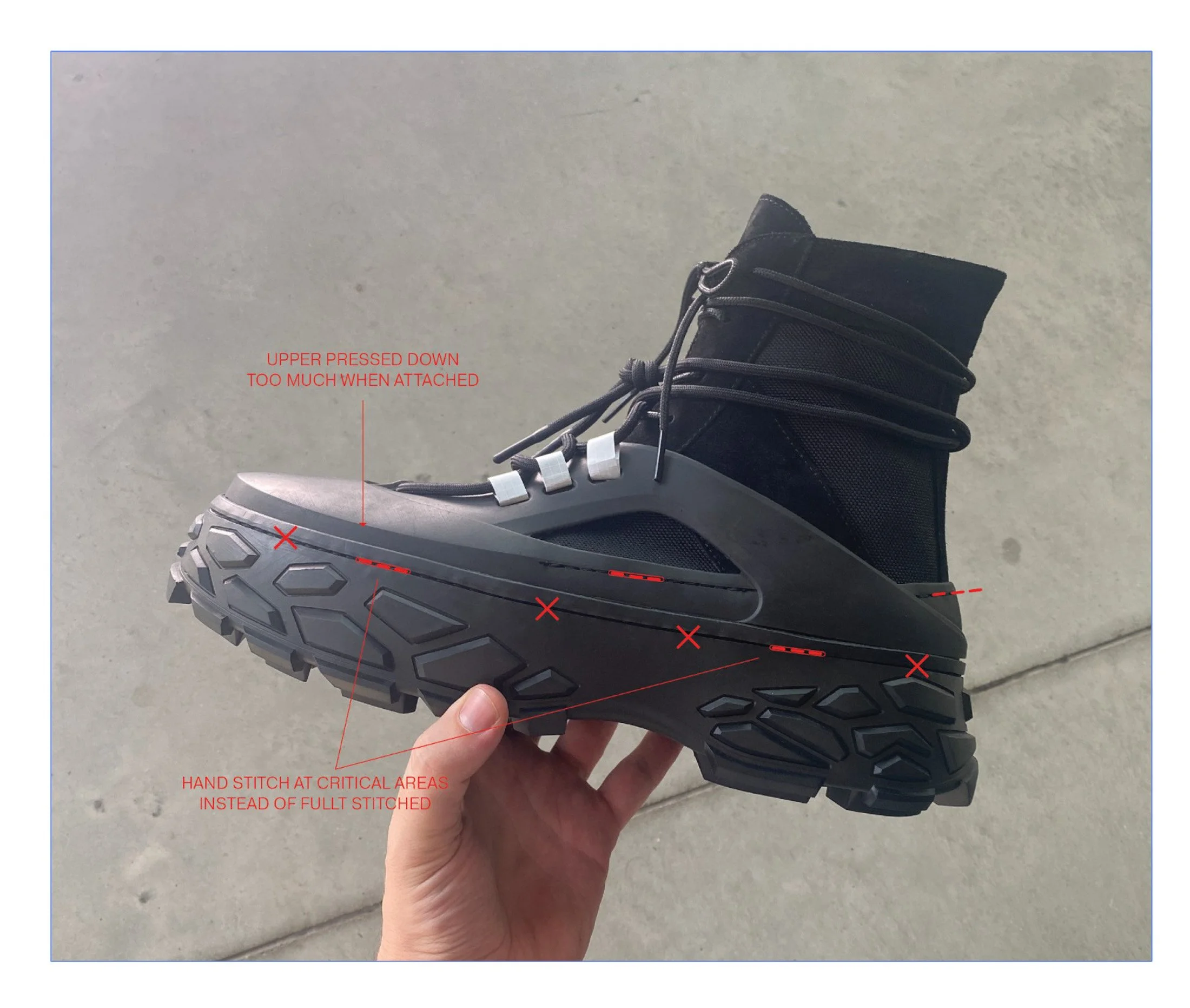
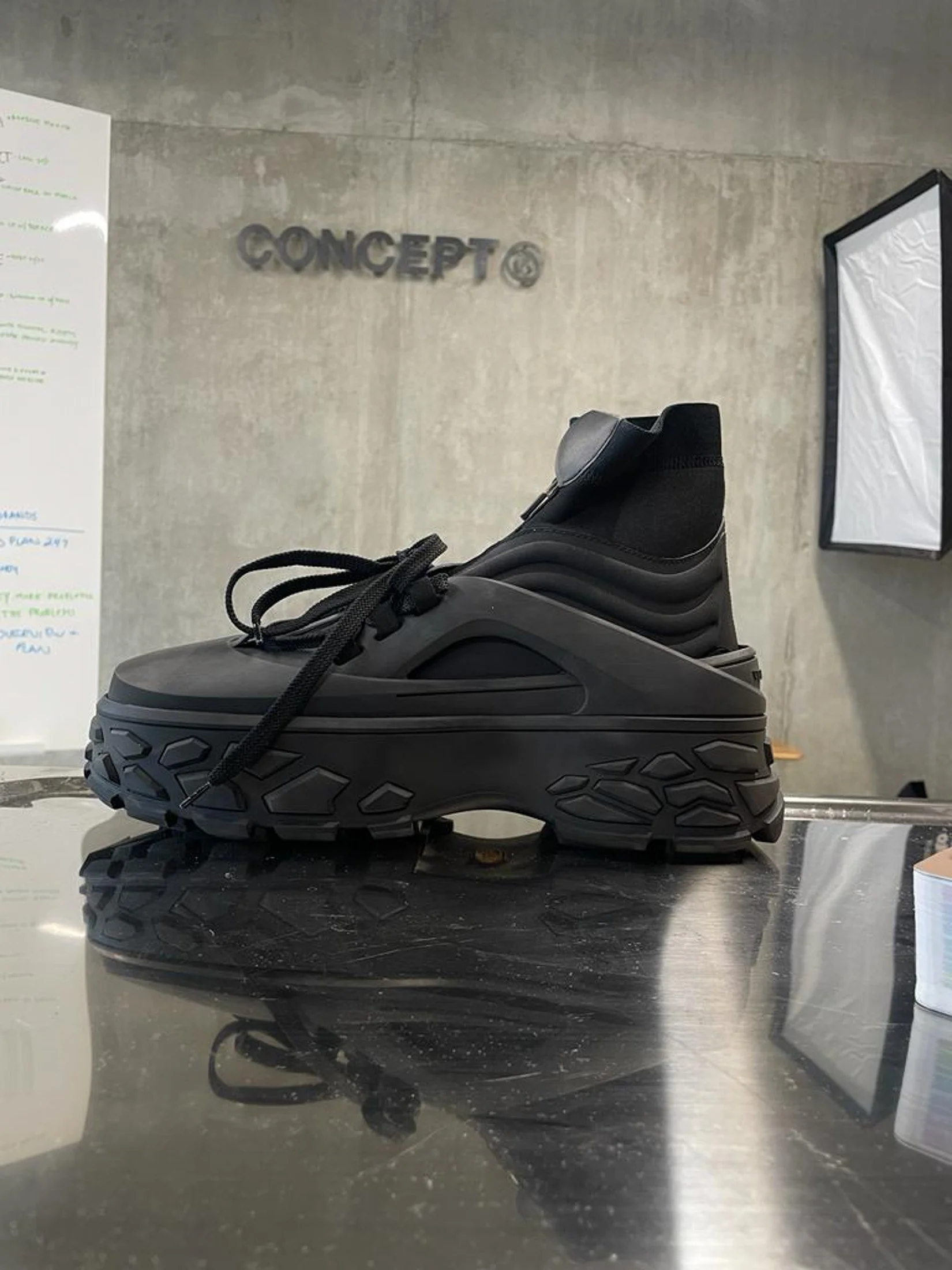
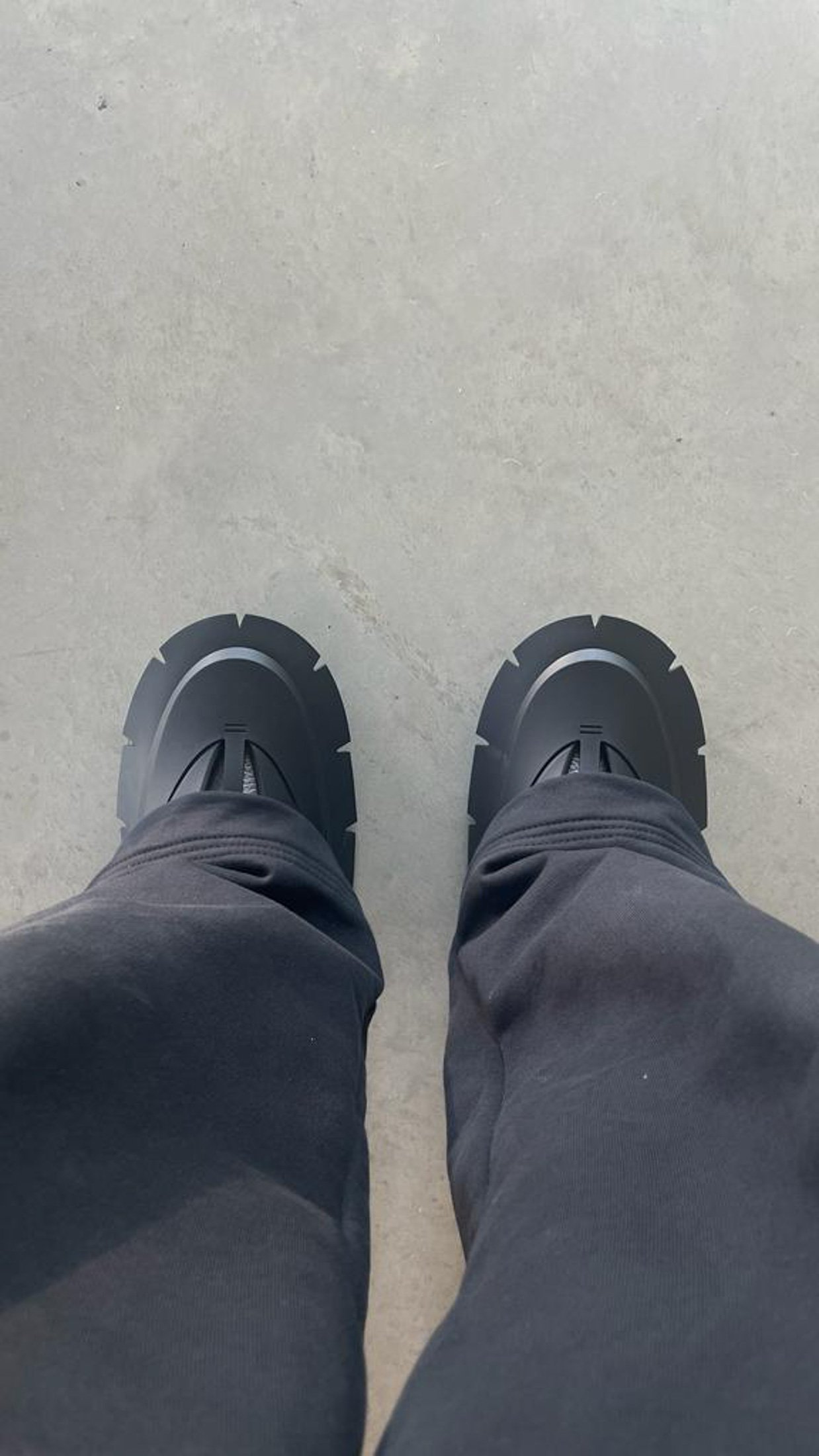
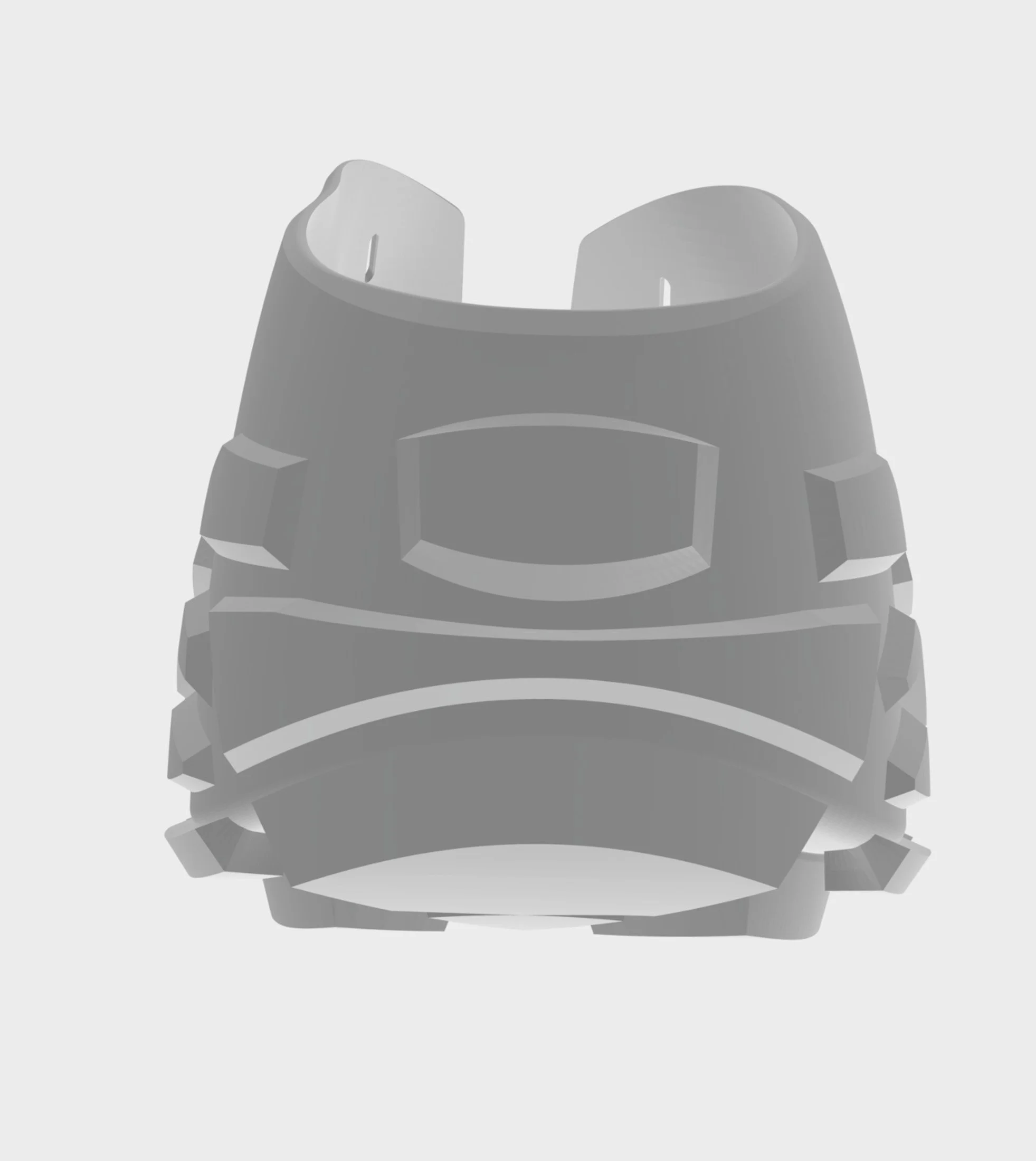
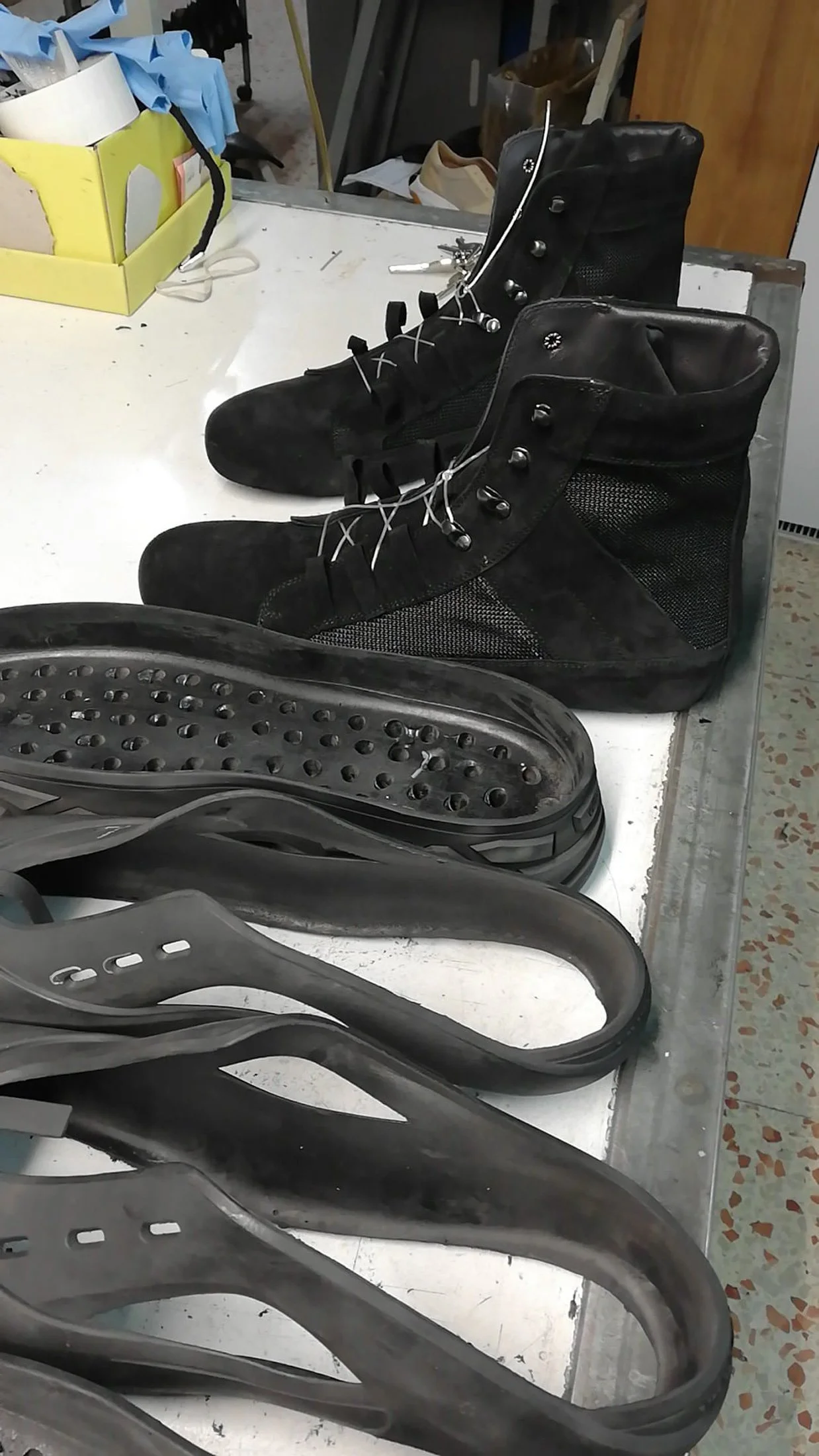
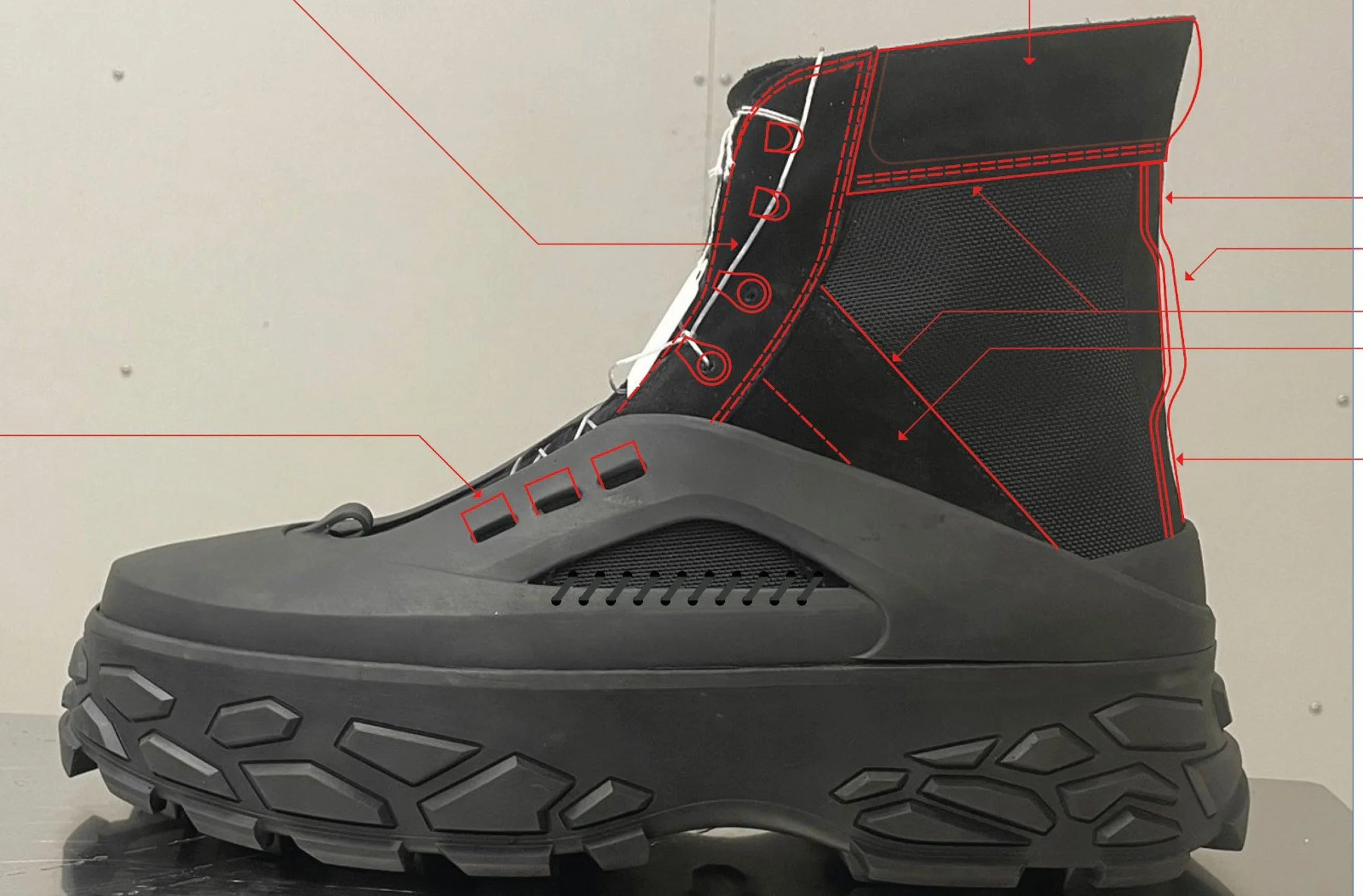
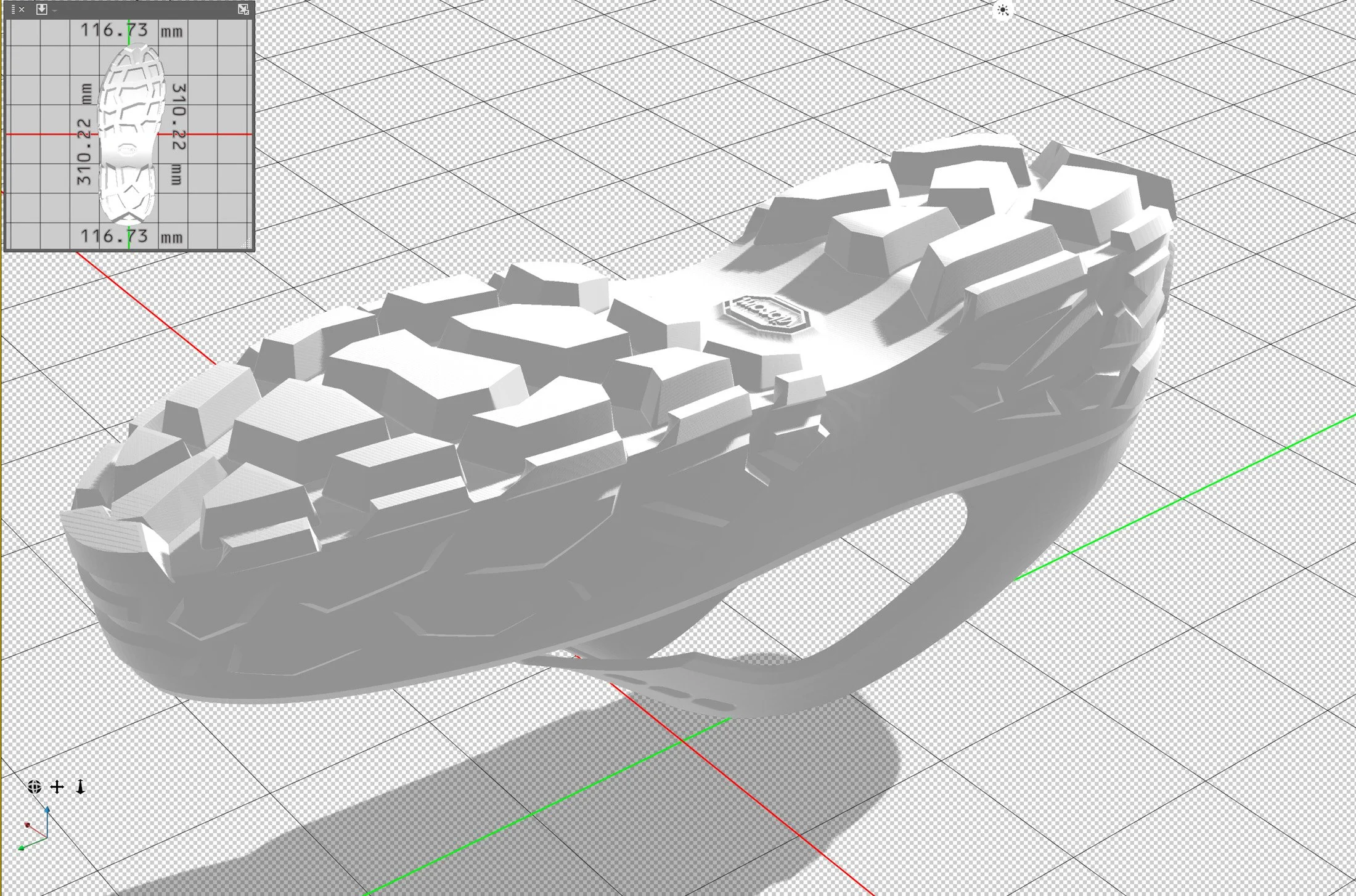
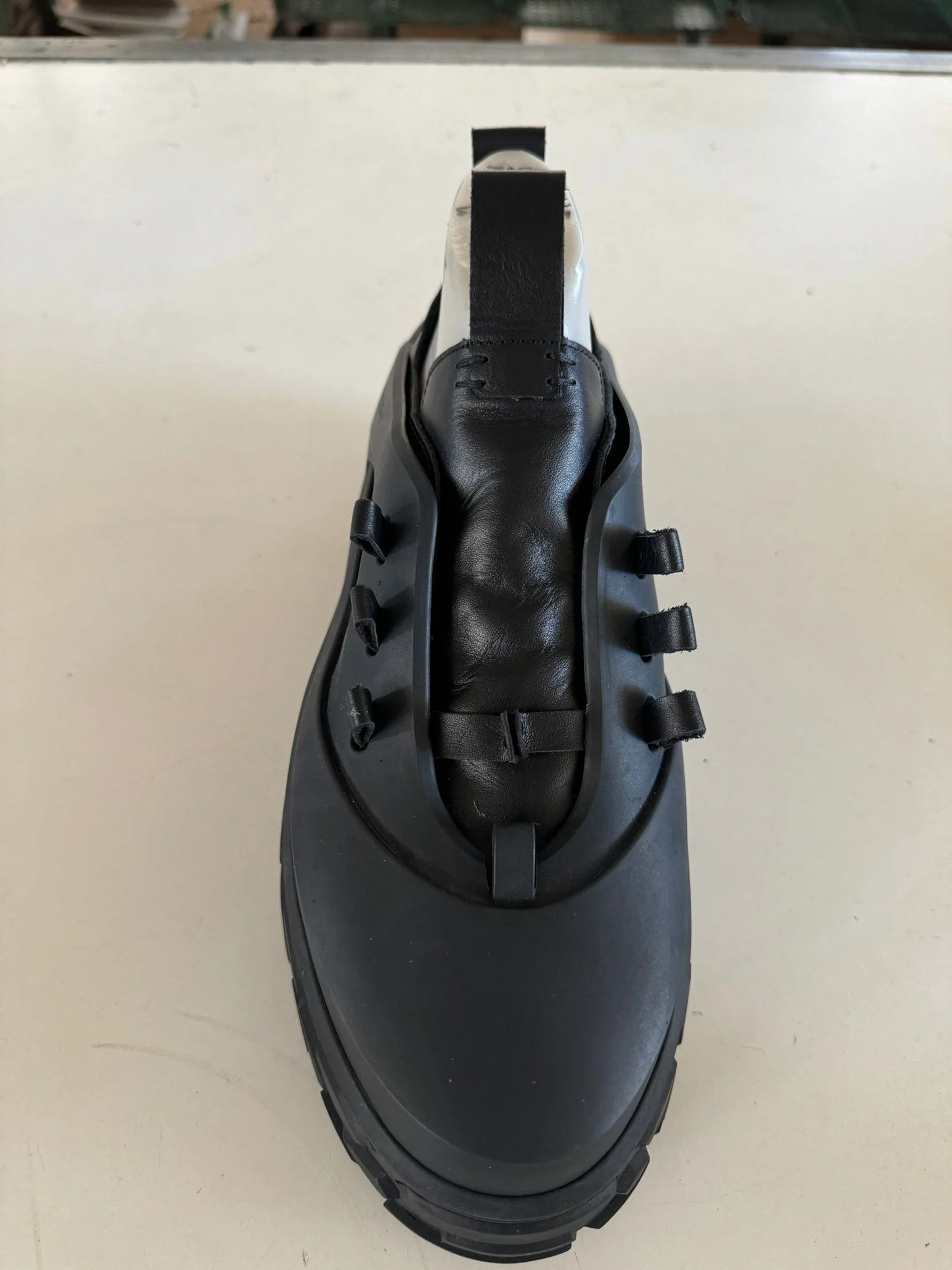
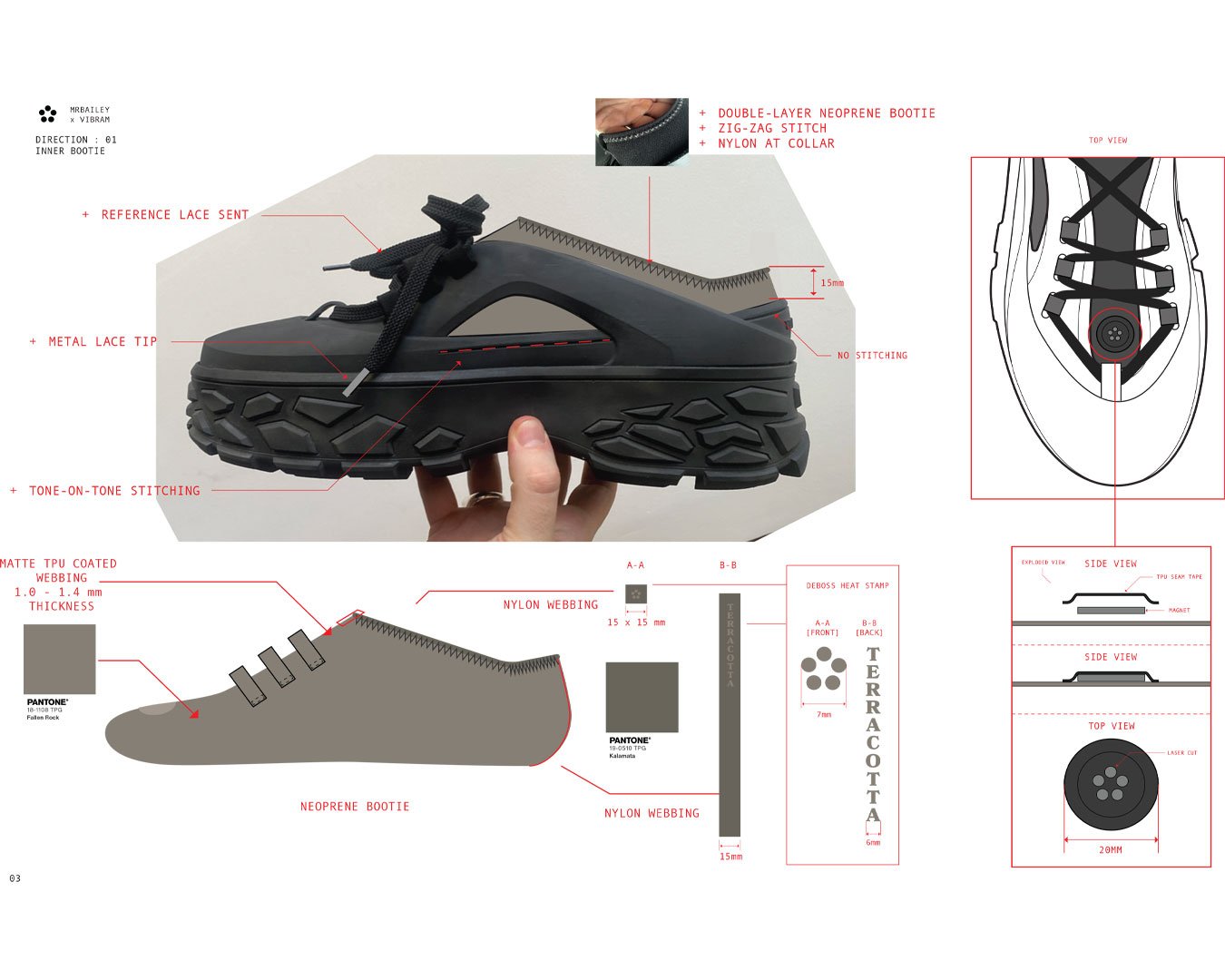
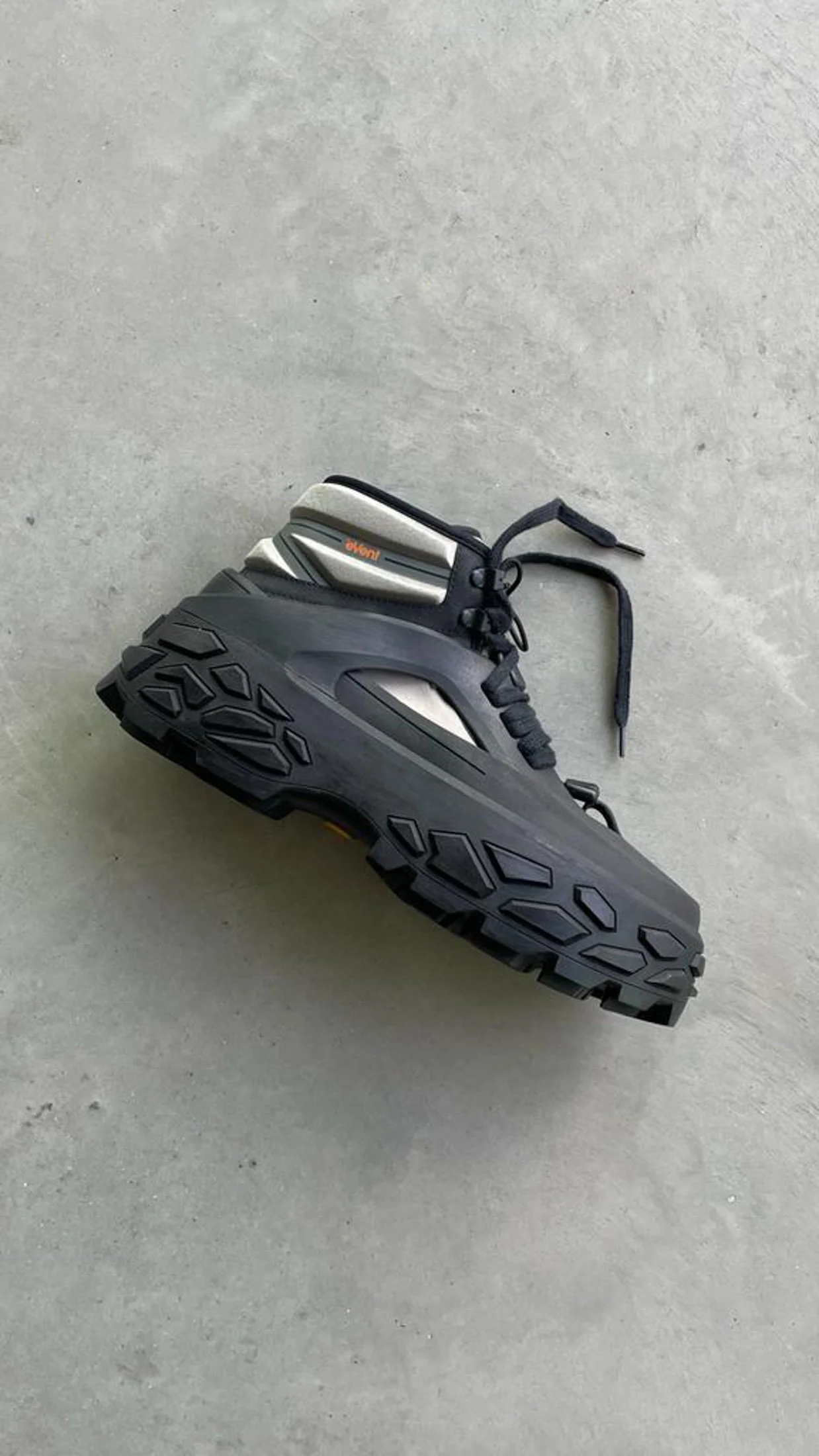
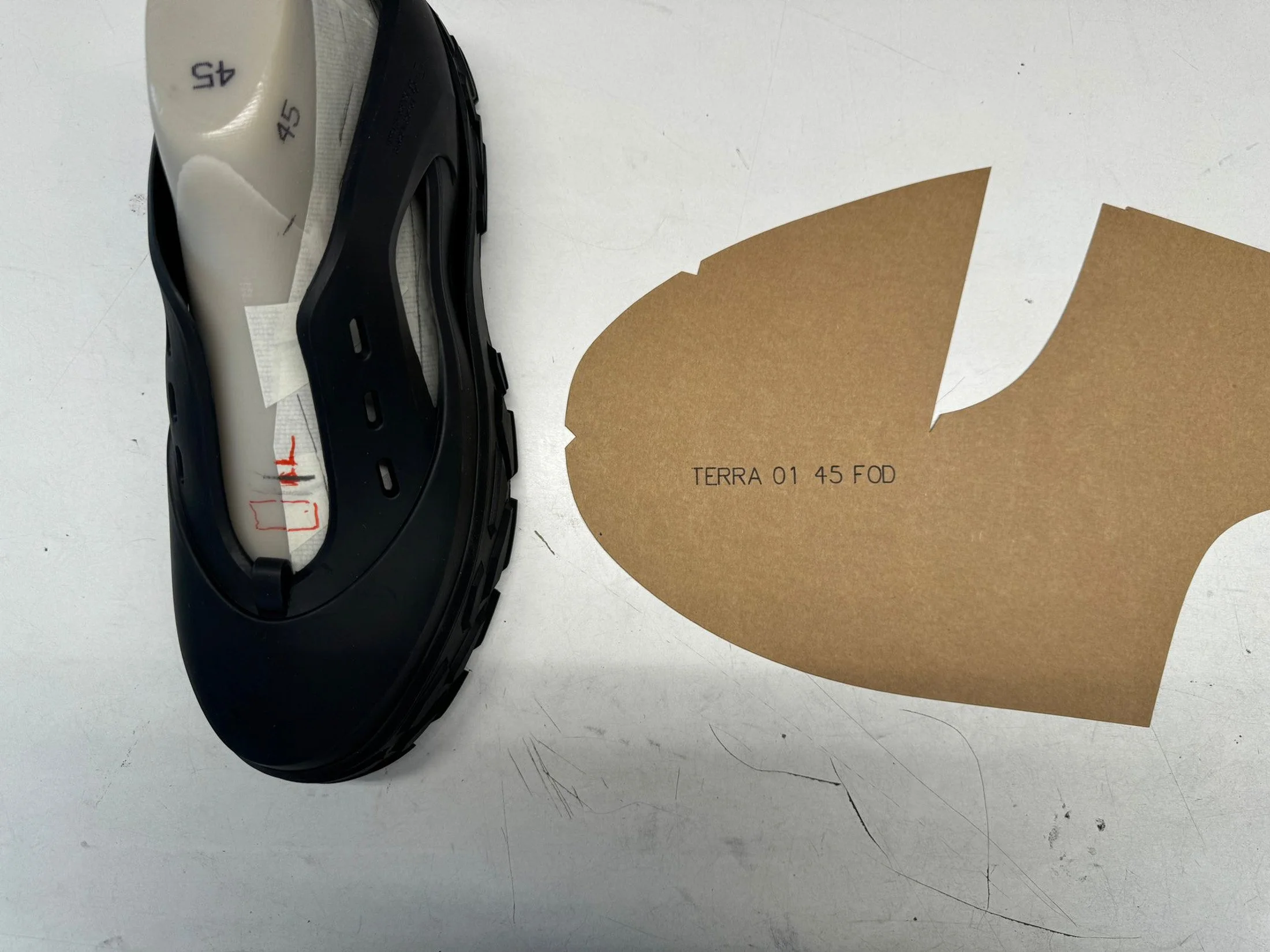
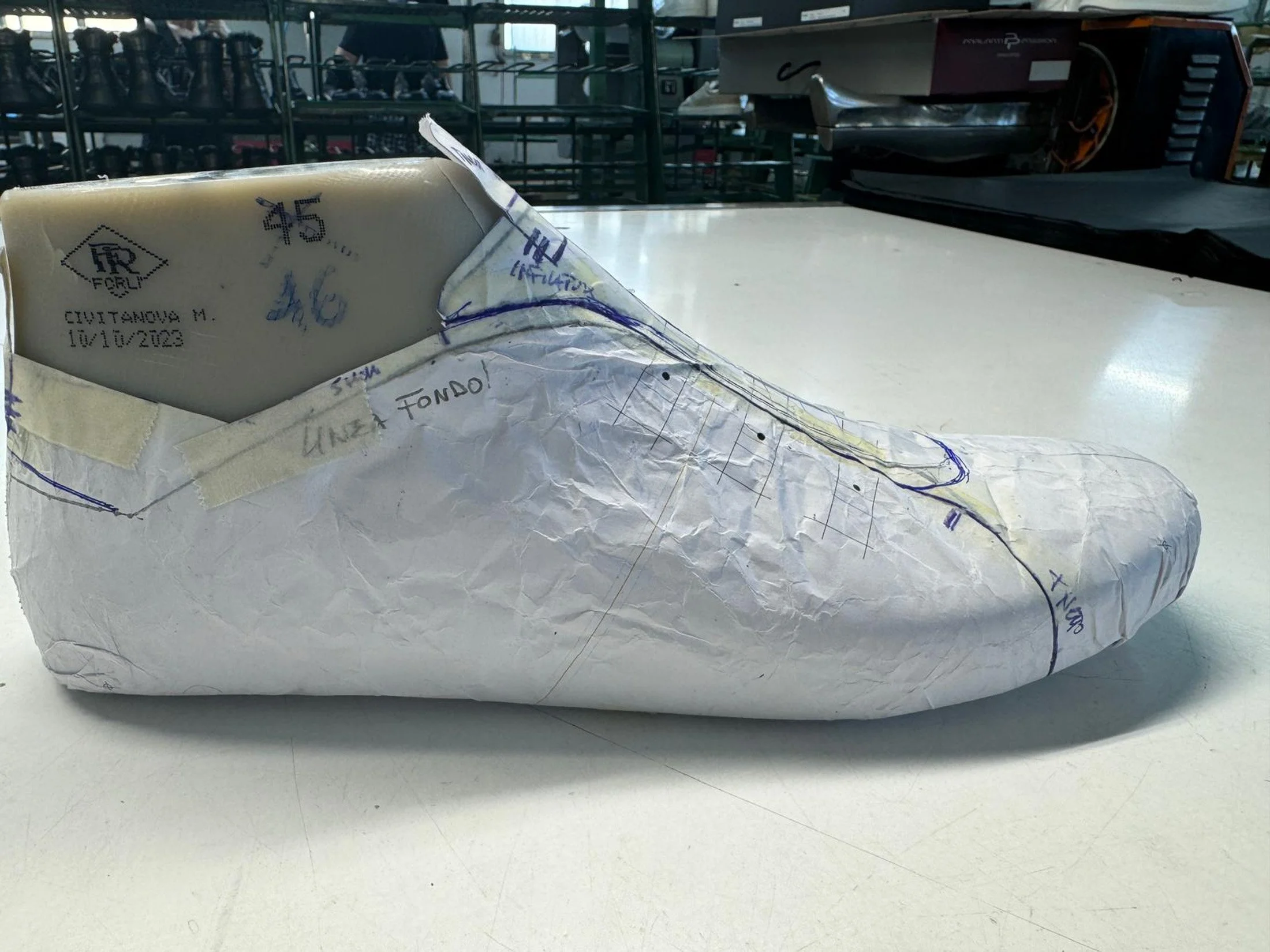
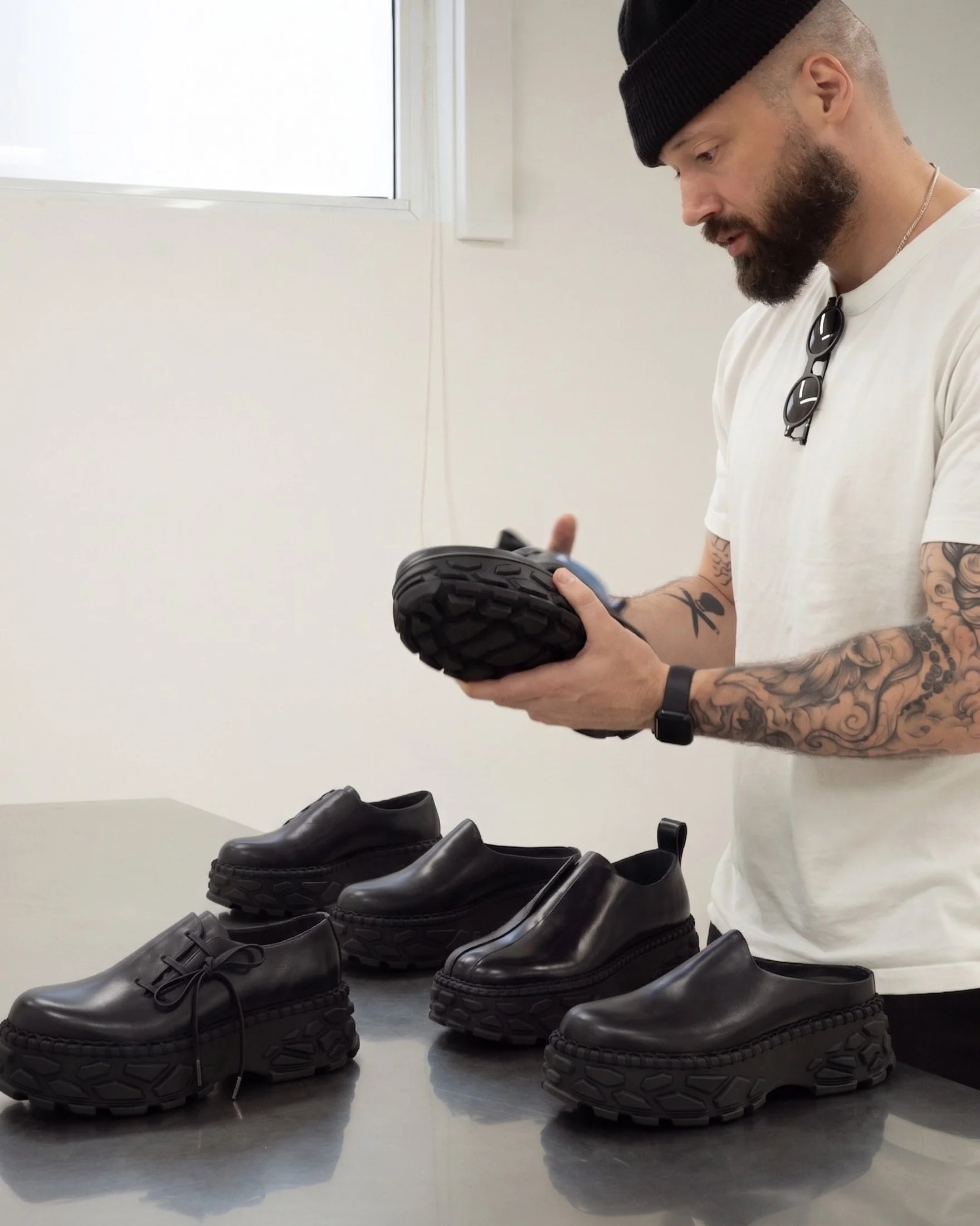
The tread also carries our origin story. Terracotta means baked earth, and the irregular lug pattern is drawn from the fractured surface of dried ground. The cracked clay is translated into industrial tooling. It was this design that first prompted our exploration into modular outsole construction, and getting it to work took most of those six years.
The hardest part was time. Bringing it out now was no easier than it would have been when Daniel first designed it. The engineering alone took roughly four and a half years, much of it spent on rubber and foam compounds that could stand up to wear while still allowing the disassembly the concept depends on. Then there was the tooling. Molds are expensive, and every revision costs. An early version took a different route entirely, forming the upper in the same mold as the midsole. That one-piece approach proved slow to develop and was eventually reworked into the layered system.
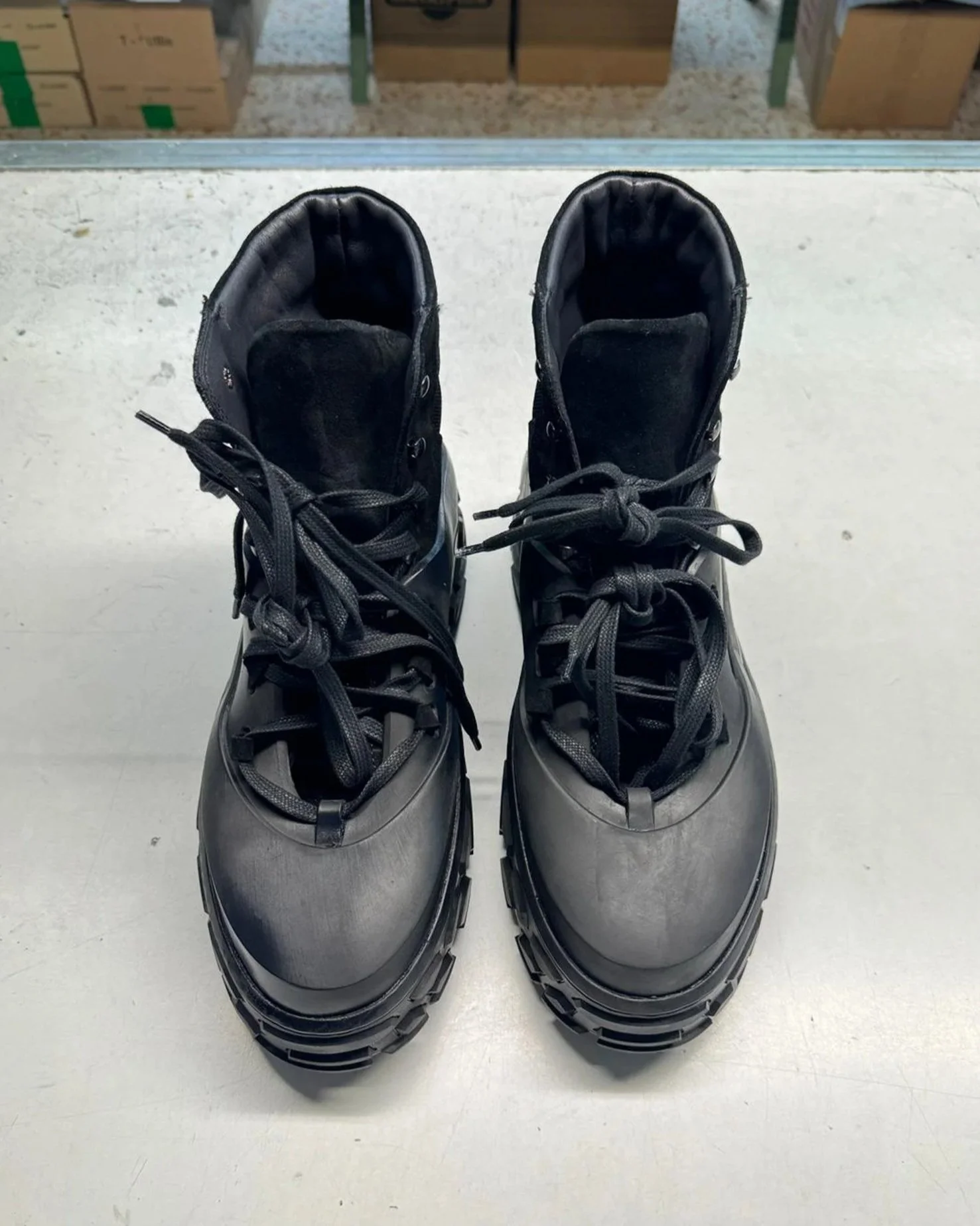
Six years is a long time in footwear. In this day in age taste shifts rapidly and the conversation around repair is also always in flux. It's interesting to release something conceived in a different moment and see how it reads today. If anything, the timing makes the case for a shoe built to outlast trends arrives having already outlasted a few. Like the design, the process is modular, and creativity is always shifting. The shoe changed over those years, and the system around it is designed to keep changing.
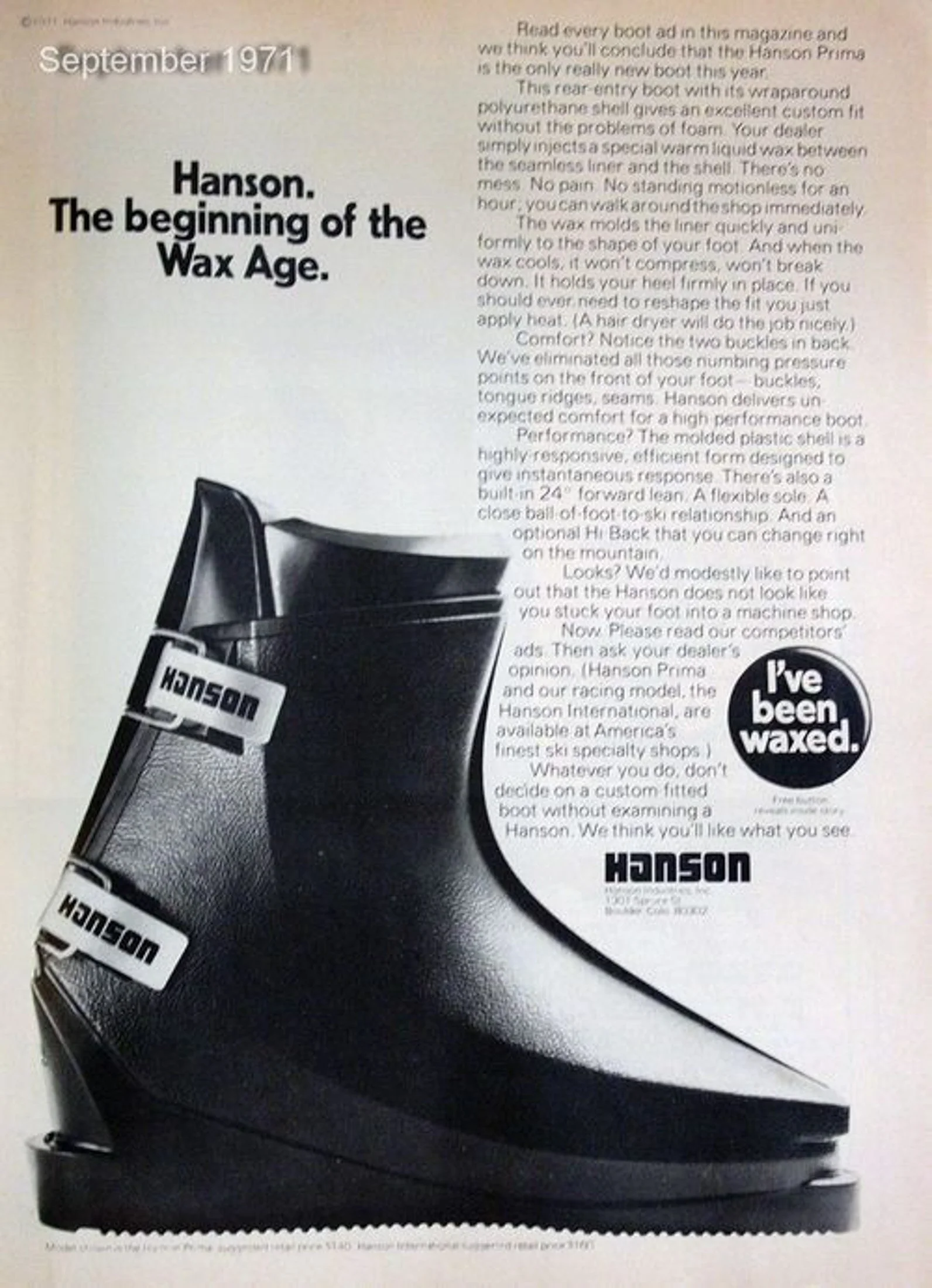
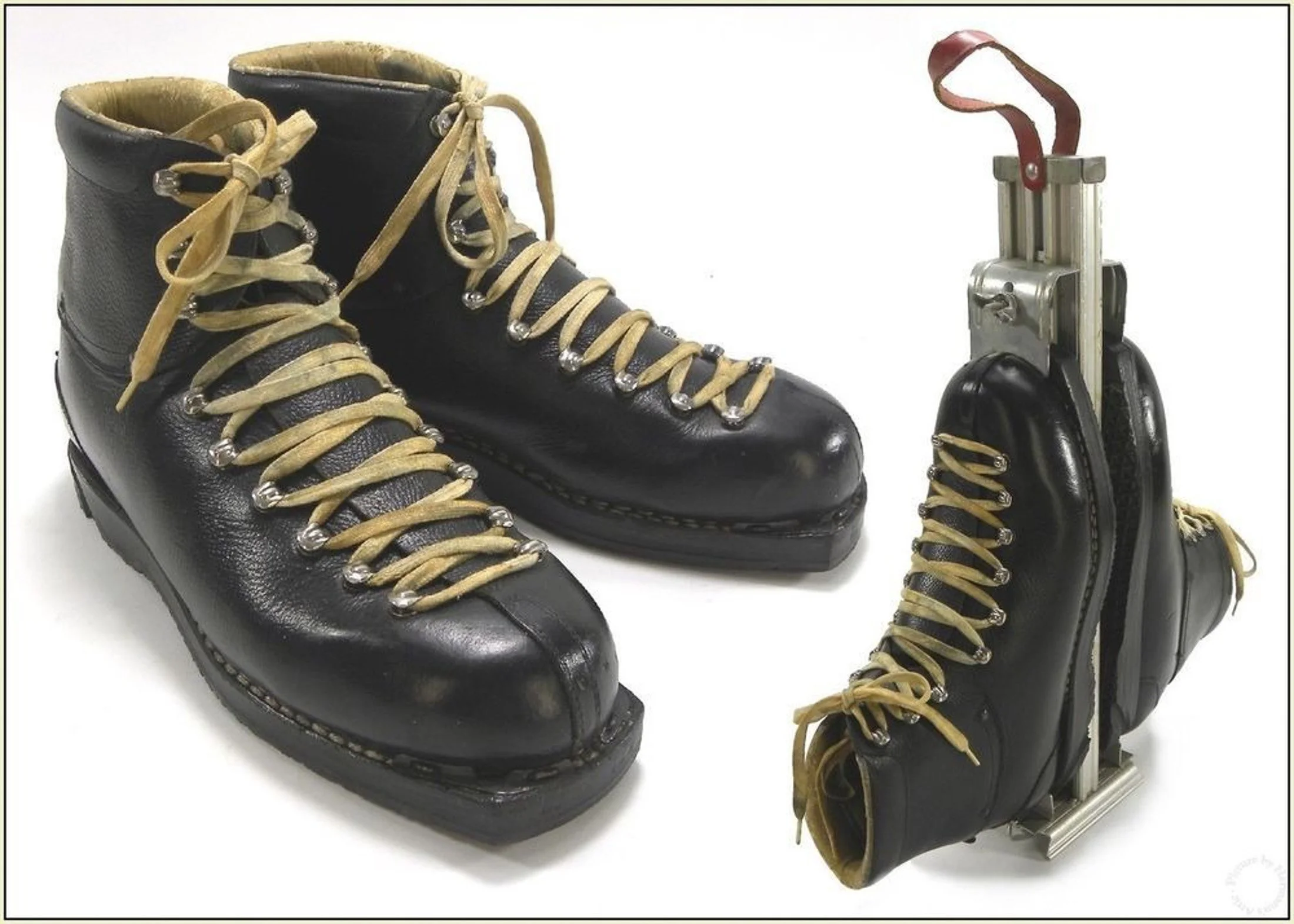
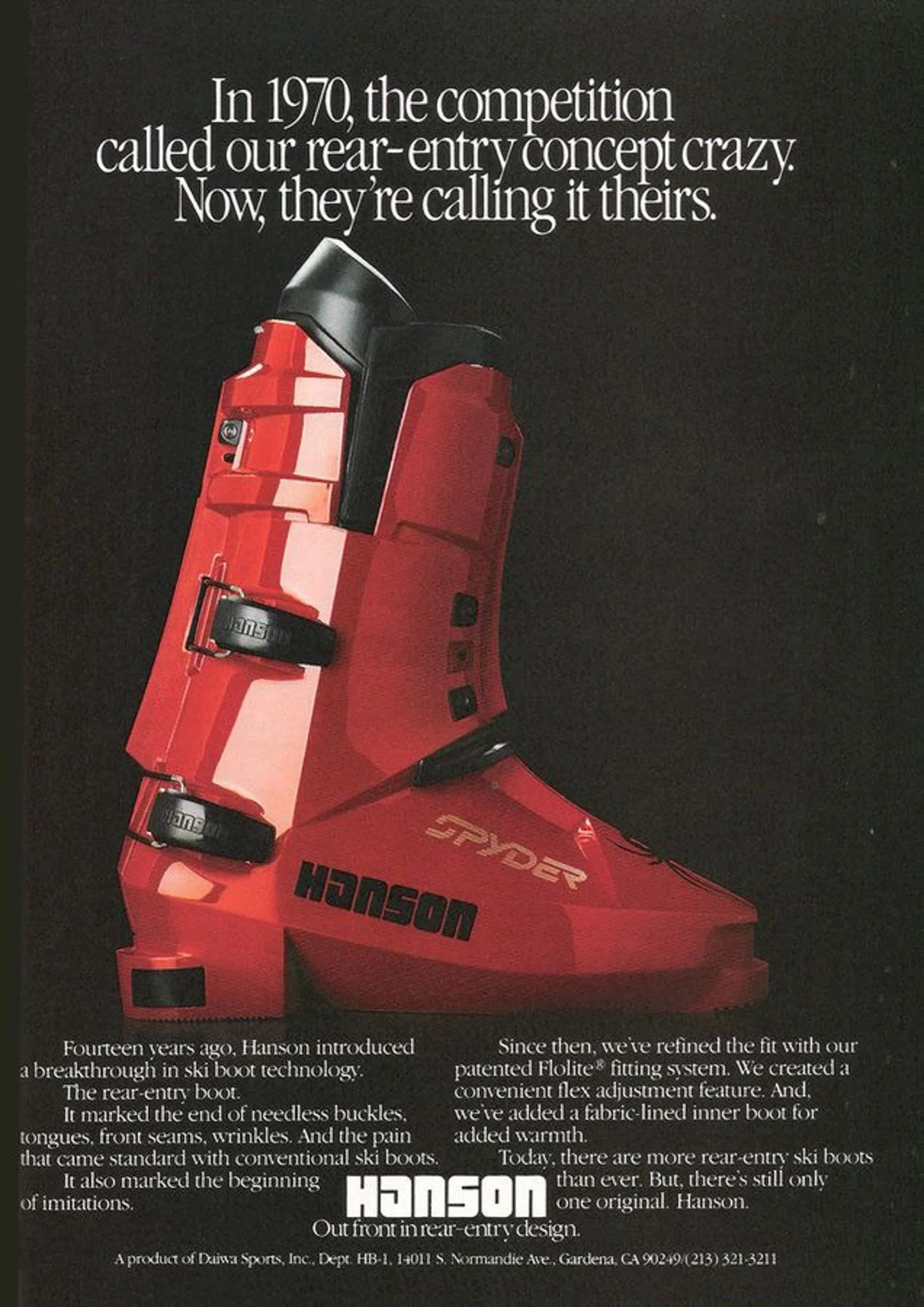
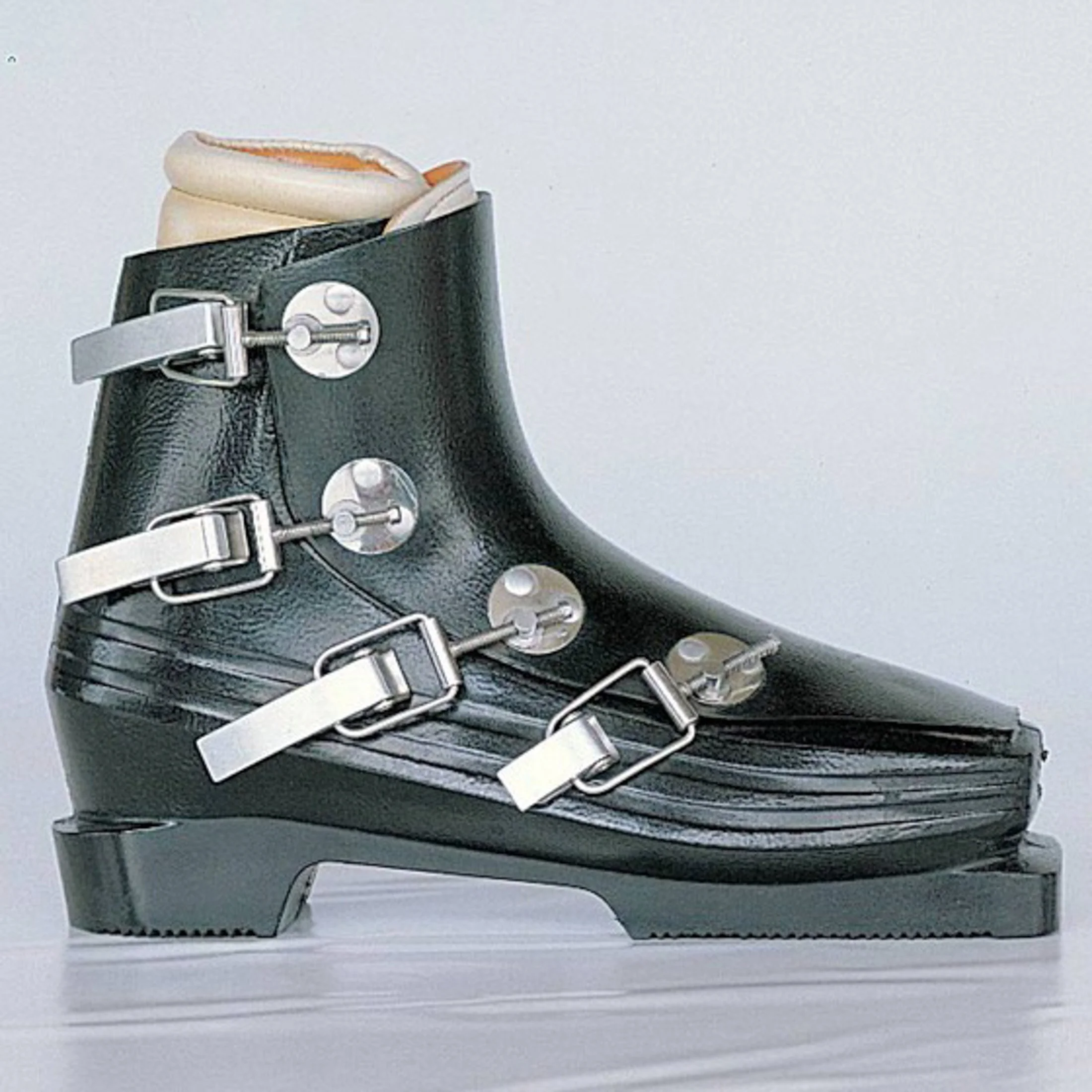
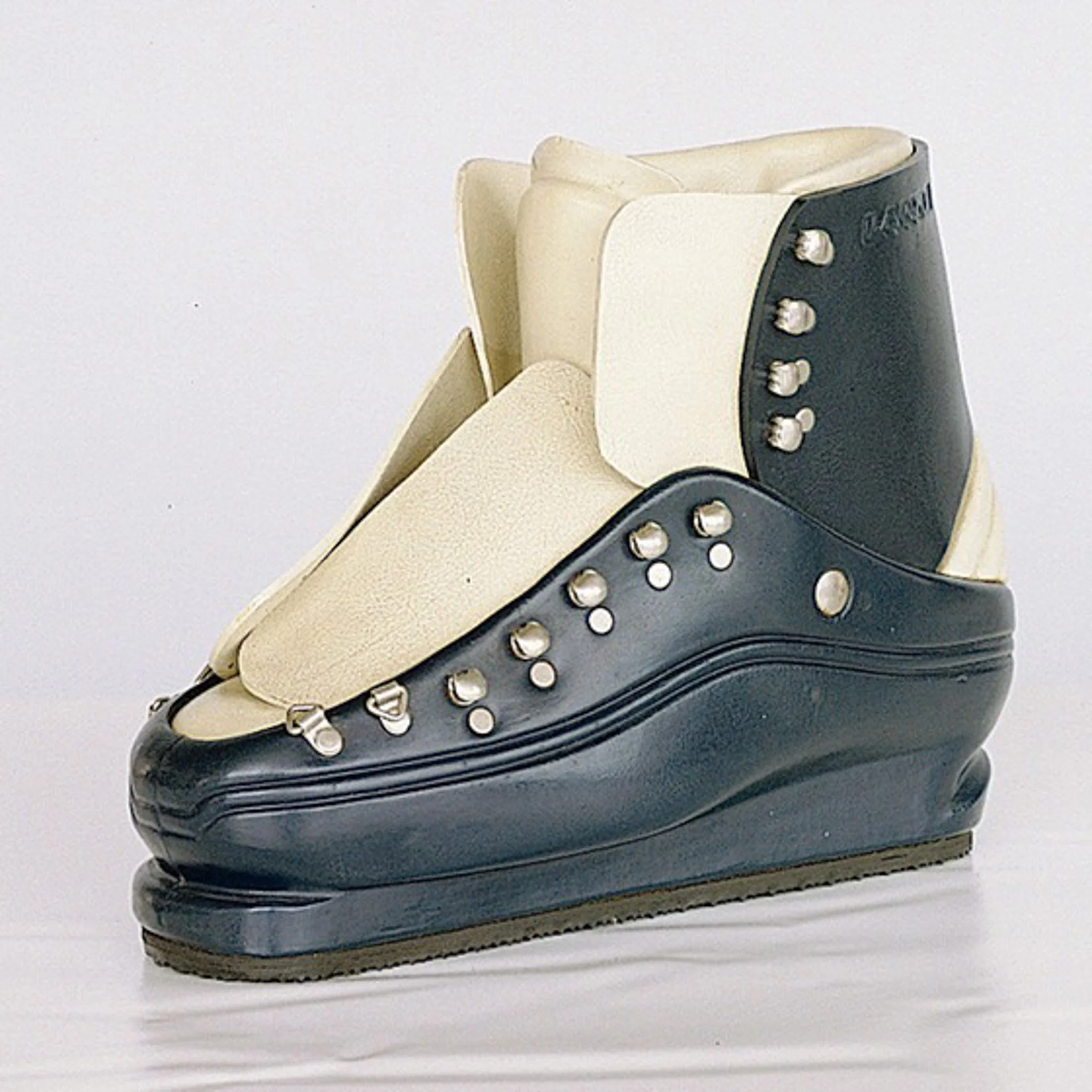
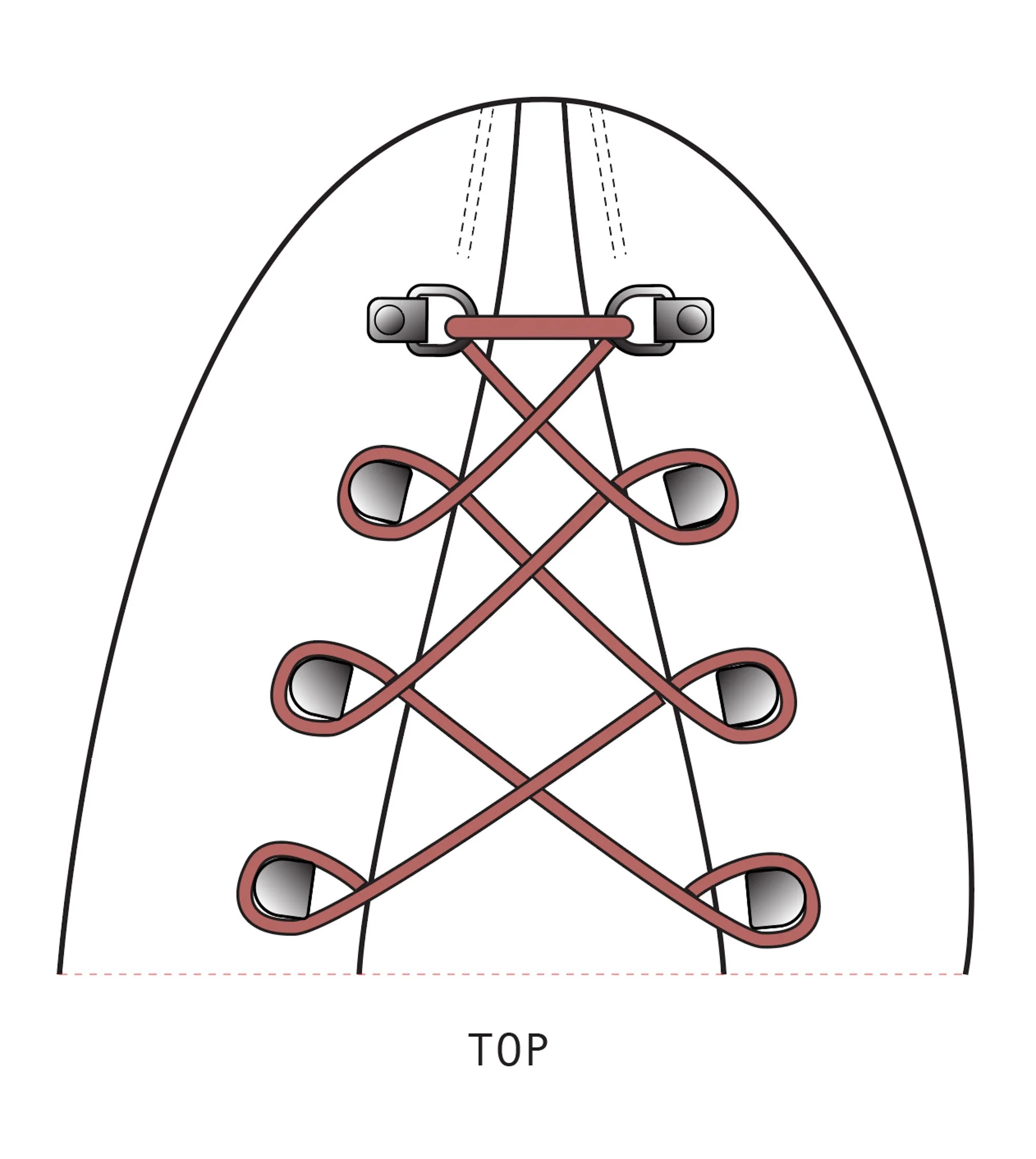
The first collection applies the same sole system across three familiar shapes. The Hiker is a low-cut leather shoe informed by early ski and Alpine footwear. Its Loop Back lacing wraps the lace around open metal hardware, so friction holds tension around the foot. The Derby shares that Alpine influence, borrowing the asymmetric side-lacing of the traditional Haferlschuh and pairing it with the technical sole. The Mule strips the idea to its simplest form, a laceless slip-on finished with a spat gaiter.
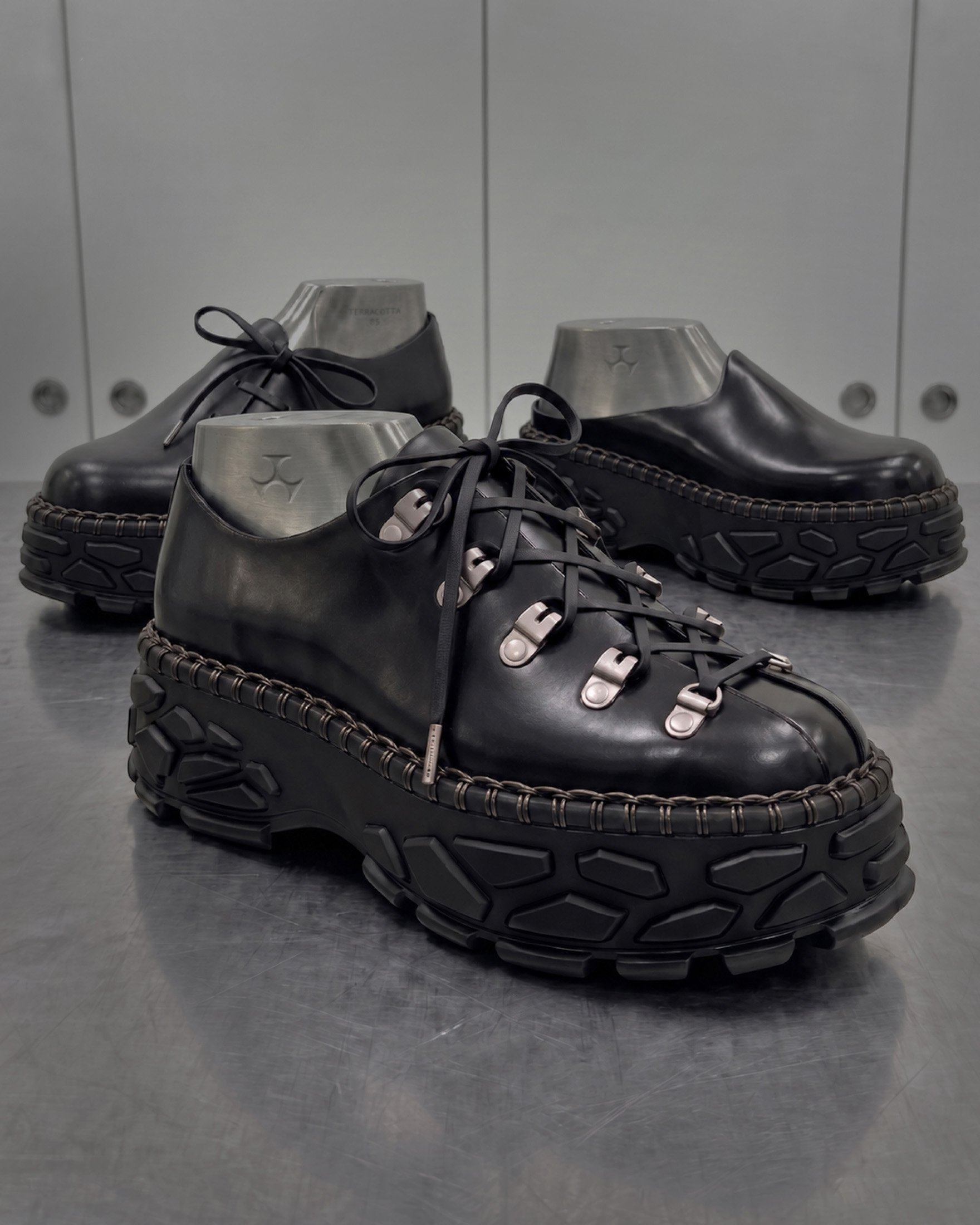
Spare components are only a starting point. Down the line, wearers may be able to buy different variations that fit into the same system, customising a pair over its lifetime. For now, the shared construction gives each of the three the same approach to replacing worn tread.
Part of our ambition is about what a shoe carries. A pair worn for years holds a record of where it has been, especially leather, which creases and shapes itself to a foot. The aim is to renew the parts that wear out while preserving the ones that become more personal with time. Our ambitions stretch as far as a pair passing from one generation to the next.
That kind of longevity also depends on what happens after the sale. Every pair comes with an extra set of replacement plate. When the original tread wears down, the shoe can go to a participating Vibram-authorised resoling specialist.
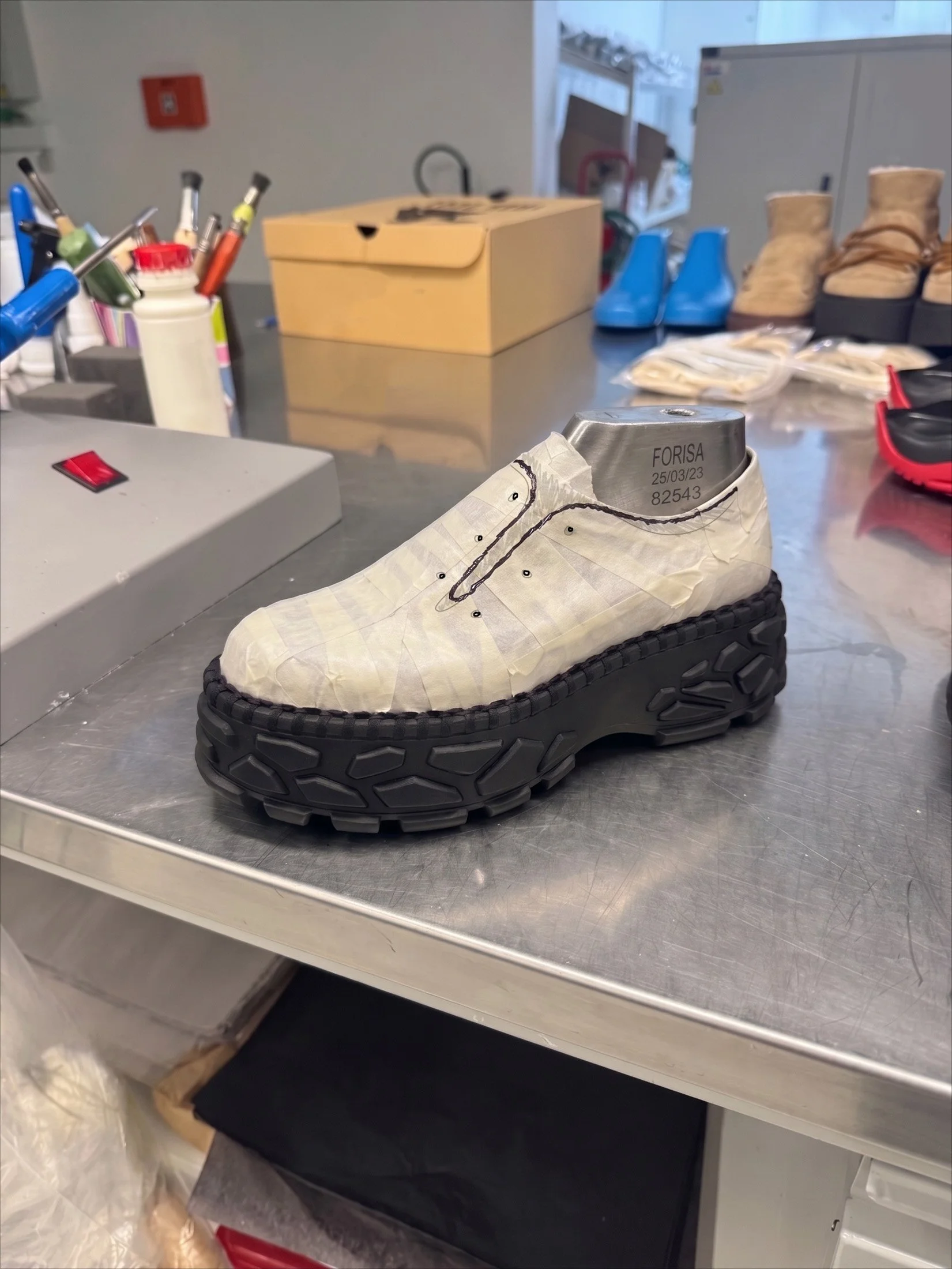
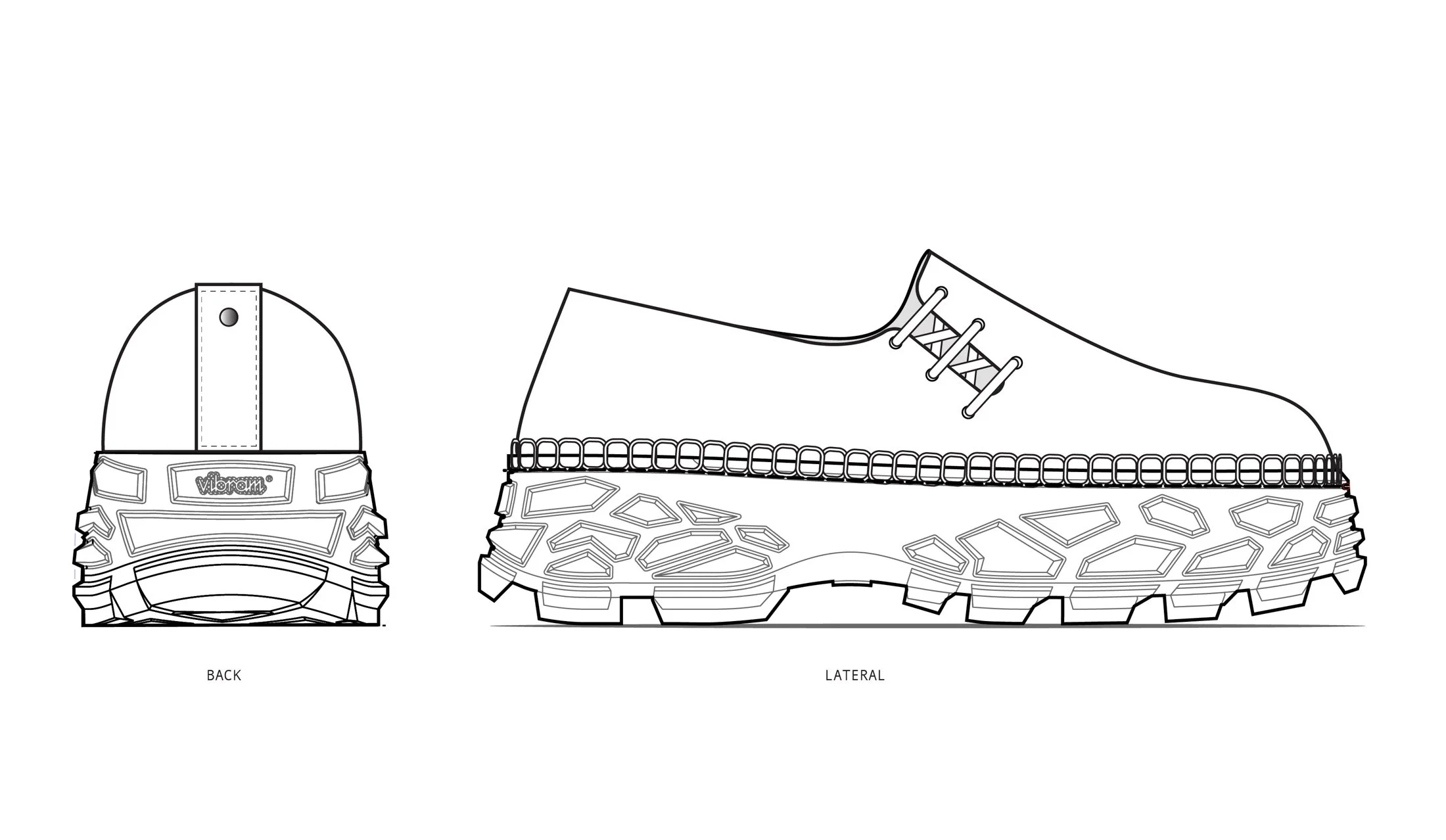
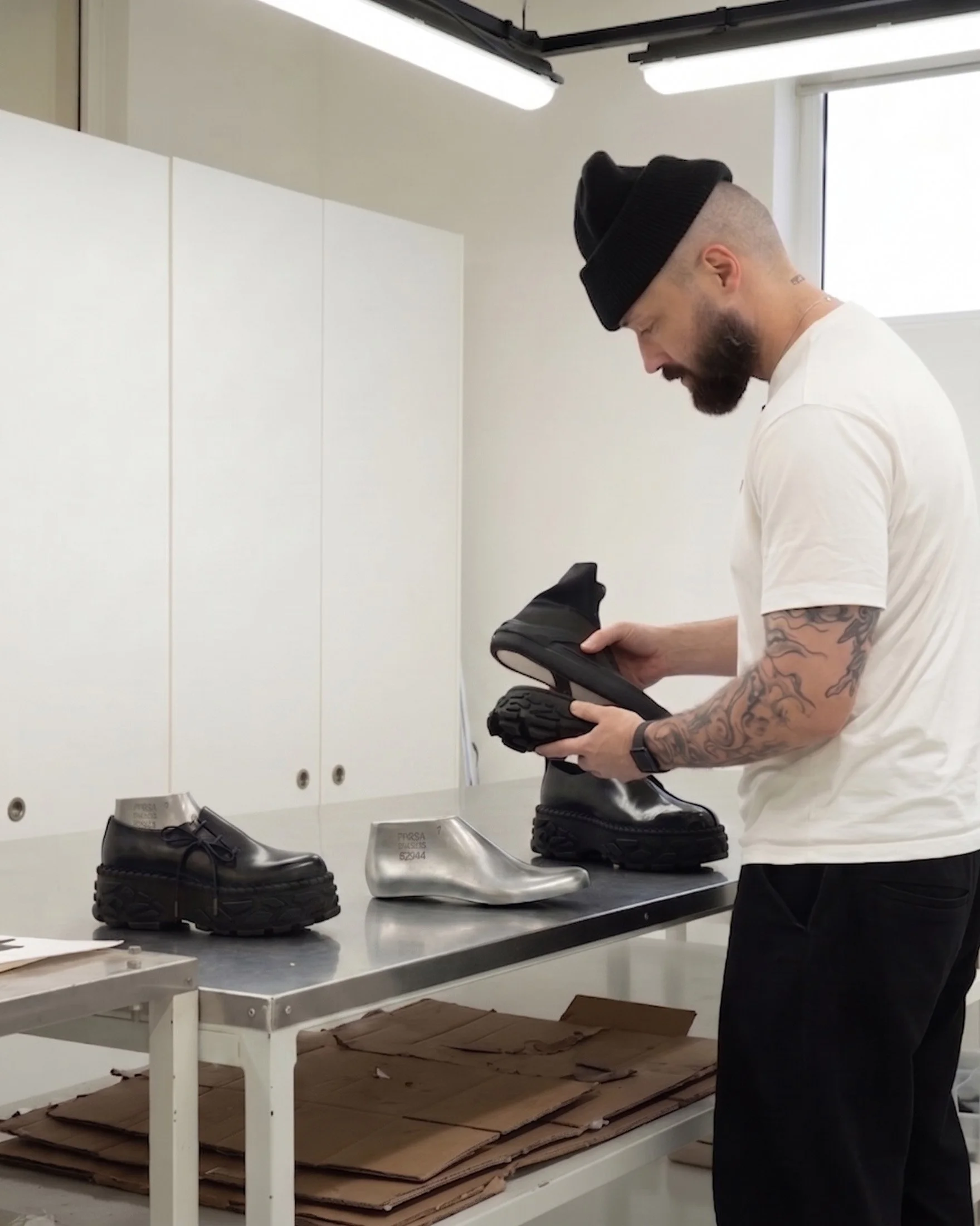
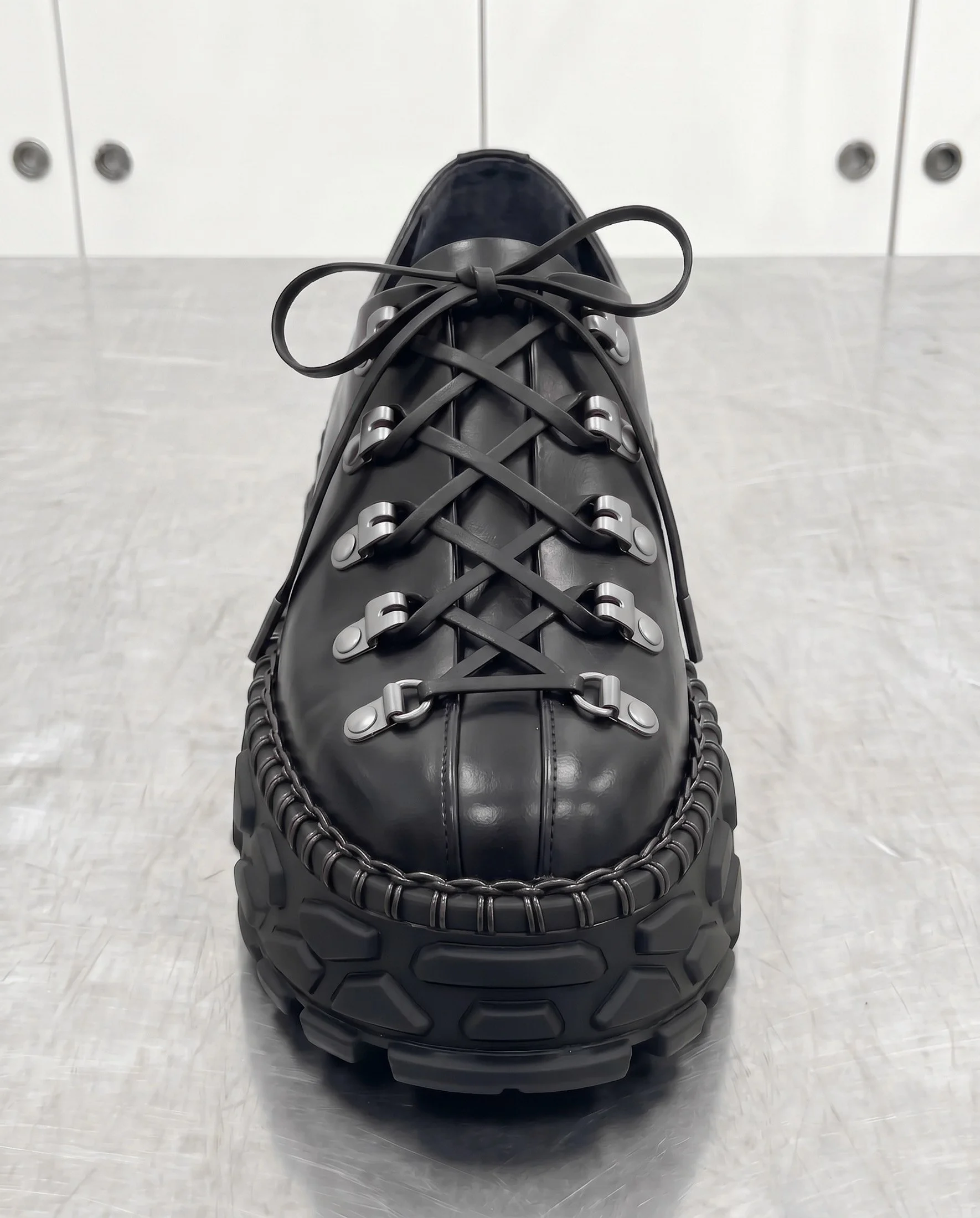
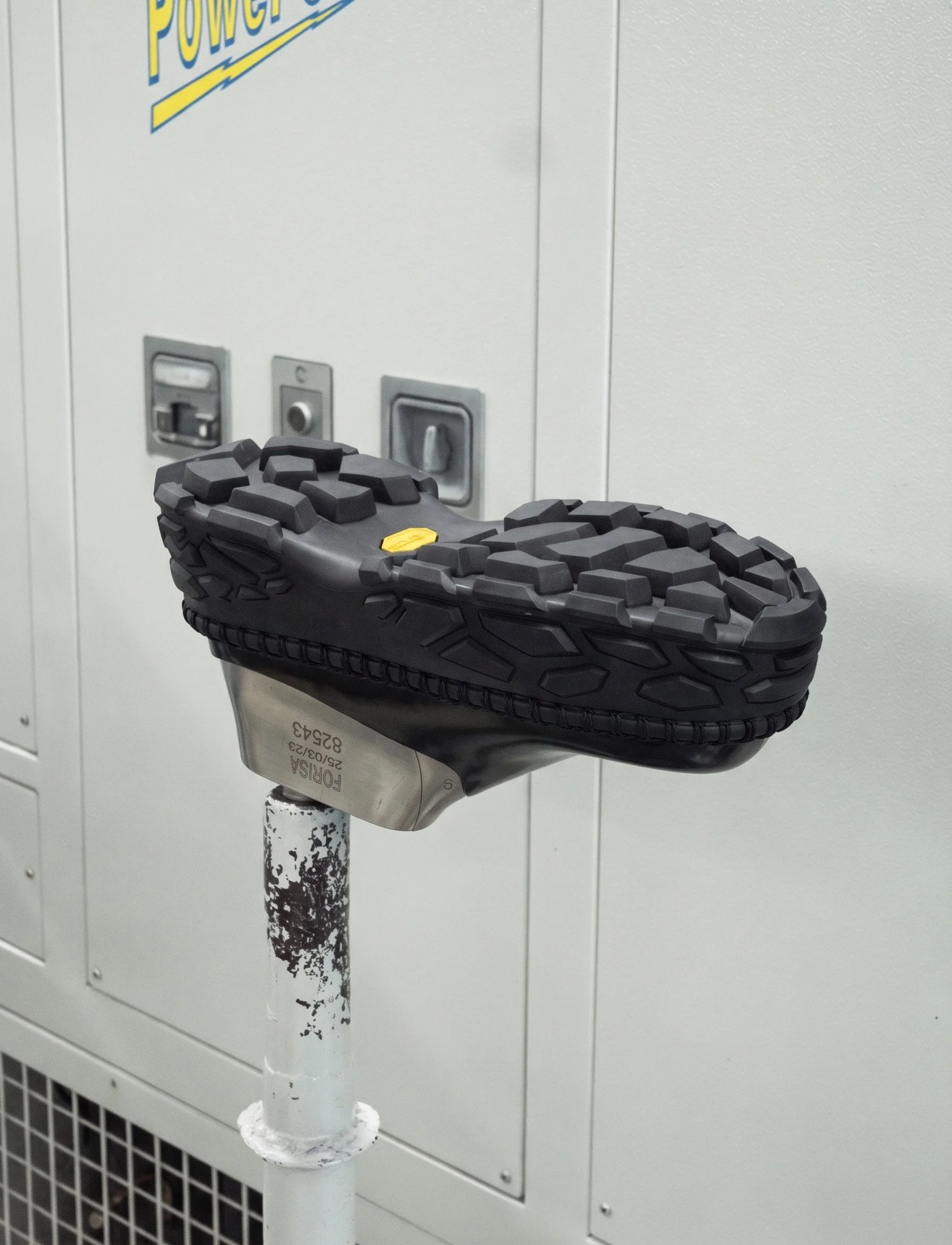
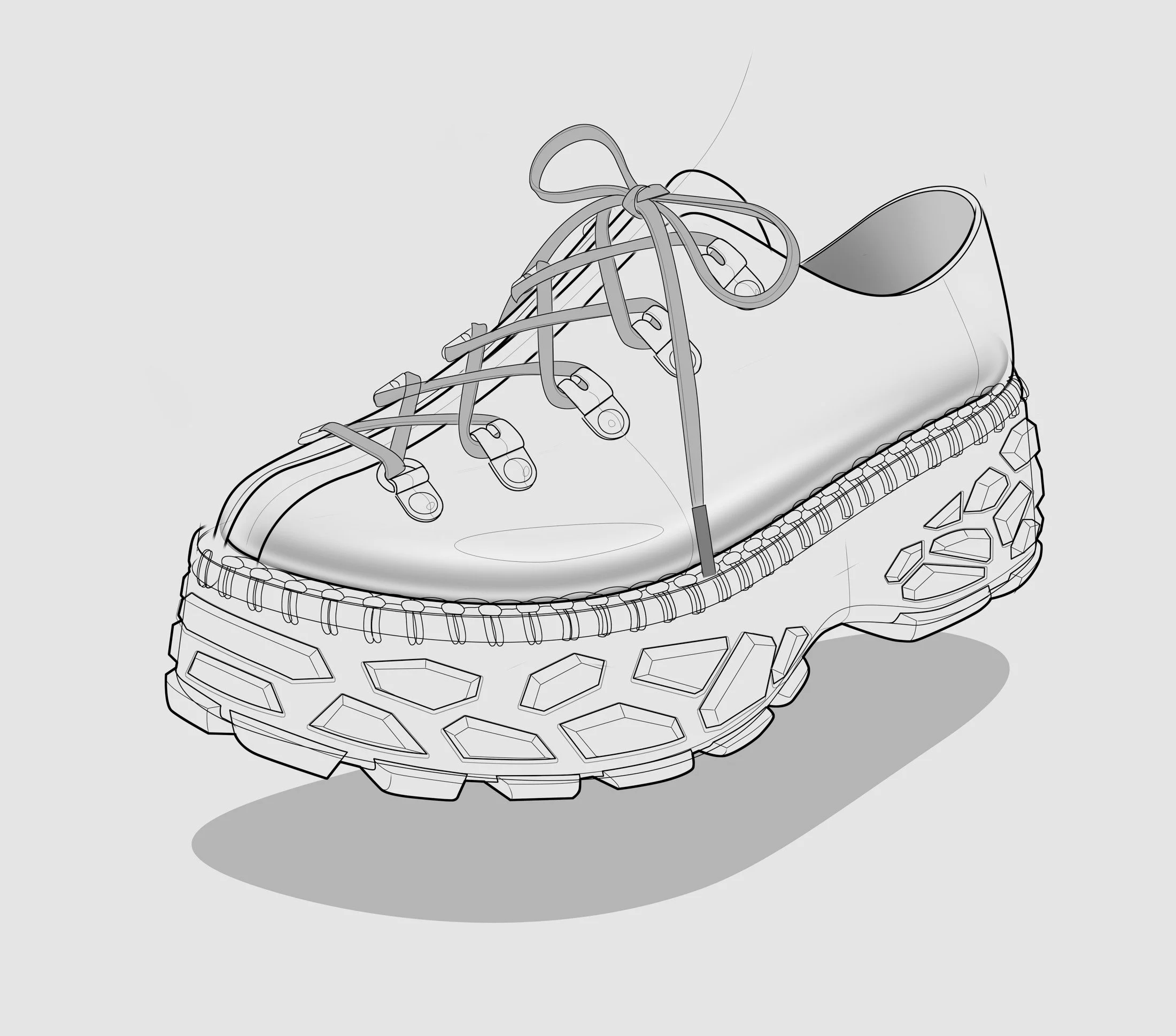
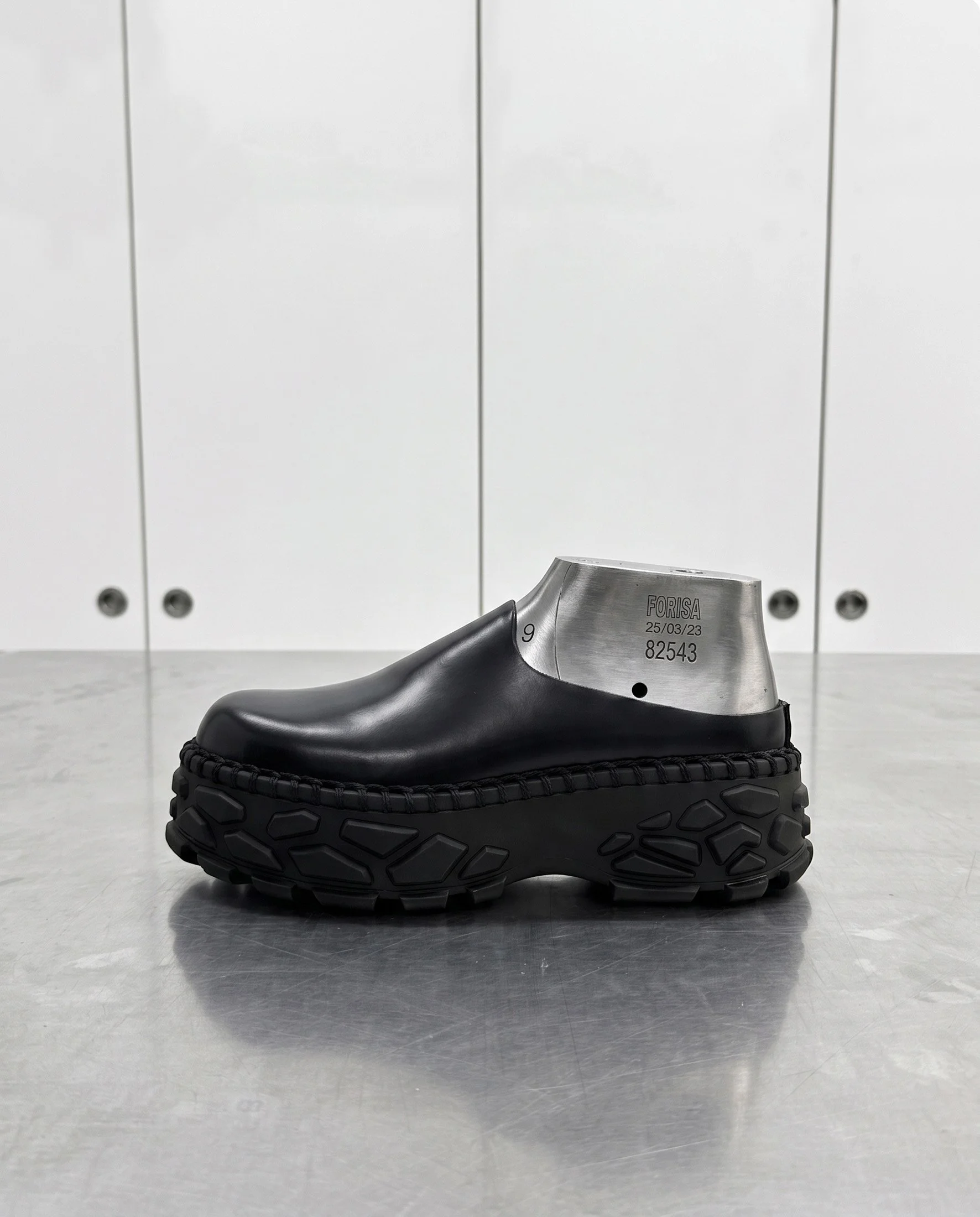
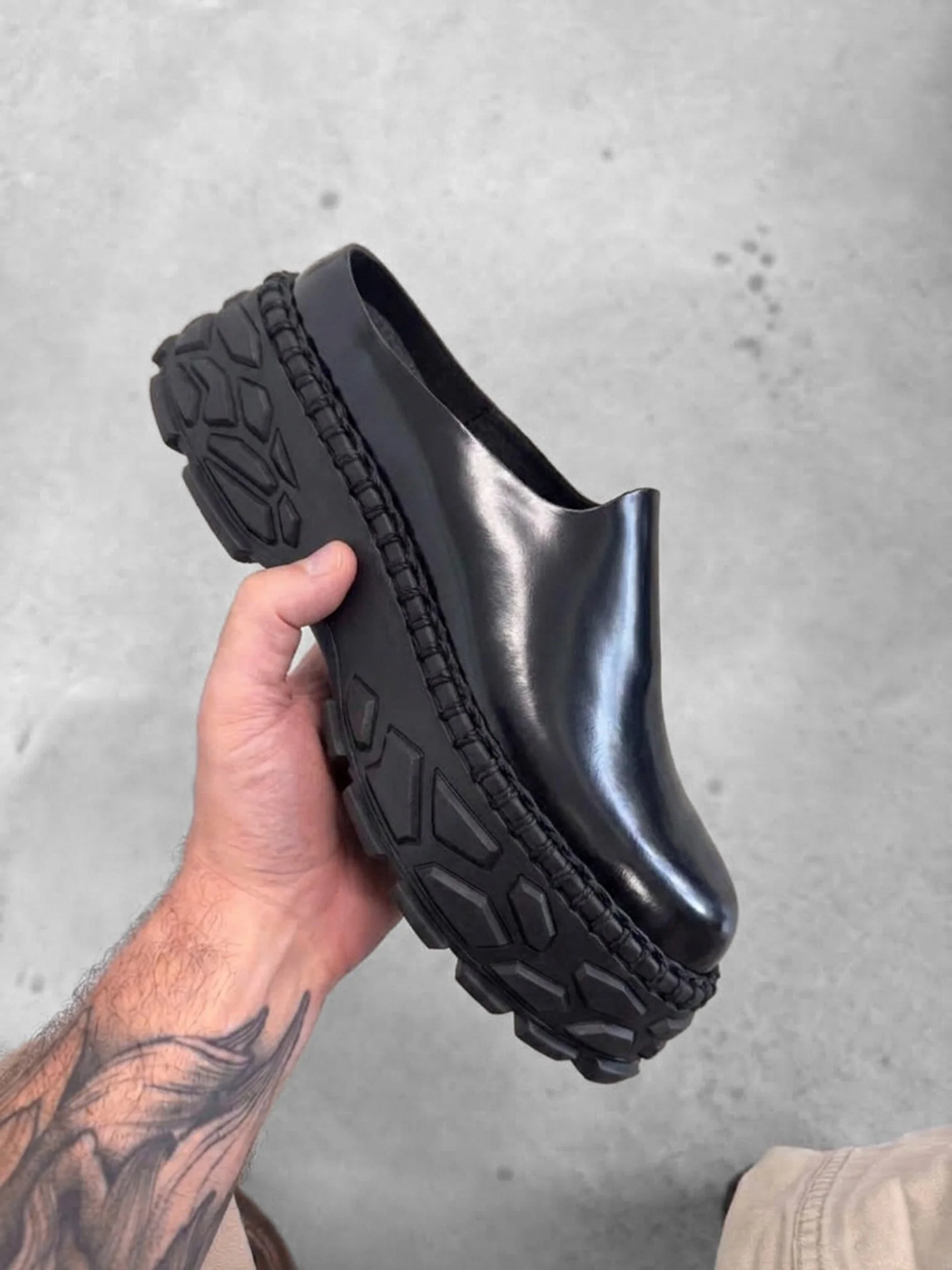
This is where the Vibram relationship earns the word collaboration. Its repair infrastructure forms part of the project from the beginning, giving the construction a service network behind it. Terracotta takes on some of the work that can otherwise make repair a problem for another day. We're careful with the language here. This isn't greenwashing, and it isn't a claim to have reinvented the wheel. Resoling has been around for a long time, but it has also been a fairly stagnant industry for much of it. What Terracotta does is put modern technology to work for longevity, using it to modernise a long-standing tradition.
The trip to the cobbler still has to happen. But the replacement parts are already there, which is one less thing to sort out before the shoes leave the house. What's launching is a shoe, but more precisely a framework, one built to hold future soles and the history of the person wearing it. Most footwear ends when the ground wears it down. Terracotta is betting that's where the next chapter begins.